Waltz History: Origins, Evolution and Ballroom Legacy
The waltz transformed social dancing. Known for its flowing turns, close partner hold, and characteristic triple meter, it developed from Central European social-dance traditions and eventually became one of the most recognizable ballroom dances in the world.
Waltz history is not the story of a dance invented by one person at one moment. The form emerged gradually during the eighteenth century, gained momentum in Vienna around the end of that century, faced criticism for the physical closeness of its dancers, and then became a defining feature of nineteenth-century ballroom culture.
This guide explores where the waltz came from, when it developed, who helped popularize it, how Viennese, Slow, and American ballroom forms emerged, and why the dance had such a lasting cultural impact.
Table of Contents:
- Waltz History: Origins and Early Development
- How the Waltz Became a Ballroom Sensation
- The Waltz in 19th-Century Vienna
- How Waltz Styles Evolved
- Characteristics of Waltz Dancing
- How Waltz Music Shaped the Dance
- Cultural Significance of the Waltz
- The Waltz in Modern Ballroom and Popular Culture
- Conclusion: Why Waltz History Still Matters
Waltz History: Origins and Early Development
The precise ancestry of the waltz is complex, but the recognizable dance began developing in Central Europe during the eighteenth century, particularly in German-speaking regions and Austria. Earlier rural and social dances used turning movements, triple-meter music, and rotating couples, creating a broader cultural environment from which the waltz could emerge.
The German verb walzen, meaning “to turn” or “to roll,” is closely connected with the dance's name. The term reflects one of its most distinctive characteristics: a couple rotating together while traveling around the floor.
The Ländler, an Austrian and southern German folk and social dance, is frequently mentioned when discussing the origin of the waltz. However, it is more accurate to treat the Ländler as part of a broader family of Central European turning dances rather than claiming that the modern waltz descended directly from one single predecessor.
When and Where Did the Waltz Originate?
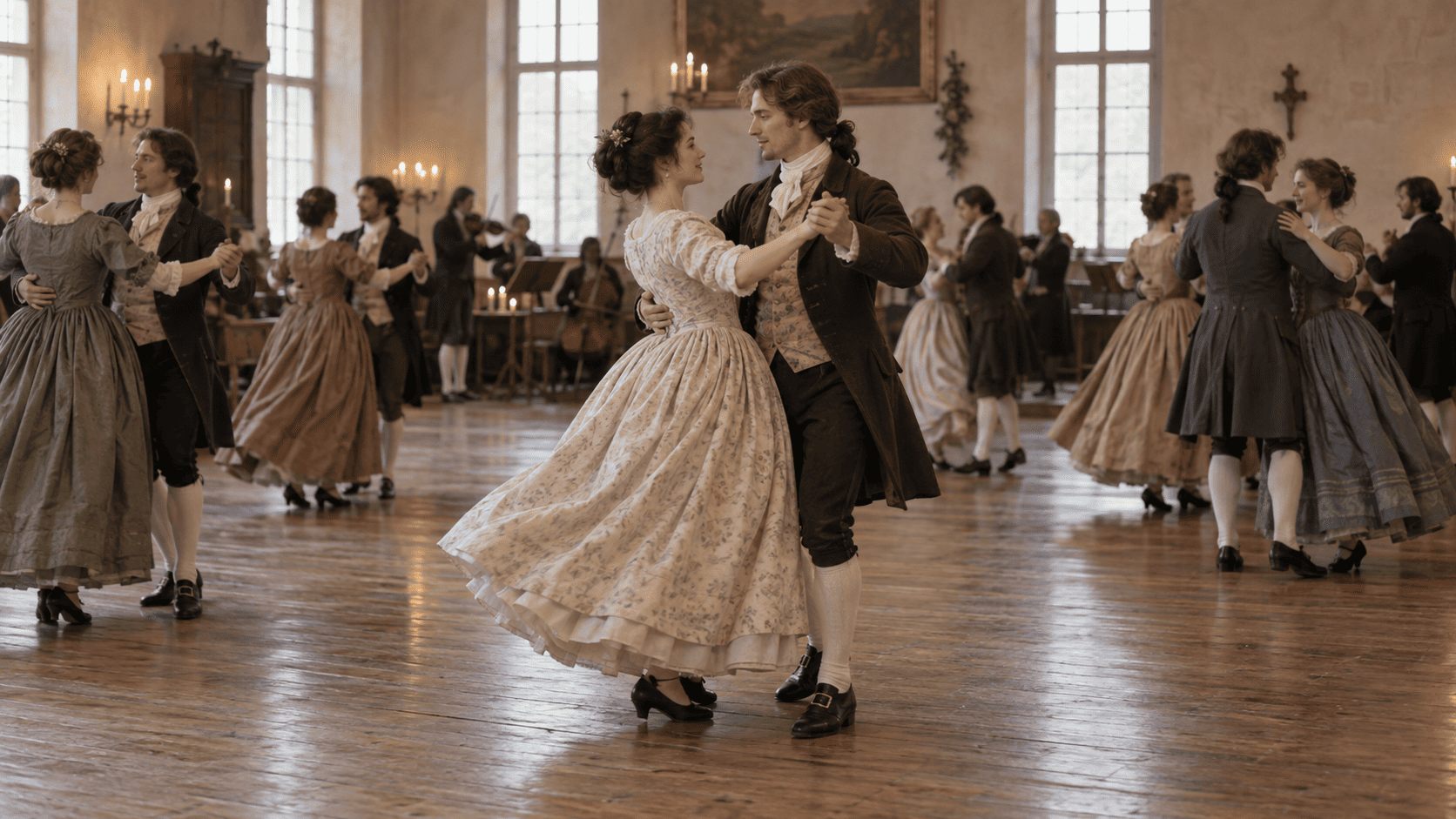
The waltz took recognizable form during the late eighteenth century and became especially associated with Austria and Vienna. Turning couple dances were already familiar in parts of Central Europe, but urban ballroom culture helped transform regional practices into a fashionable social dance.
By the 1780s and 1790s, waltzing was becoming increasingly visible in Vienna and other European cities. Its continuous rotation, triple-meter rhythm, and close partnership distinguished it from many other ballroom forms of the period.
Who Invented the Waltz?
No single person invented the waltz. It developed gradually from several Central European social-dance traditions rather than being created by one choreographer or composer. Individual musicians and dance masters later helped refine, popularize, and standardize the form, but none can accurately be described as its sole inventor.
This distinction matters because questions such as “who created the waltz?” can suggest that the dance appeared fully formed at one identifiable moment. Its development instead reflects decades of social change, musical innovation, and adaptation.
How the Waltz Became a Ballroom Sensation
By the beginning of the nineteenth century, the waltz was spreading beyond its Central European roots. Vienna became especially important to its development, and the dance increasingly appeared in public ballrooms, private gatherings, and fashionable social life.
The Congress of Vienna in 1814–1815 helped reinforce the city's international reputation for balls and dancing. Diplomats, aristocrats, musicians, and visitors encountered Viennese social culture at a moment when the waltz was becoming increasingly fashionable across Europe.
Why Was the Waltz Considered Scandalous?
The waltz challenged expectations about respectable social dancing. Partners danced in a comparatively close hold and rotated continuously together, creating a degree of physical proximity that some contemporary critics considered improper.
The rapid turning also drew criticism from observers who regarded the dance as physically excessive or socially indecorous. Despite that criticism, the waltz continued to gain popularity and gradually became accepted as a major form of ballroom dancing.
For broader context on how European social dancing changed during this period, see our guide to the history of ballroom dancing.
The Waltz in 19th-Century Vienna
The nineteenth century was decisive in waltz history. Vienna developed a thriving culture of public balls and dance music, while composers transformed the waltz from social accompaniment into an orchestral genre capable of filling concert halls as well as ballrooms.
Joseph Lanner and Johann Strauss I
Two major figures in early nineteenth-century Viennese dance music were Joseph Lanner and Johann Strauss I. Their orchestras helped expand the musical sophistication and popularity of the Viennese waltz, turning dance tunes into polished compositions with introductions, sequences of waltz sections, and memorable finales.
Their success helped establish Vienna as the international center of waltz culture.
Johann Strauss II and the Golden Age of the Viennese Waltz
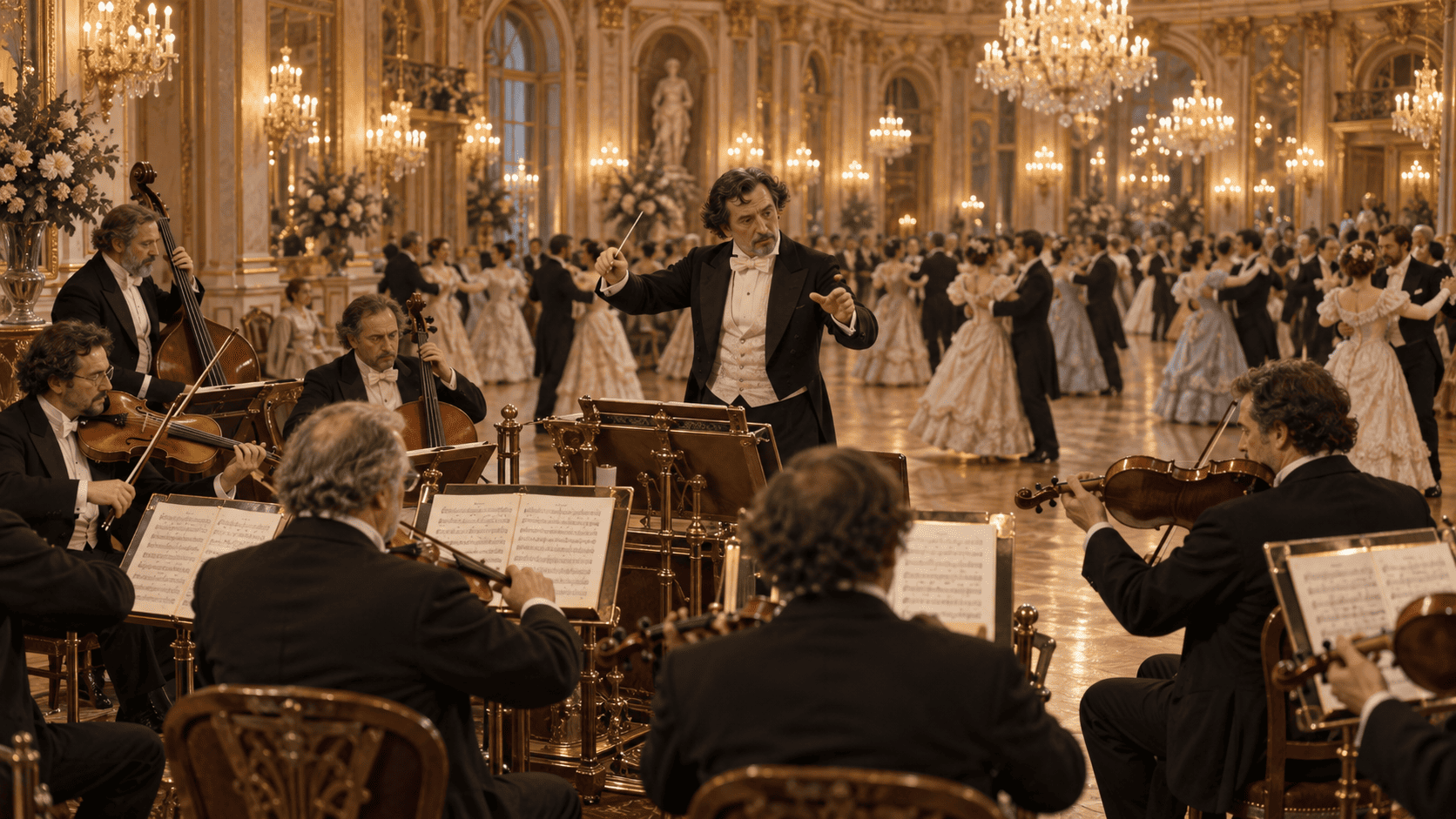
Johann Strauss II, born in 1825, became the composer most closely associated with the nineteenth-century Viennese waltz. His works brought the genre to new levels of international popularity and orchestral refinement.
His most famous waltz, The Blue Danube (An der schönen blauen Donau), was composed in 1866–1867 and premiered in Vienna in 1867. Other well-known Strauss waltzes include Tales from the Vienna Woods, Vienna Blood, and the Emperor Waltz.
This musical tradition helped transform the waltz from a fashionable social dance into a cultural symbol closely associated with Vienna.
How Waltz Styles Evolved
As the dance spread internationally, different forms developed from the broader waltz tradition. They share triple-meter roots and turning movement, but their tempo, technique, posture, and competitive conventions can differ substantially.
Viennese Waltz
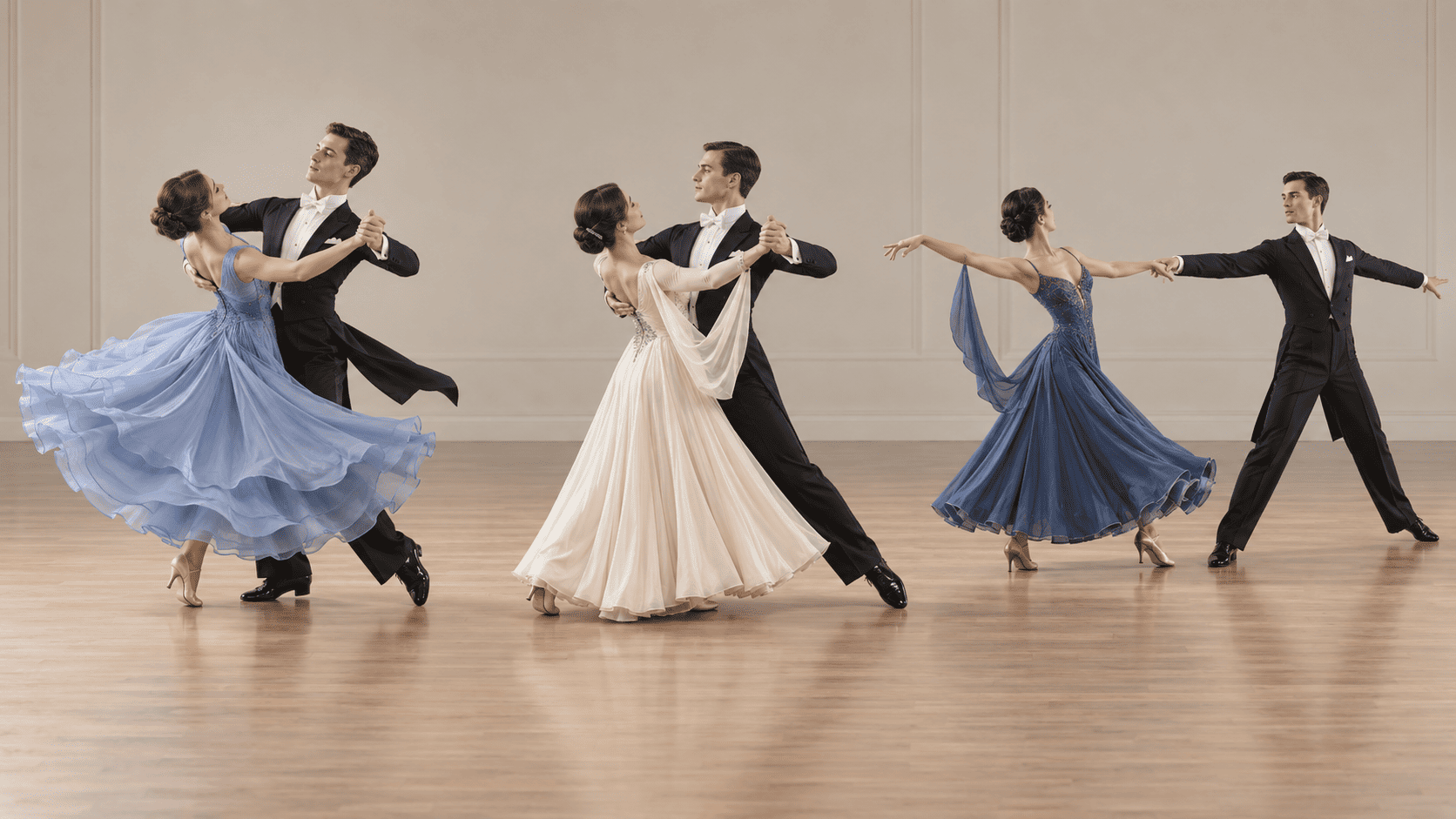
The Viennese Waltz preserves the fast, continuously rotating character most closely associated with nineteenth-century Vienna. Couples travel around the floor using repeated natural and reverse turns, with the speed of the music creating its characteristic sweeping motion.
Modern ballroom Viennese Waltz is more formally standardized than the social dancing of the nineteenth century, but it retains the visual impression of rapid rotation and continuous travel.
Slow Waltz and the English Waltz
Slower forms of waltzing, including the Boston, became popular around the turn of the twentieth century. These dances moved away from the rapid continuous rotation of Viennese Waltz and contributed to a broader preference for slower tempos and more expansive movement.
In Britain, teachers, competitors, studios, and ballroom organizations reshaped and standardized these influences during the 1910s and 1920s. Their work played a central role in developing the form that became internationally known as the English Waltz or Slow Waltz.
The slower tempo allows greater use of rise and fall, swing, shaping, and a wider variety of figures than the continuously rotating Viennese style. In modern international ballroom competition, this form is commonly listed simply as Waltz.
American Smooth Waltz
In the United States, American Smooth Waltz developed within the American ballroom system. Unlike International Standard Waltz, American Smooth permits dancers to separate from the traditional closed hold and use open positions, underarm turns, and side-by-side movements.
These differences do not represent a separate historical origin of the waltz. American Smooth is a later ballroom development that adapted the broader waltz tradition to different competitive and social conventions.
Characteristics of Waltz Dancing
Despite differences between styles, several characteristics make the waltz visually and musically recognizable. Most forms are organized around triple meter, with one strong beat followed by two lighter beats, creating the familiar “one-two-three” rhythmic feel.
Turning movement is another defining feature. Viennese Waltz emphasizes continuous rotation, while slower ballroom waltzes combine turns with rise and fall, swing, progressive movement, and changes of direction.
The familiar box step is commonly used when teaching introductory American-style waltz, but it should not be treated as the universal foundation of every waltz tradition. Competitive Viennese, International Standard, and social forms each use their own technical vocabularies.
How Waltz Music Shaped the Dance
Music is fundamental to the development of the waltz. Its triple meter provides a clear rhythmic structure for turning and traveling with a partner, while differences in tempo helped shape distinct styles.
Fast Viennese music favors continuous rotation and movement around the floor. Slower ballroom music gives dancers more time for rise and fall, swing, shaping, and extended movement. This relationship between tempo and choreography is one reason Viennese and Slow Waltz can look so different despite belonging to the same historical family.
Waltz rhythm also extends beyond traditional ballroom repertoire. Film scores, popular songs, jazz compositions, stage works, and contemporary music have all used triple-meter patterns capable of supporting or evoking waltz movement.
Cultural Significance of the Waltz
The waltz became culturally significant because it helped change the structure and experience of social dancing. Many earlier ballroom and court dances placed greater emphasis on formal figures and group relationships. Waltzing instead made the rotating couple an independent unit moving continuously through the ballroom.
Over time, this new emphasis on continuous partnered movement became widely accepted and influential. The waltz helped establish a model for later ballroom dances in which couples travel independently around the floor rather than remaining primarily within larger group formations.
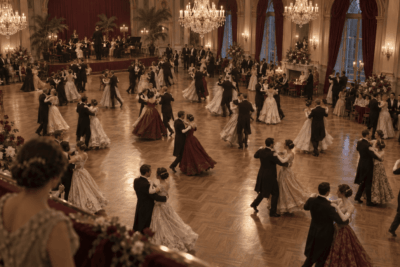
The dance also became deeply connected with music, literature, opera, theater, film, and popular ideas about romance and elegance. The image of a couple turning across a ballroom remains one of the most recognizable visual symbols of formal partnered dancing.
The Waltz in Modern Ballroom and Popular Culture
Today, the waltz remains active in both social and competitive dancing. International Standard Waltz, Viennese Waltz, and American Smooth Waltz continue to be taught and performed in studios and competitions, while social versions remain popular at weddings, formal events, and recreational dance programs.
The dance also continues to appear in film, television, theater, and contemporary choreography, showing how a form that emerged from eighteenth-century European social culture has remained adaptable without losing its recognizable association with triple meter, turning movement, and partnered flow.
Conclusion: Why Waltz History Still Matters
Waltz history spans more than two centuries of social, musical, and technical change. The dance was not invented by one person and did not emerge fully formed from a single folk tradition; it developed gradually in Central Europe, flourished in Vienna, spread internationally, and later evolved into distinct ballroom styles. From its once-controversial close hold to the music of Johann Strauss II and today's competitive ballroom floor, the waltz remains one of the clearest examples of how social dance can adapt while preserving a recognizable historical identity.
More articles about Dance History
Explore more guides and related content about Dance History.



Discover more about the world of dance: