Dance in Religion and Mythology Across Cultures
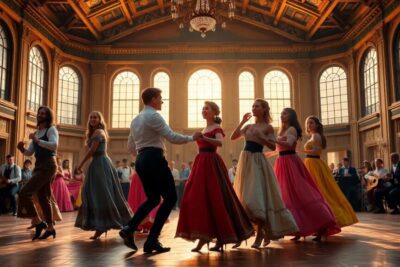
Dance in religion and mythology has long served as a bridge between the human and the divine. Across cultures, dance has been used in worship, rites of passage, sacred festivals, and mythological storytelling, transforming movement into a language of devotion, symbolism, and spiritual power. From Shiva Nataraja’s cosmic dance in Hindu mythology to Sufi whirling and Dionysian rites in ancient Greece, sacred movement has expressed creation, ecstasy, healing, and rebirth.
This guide explores dance in religion and mythology through ritual, scripture, mythological figures, and cross-cultural examples. If you are looking for dance and religion, dance in religion, religious or ceremonial dances, examples of religious dance, or the meaning of dance as ritual, this article brings those themes together in one place.
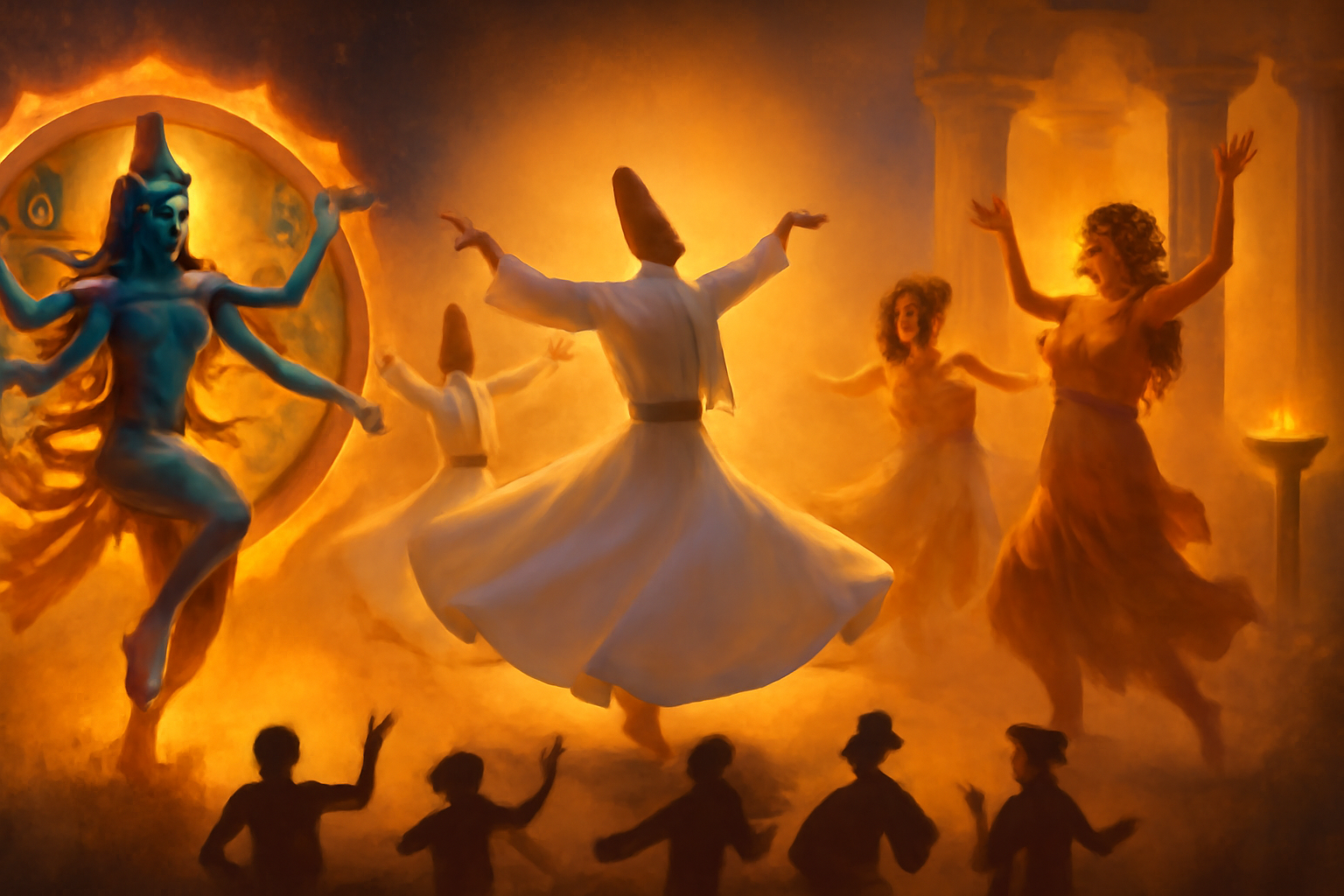
Table of Contents:
- What Is Dance in Religion and Mythology?
- Dance and Religion: Why Movement Becomes Sacred
- Dance as Ritual and Ceremony
- Examples of Religious Dance Across Cultures
- Gods and Goddesses of Dance in Mythology
- Dance in Hinduism and Hindu Mythology
- Dance in Greek Mythology
- Dance in Religious Traditions and Scriptures
- Symbolism and Meaning Behind Ritual Dance
- Dance as Transformation, Trance, and Divine Connection
- Decline and Revival of Sacred Dance Traditions
- Contemporary Interpretations and Integrations
- FAQs About Dance in Religion and Mythology
What Is Dance in Religion and Mythology?
Dance in religion and mythology refers to the use of movement in sacred, ceremonial, and mythic contexts. In religion, dance may function as worship, prayer, ritual, celebration, mourning, initiation, or communal devotion. In mythology, dance often appears through gods, goddesses, heroes, and sacred narratives that symbolize cosmic balance, divine love, ecstasy, fertility, death, or rebirth.
Because of this, dance is not just performance. In many traditions, it becomes a sacred action, a ritual language, and a way to embody truths that words alone cannot express.
Dance and Religion: Why Movement Becomes Sacred
Dance and religion have been connected for centuries because movement can express devotion in a direct, embodied way. In many traditions, the body is not separate from spiritual life but a vessel through which prayer, praise, and sacred presence are experienced. That is why dance in religion often appears in ceremonies, temple traditions, scriptural interpretations, and communal celebrations.
Whether through temple dance in Hinduism, liturgical dance in Christianity, the Hora in Judaism, or whirling practices in Sufism, religious dances reveal how communities turn belief into movement. In this sense, religion dance and dance religion are not abstract ideas—they are living traditions in which physical motion becomes faith in action.
Dance as Ritual and Ceremony
Dance as a ritual appears in cultures across the world. Sacred movement is used to mark transitions, invoke divine blessing, celebrate fertility, mourn the dead, initiate spiritual maturity, and maintain communal memory. In many traditions, dance as ritual is not optional decoration but a core part of the ceremony itself.
That is why searches such as dance and ritual, dance as ritual, and religious or ceremonial dances all point to the same larger truth: ritual movement helps communities align human life with sacred order.
Dance as Worship
In many religions, dance is a direct form of worship. Through stylized gestures, repeated patterns, and symbolic choreography, dancers offer reverence to the divine and narrate sacred stories.
Hinduism: Bharatanatyam
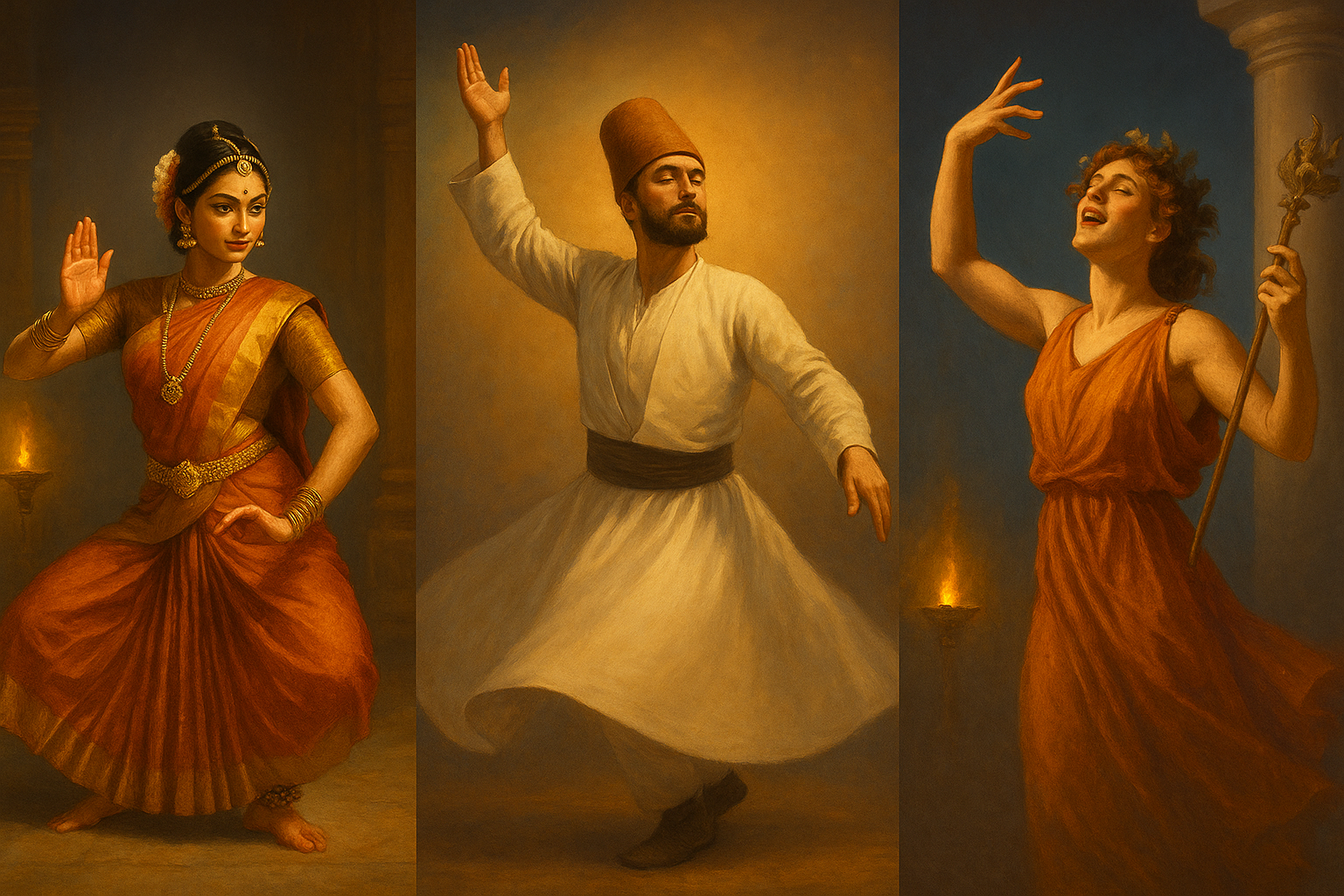
In Hindu traditions, especially in South India, Bharatanatyam is one of the most recognized examples of dance in religion. Originally practiced in temples by devadasis, Bharatanatyam uses mudras, facial expression, and codified posture to tell stories of gods such as Shiva, Krishna, and Vishnu. Each performance can function as both art and devotion.
Christianity: Liturgical Dance
In some Christian traditions, especially Pentecostal, charismatic, and African-American church settings, liturgical dance is used during worship. It may interpret scripture, accompany prayer, or embody praise through movement. In this context, dance in religion becomes a physical form of spiritual offering.
Judaism: The Hora
In Jewish tradition, communal dances such as the Hora are performed at weddings and celebrations. Danced in a circle, the Hora symbolizes unity, continuity, and communal joy. It is one of the clearest examples of how movement can be festive, spiritual, and communal at the same time.
Dance in Rites of Passage and Festivals
Throughout the world, ritual dances mark weddings, funerals, initiations, harvest ceremonies, and religious festivals.
Weddings
In many traditions, sacred dances bless the union and bring the community into the ceremony.
Funerals
In some cultures, dance honors the dead and guides the spirit onward. In Ghanaian funerary customs, for example, dance may celebrate the life of the deceased while expressing communal grief and hope.
Initiation Ceremonies
In indigenous and tribal religions, dance is often central to transition into adulthood, priesthood, or spiritual responsibility.
Religious Festivals
During Navaratri in Hinduism, dancers perform Garba and Dandiya Raas in honor of the goddess Durga. In Sufi Islam, whirling symbolizes spiritual ascent. In Ethiopian Orthodox Christianity, dance and chant animate sacred processions. These are strong examples of religious dance that show how faith is transmitted through movement.
Examples of Religious Dance Across Cultures
If someone asks for an example of religious dance or examples of religious dance, the answer varies by tradition, but the following table offers a broad cross-cultural overview.
| Religion / Culture | Type of Dance | Purpose or Meaning |
|---|---|---|
| Hinduism | Bharatanatyam | Devotion to Shiva Nataraja and expression of cosmic rhythm |
| Christianity | Liturgical Dance | Prayer and spiritual connection through movement |
| Judaism | The Hora | Unity, joy, and celebration of life and community |
| Sufism | Whirling Dervishes | Spiritual ascent and union with the divine |
| Ancient Greece | Dionysian Rites | Ecstatic worship and divine inspiration |
| Egypt | Isis and Osiris Mourning Dance | Rebirth, resurrection, and cosmic renewal |
| Yoruba Religion | Trance Dances for Orishas | Invocation, healing, and communication with spirits |
| Aztec / Maya | Warrior and Cosmic Dances | Honoring gods and maintaining cosmic order |
| Hawaii | Hula | Sacred storytelling and expression of nature’s spirit |
This table also helps answer questions about types of religious dances and religious or ceremonial dances in a more direct way.
Gods and Goddesses of Dance in Mythology
Many cultures have imagined gods of dance, dance gods, and sacred figures whose movement represents creation, divine love, ecstasy, inspiration, fertility, or transformation. These mythological beings help explain why dance appears so often in spiritual narratives: it is not only a human act, but also a divine one.
If you are searching for god of dancing, dancing with gods, or even goddesses of dance, the strongest examples appear in Hindu, Greek, and Egyptian traditions.
Shiva Nataraja: Lord of the Dance
One of the most famous gods of dance is Shiva Nataraja in Hindu mythology. In this form, Shiva performs the Tandava, the cosmic dance of creation, preservation, and destruction. The ring of fire around him symbolizes the universe, the drum marks the rhythm of time, and his dance expresses the continual movement of existence. Shiva is perhaps the clearest answer to the question of a divine god of dancing.
Krishna and the Dance of Divine Love
In Hindu tradition, Krishna’s Raslila represents divine love expressed through dance. In devotional storytelling, Krishna dances with the gopis in a sacred circle of ecstatic love and spiritual union. This makes Krishna another central figure in the relationship between mythology, devotion, and movement.
Dionysus and Ecstatic Dance
In Greek mythology, Dionysus is closely associated with ecstatic dance, ritual frenzy, music, and theatrical transformation. His rites involved intense movement and altered states of consciousness. If Shiva represents cosmic order in motion, Dionysus represents divine ecstasy and release through dance.
The Muses and Divine Inspiration
The Muses in Greek mythology can also be understood as goddesses of dance in a broader artistic sense. They embody creativity, poetry, music, and inspired movement. Their graceful dancing on Mount Olympus links the arts to divine inspiration.
Isis and Sacred Ritual Dance
In Egyptian mythology, Isis is associated with ritual mourning, resurrection, and sacred ceremony. Priestesses dancing in rites connected to Isis and Osiris transformed grief and rebirth into communal spiritual experience, placing her among the mythological figures most closely tied to sacred dance.
Dance in Hinduism and Hindu Mythology
Among world traditions, Hinduism offers one of the richest examples of how dance, religion, and mythology intertwine. Temple dance, devotional storytelling, sacred festivals, and divine iconography all place movement at the center of spiritual expression.
Bharatanatyam is not simply a classical dance form; it is also a devotional practice rooted in temple ritual. Through mudras, expression, rhythm, and narrative, dancers embody divine stories and theological ideas. Shiva Nataraja symbolizes cosmic dance, while Krishna’s Raslila expresses sacred love. In this way, Hindu spirituality offers one of the strongest examples of how mythology dance becomes a living religious tradition.
Religious festivals deepen this relationship. During Navaratri, Garba and Dandiya Raas celebrate the goddess Durga, turning communal dance into devotion and collective memory.
Dance in Greek Mythology
In ancient Greek mythology, dance was linked to both inspired beauty and ecstatic release. The Muses represented artistic grace and divine creativity, while Dionysian rituals emphasized transformation, collective emotion, and altered states. Greek sacred movement shows how dance can express both order and wildness, discipline and ecstasy.
These ritual dance examples demonstrate that in Greek thought, movement was not just celebration but a sacred act tied to divine inspiration and human transformation.
Dance in Religious Traditions and Scriptures
The relationship between movement and the sacred also appears in scriptures, temple traditions, communal rites, and ceremonial practice across religions.
Christianity
Dance appears in some Christian traditions as liturgical praise, emotional worship, and scriptural interpretation through movement. In these settings, dance in religion becomes an embodied form of prayer.
Judaism
Jewish communal dance traditions such as the Hora show how movement expresses joy, unity, blessing, and continuity, especially in weddings and celebrations.
Islam and Sufism
In Sufi tradition, the Sema of the whirling dervishes symbolizes spiritual ascent, remembrance of God, and the soul’s return to the divine center. It is one of the clearest examples of dance as meditation and sacred devotion.
Buddhism and East Asian Traditions
Across Buddhist and East Asian ritual contexts, dance may be used in temple festivals, masked ceremonies, and symbolic reenactments that align the body with sacred narrative, communal identity, and cosmic balance.
Hawaiian Spiritual Traditions
Hula in Hawaii is more than performance; it is sacred storytelling through movement, chant, and connection to the spirit of nature. Its history also reflects suppression and revival, making it an important case in the history of sacred dance.
Symbolism and Meaning Behind Ritual Dance
The meaning of ritual dance extends beyond visible choreography. Sacred movement often works as a symbolic system in which gesture, rhythm, formation, costume, music, and space carry spiritual meaning.
Movement as the Language of the Sacred
In ritual contexts, movement can function as prayer, offering, invocation, and mythic reenactment. In Indian classical dance, for example, mudras symbolize deities, emotions, and natural forces. In other traditions, steps, posture, and orientation may correspond to ancestors, the four directions, or sacred cosmology.
Circle, Spiral, and Trance
The circle often symbolizes unity, eternity, and communal connection. The spiral suggests transformation and rebirth. Repetitive rhythm can induce trance, opening the possibility of healing, vision, spirit possession, or divine communion. These patterns are found across cultures, from Balkan and African circle dances to Sufi whirling and possession rites.
Costume, Music, and Sacred Space
Costumes may represent gods, spirits, mythic ancestors, or sacred animals. Music creates the sonic environment of ritual, while the space itself—temple courtyard, circle, procession path, desert ground, or ceremonial hall—becomes consecrated through intention and movement. Together, these elements turn dance into a multidimensional sacred act.
Dance as Transformation, Trance, and Divine Connection
Across many traditions, dance is a medium of transformation. Through rhythmic repetition, trance, and symbolic gesture, dancers may enter altered states associated with healing, purification, spirit communication, or spiritual rebirth.
Sufi Whirling
The whirling practice of the Mevlevi dervishes is one of the best-known examples of sacred transformation through dance. The turning body symbolizes the cosmos, and the ritual expresses the soul’s journey toward God. Here, dance becomes active meditation and moving prayer.
African and Afro-Diasporic Trance Dances
In Yoruba and related traditions, dance may invoke orishas and create a temporary state of divine embodiment. In Haitian Vodou and other trance-based traditions, repetitive movement, drumming, and communal energy help open the body to sacred communication and transformation.
Healing, Purification, and Spiritual Rebirth
In many ritual systems, dance is used to cleanse, renew, initiate, and heal. Far from mere spectacle, it becomes a passage from one state of being to another—a ritual of becoming.
Decline and Revival of Sacred Dance Traditions
Many sacred dance traditions have experienced suppression, marginalization, and later revival. Colonialism, missionary pressure, and modern secularization often pushed ritual movement to the margins, labeling it pagan or improper. Yet many forms survived underground, adapted, or reemerged through cultural revival.
Today, sacred movement is being rediscovered through cultural reclamation, holistic practice, dance therapy, spiritual performance, and embodied disciplines such as Ecstatic Dance, 5Rhythms, and Yoga Dance. These contemporary practices reinterpret ancient ritual themes while keeping alive the idea that dance can be a vehicle for healing, spirituality, and symbolic meaning.
Contemporary Interpretations and Integrations
In contemporary performance and somatic practice, choreographers and facilitators continue to draw on mythological and sacred themes. Stories such as the Dance of Shiva, archetypal descent-and-rebirth myths, and ritual structures are being reimagined through modern choreography, dance-theatre, healing arts, and spiritual movement communities.
These reinterpretations keep the sacred essence of dance alive by bridging tradition and innovation, spirituality and art, the personal and the collective.
More articles about Dance History
Explore more guides and related content about Dance History.
See more about Dance HistoryFAQs About Dance in Religion and Mythology
What is religious dance?
Religious dance is a sacred form of movement used to express devotion, tell myths, and communicate with the divine.
What is the meaning of religious dance?
It represents prayer, transformation, and the connection between body, spirit, and divine forces.
What are examples of religious dance?
Examples include Bharatanatyam in Hinduism, liturgical dance in Christianity, the Hora in Judaism, Sufi whirling, Dionysian rites, and Yoruba trance dances.
What is the role of dance in religion?
Dance in religion can function as worship, ritual, celebration, mourning, initiation, healing, and communal devotion.
Who are the gods of dance in mythology?
Important figures include Shiva Nataraja in Hindu mythology, Dionysus in Greek mythology, the Muses as goddesses of artistic inspiration, and Isis in Egyptian sacred ritual contexts.
Dance in religion and mythology reveals how movement can become prayer, ritual, storytelling, transformation, and divine embodiment all at once. From dance in religion and religious dances to the mythic worlds of Shiva, Dionysus, the Muses, and Isis, sacred movement has shaped the spiritual imagination of cultures across time. Whether explored as dance as a ritual, examples of religious dance, or the symbolism of gods of dance, this tradition shows that the body has always been one of humanity’s oldest ways of reaching toward the sacred.

Discover more about the world of dance: