History of Ballet Shoes: From Royal Courts to Pointe Shoes
The history of ballet shoes is the story of how dance footwear evolved from decorative court shoes into one of the most recognizable symbols of classical ballet. Long before dancers wore soft ballet slippers or pointe shoes, early ballet was performed in heeled footwear at royal courts. Over time, as ballet became more technical, lighter and more flexible shoes helped dancers jump, turn, glide, and eventually rise onto the tips of their toes.
This guide explains the history of ballet shoes in English, tracing their development from Renaissance court performances to the evolution of pointe shoes, ballet slippers, and ballet flats. It also explores who influenced the first ballet shoes, how pointe shoes changed in the 1800s, and why ballet footwear continues to shape both performance and fashion today.
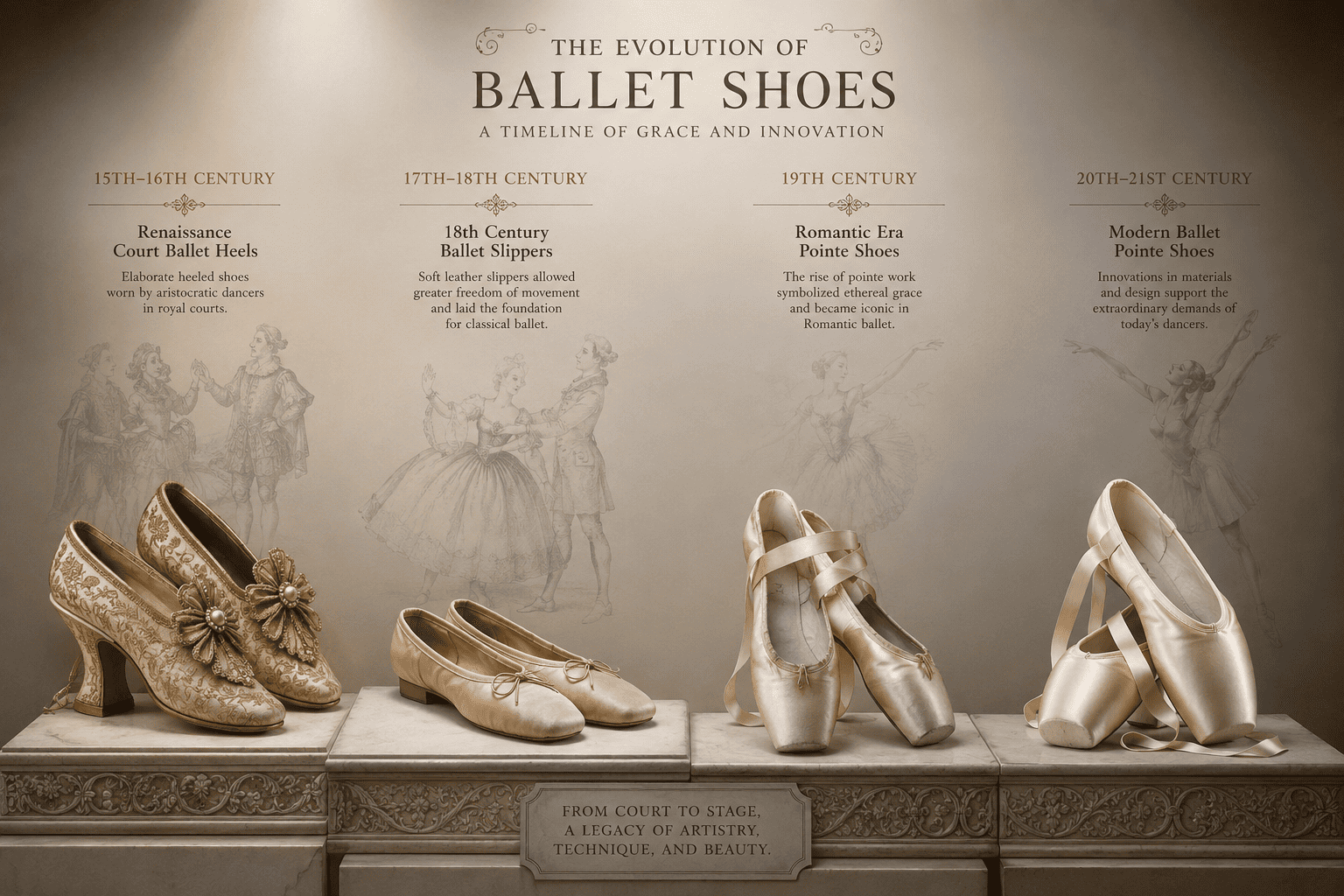
Table of Contents:
- What Is the History of Ballet Shoes?
- The First Ballet Shoes: From Renaissance Courts to Heeled Footwear
- Who Invented Ballet Shoes?
- Marie Camargo and the Rise of Ballet Slippers
- From Ballet Slippers to Pointe Shoes
- 19th Century Pointe Shoes and the Romantic Ballet Era
- Marie Taglioni, La Sylphide, and the Birth of Pointe Work
- Evolution of Pointe Shoes: Materials, Toe Boxes, and Shanks
- Ballet Shoes vs Ballet Slippers vs Pointe Shoes
- History of Ballet Flats: How Stage Footwear Influenced Fashion
- Modern Ballet Shoes: Technology, Inclusivity, and New Materials
- Ballet Shoes as Historical Objects and Cultural Symbols
- Timeline of Ballet Shoes History
- FAQs About the History of Ballet Shoes
- Conclusion: Why the History of Ballet Shoes Still Matters
What Is the History of Ballet Shoes?
The history of ballet shoes begins with the early development of ballet itself. Ballet emerged in the courts of Renaissance Italy before becoming highly refined in France, especially during the reign of King Louis XIV. At that time, ballet was not yet the athletic stage art we know today. It was a courtly form of entertainment connected to ceremony, status, music, and aristocratic display.
Because early ballet was performed in royal and noble settings, dancers wore shoes similar to fashionable court footwear. These early ballet shoes often had heels, decorative details, and rigid soles. They were elegant, but they limited movement. Dancers could present graceful poses and formal steps, but they could not easily perform the fast footwork, high extensions, jumps, or pointe work associated with later ballet technique.
As ballet moved from court entertainment to professional theater, the needs of dancers changed. Shoes had to become lighter, softer, and more responsive. This shift led to the development of ballet slippers, then to early pointe shoes, and eventually to the modern ballet shoes used in studios and on stages around the world.
In simple terms, ballet shoes history follows one major pattern: the more technically demanding ballet became, the more specialized its footwear needed to be.
The First Ballet Shoes: From Renaissance Courts to Heeled Footwear
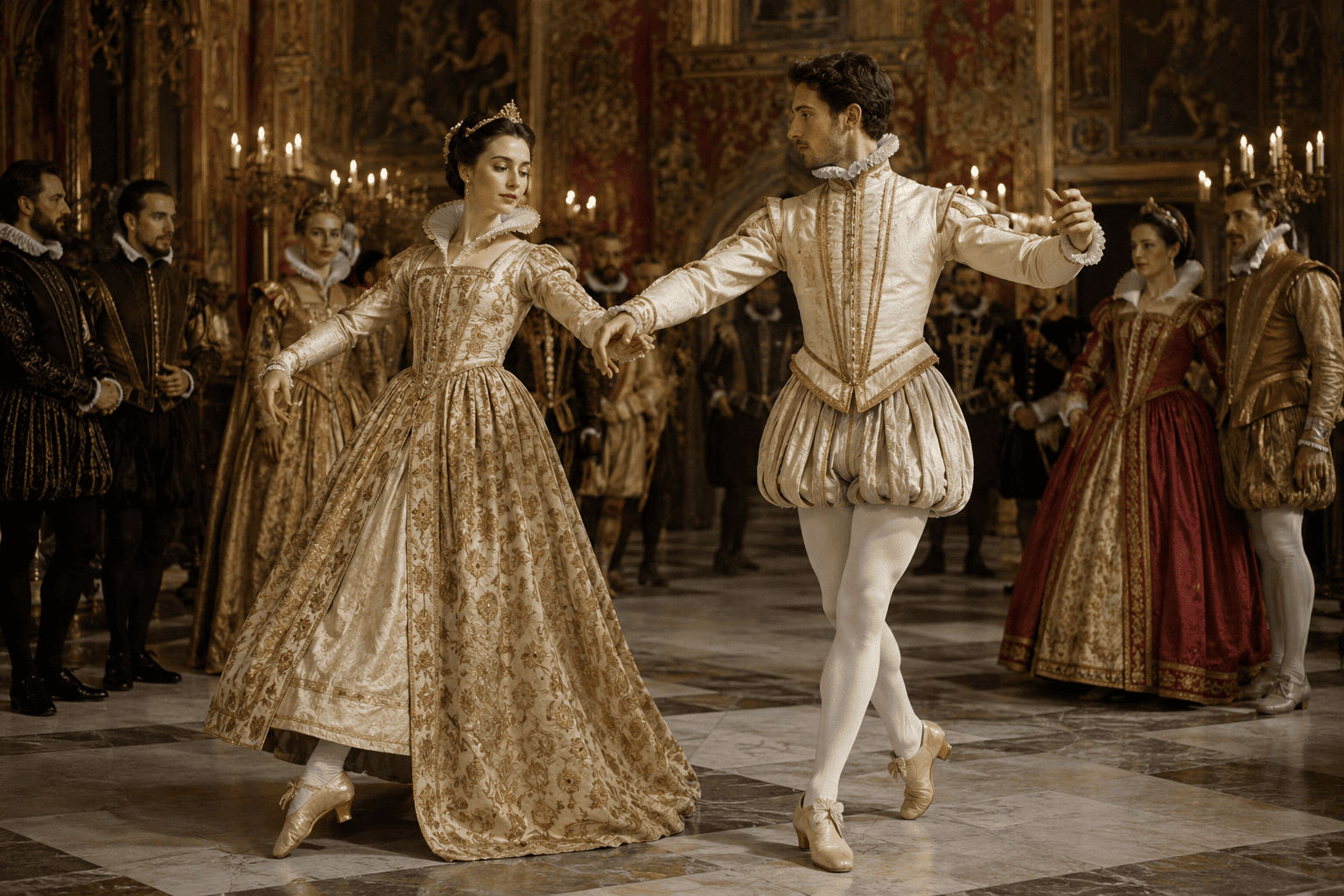
The first ballet shoes were not the soft slippers most people imagine today. In the 15th and 16th centuries, ballet was closely tied to European court culture, so dancers wore formal shoes that reflected the fashion of the period. These shoes were often heeled, structured, and decorative rather than flexible or athletic.
This early ballet heels story is important because it shows how different ballet once was. The purpose of the shoe was not to support pointe work or complex technique. Instead, it helped create a polished visual image suitable for royal performances. Shoes were part of the costume, and costume was part of the spectacle.
In France, King Louis XIV played a major role in elevating ballet as a formal art. He was not only a patron of dance but also a performer. His founding of the Académie Royale de Danse in 1661 helped codify ballet technique and establish it as a disciplined art form. During this period, heeled shoes remained part of the ballet image, especially for male dancers and court performers.
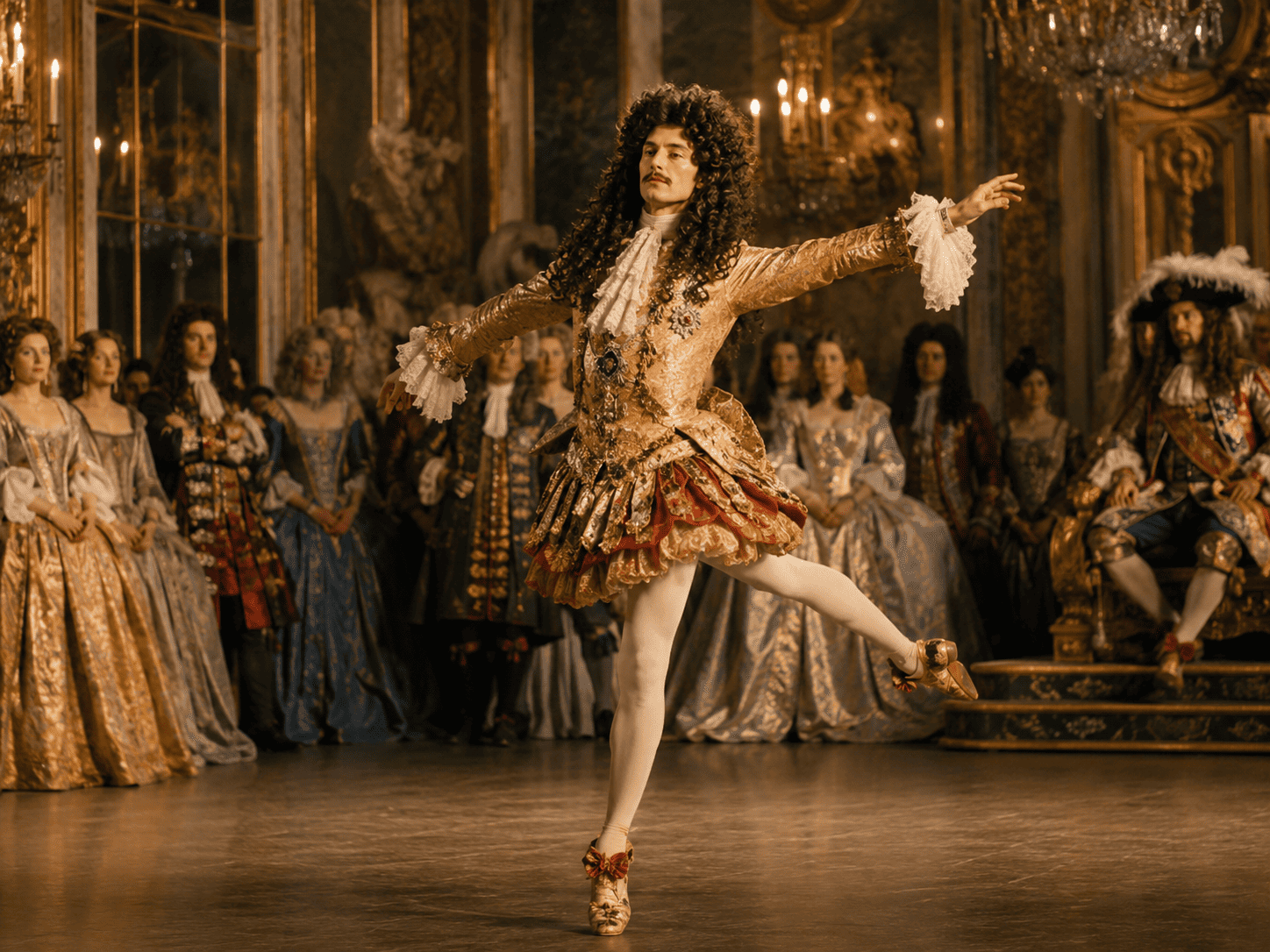
However, heeled footwear created clear limitations. It restricted the articulation of the foot, reduced speed, and made certain movements difficult or impossible. As choreography became more complex, dancers needed footwear that allowed more freedom. This need set the stage for one of the most important changes in the history of ballet slippers: the move away from heels.
Who Invented Ballet Shoes?
There is no single person who invented ballet shoes. The answer to “who invented ballet shoes?” depends on what type of ballet shoe we are talking about. Early ballet footwear developed gradually from court shoes, while ballet slippers and pointe shoes evolved later as technique changed.
If we are talking about the first ballet shoes, they were not invented by one designer in the modern sense. They came from the formal footwear worn in European courts, especially in Italy and France. These shoes became associated with ballet because ballet itself grew out of court performance traditions.
If we are talking about the transition toward soft ballet slippers, Marie Camargo is one of the most important figures. In the 18th century, Camargo helped popularize flatter, more flexible footwear that allowed quicker and more precise footwork. She is often remembered for challenging the restrictive costume and shoe conventions of her time.
If we are talking about the history of pointe shoes, Marie Taglioni is one of the most famous names. Her performance in La Sylphide in 1832 helped define the Romantic image of the ballerina dancing en pointe. However, even Taglioni did not invent the modern pointe shoe. Early pointe shoes were more like reinforced satin slippers, and their construction developed over decades as dancers and shoemakers searched for more support.
So the best answer is this: ballet shoes were not invented all at once. They evolved through the combined influence of court fashion, professional dancers, choreographers, shoemakers, and changing ballet technique.
Marie Camargo and the Rise of Ballet Slippers
The history of ballet slippers took a major step forward in the 18th century. One of the key figures in this transformation was Marie Camargo, a celebrated dancer of the Paris Opera Ballet. Camargo is often associated with shortening her skirts to reveal more of her footwork and choosing flatter shoes that allowed her to move with greater speed and clarity.
This change may sound simple, but it was revolutionary. When dancers abandoned heavy, heeled shoes, they gained more control over the foot. A flat slipper allowed the dancer to point, flex, jump, and articulate movements that were difficult in court footwear. Ballet could become less about aristocratic display and more about technique, musicality, and expressive movement.
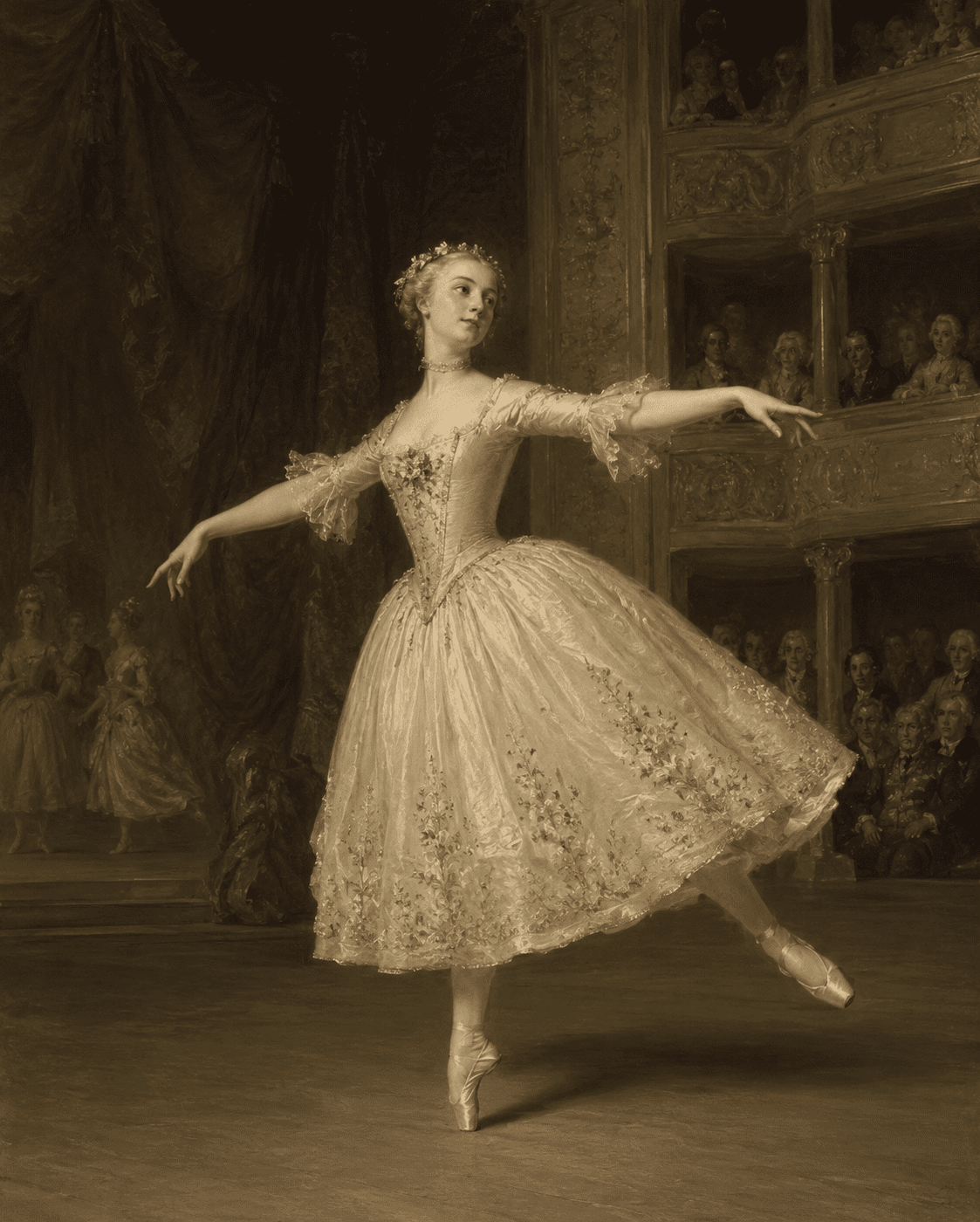
Early ballet slippers were usually made from soft materials such as leather, fabric, or satin. Unlike pointe shoes, they did not have a hard toe box or a supportive shank. Their purpose was flexibility. They helped dancers feel the floor, control their placement, and perform more delicate steps.
This period marked the beginning of the ballet slipper as a true dance tool rather than simply part of a costume. It also created the foundation for the later evolution of pointe shoes, because dancers first needed flexible slippers before they could develop the technique and visual style that made pointe work possible.
From Ballet Slippers to Pointe Shoes
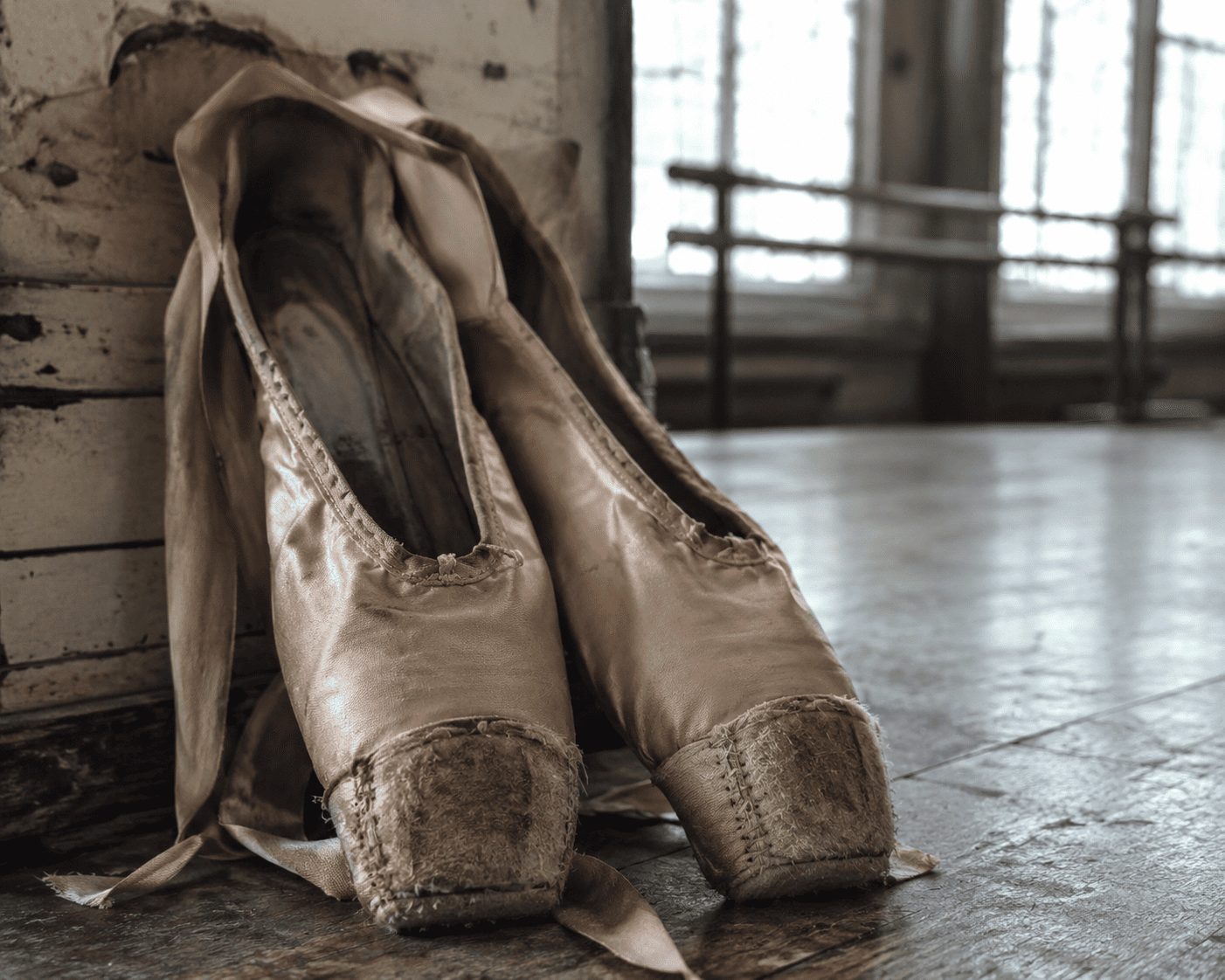
The move from ballet slippers to pointe shoes was not immediate. It happened gradually as ballet aesthetics changed. During the late 18th and early 19th centuries, ballet audiences became fascinated with the illusion of lightness. Choreographers and dancers wanted ballerinas to appear as if they were floating above the stage rather than simply moving across it.
This desire shaped the early history of pointe shoes. Before the modern pointe shoe existed, dancers experimented with rising onto the tips of their toes for brief moments. The goal was not athletic display alone. It was poetic. Pointe work helped create the image of supernatural beings, spirits, sylphs, and other weightless characters that became central to Romantic ballet.
At first, pointe work offered very little support. Early pointe shoes were essentially soft satin slippers with some extra darning or reinforcement near the toes. Dancers relied heavily on the strength of their feet, ankles, legs, and core. Because the shoes were not yet engineered to carry the dancer’s full weight safely for long periods, pointe work was limited compared with modern ballet.
Over time, however, pointe shoe history became a story of increasing structure. Shoemakers added stronger toe boxes, firmer soles, and more durable materials. These changes allowed dancers to balance longer, turn more securely, and perform more complex choreography en pointe.
19th Century Pointe Shoes and the Romantic Ballet Era
The 19th century was one of the most important periods in the history of the pointe shoe. During this era, ballet shifted toward Romantic themes, emphasizing fantasy, emotion, nature, and supernatural characters. Dancers were expected to appear delicate and almost weightless, and pointe work became one of the most powerful ways to create that illusion.
19th century pointe shoes were very different from the pointe shoes worn today. They were softer, less supportive, and much closer to modified ballet slippers. The toes might be reinforced with stitching, fabric, or layers of material, but they did not yet have the strong box and platform associated with modern pointe shoes.
Pointe shoes in the 1800s required exceptional strength because the shoe itself offered limited help. Dancers could not depend on a highly engineered structure to hold them up. Instead, the shoe worked with the dancer’s own technique. This made early pointe work both beautiful and physically demanding.
The Romantic ballet era also changed how audiences understood the ballerina. The pointe shoe helped create an image of grace, fragility, and elevation, but behind that image was intense physical control. This contrast between effort and illusion remains one of the reasons pointe shoes continue to fascinate dancers, historians, and audiences today.
Marie Taglioni, La Sylphide, and the Birth of Pointe Work
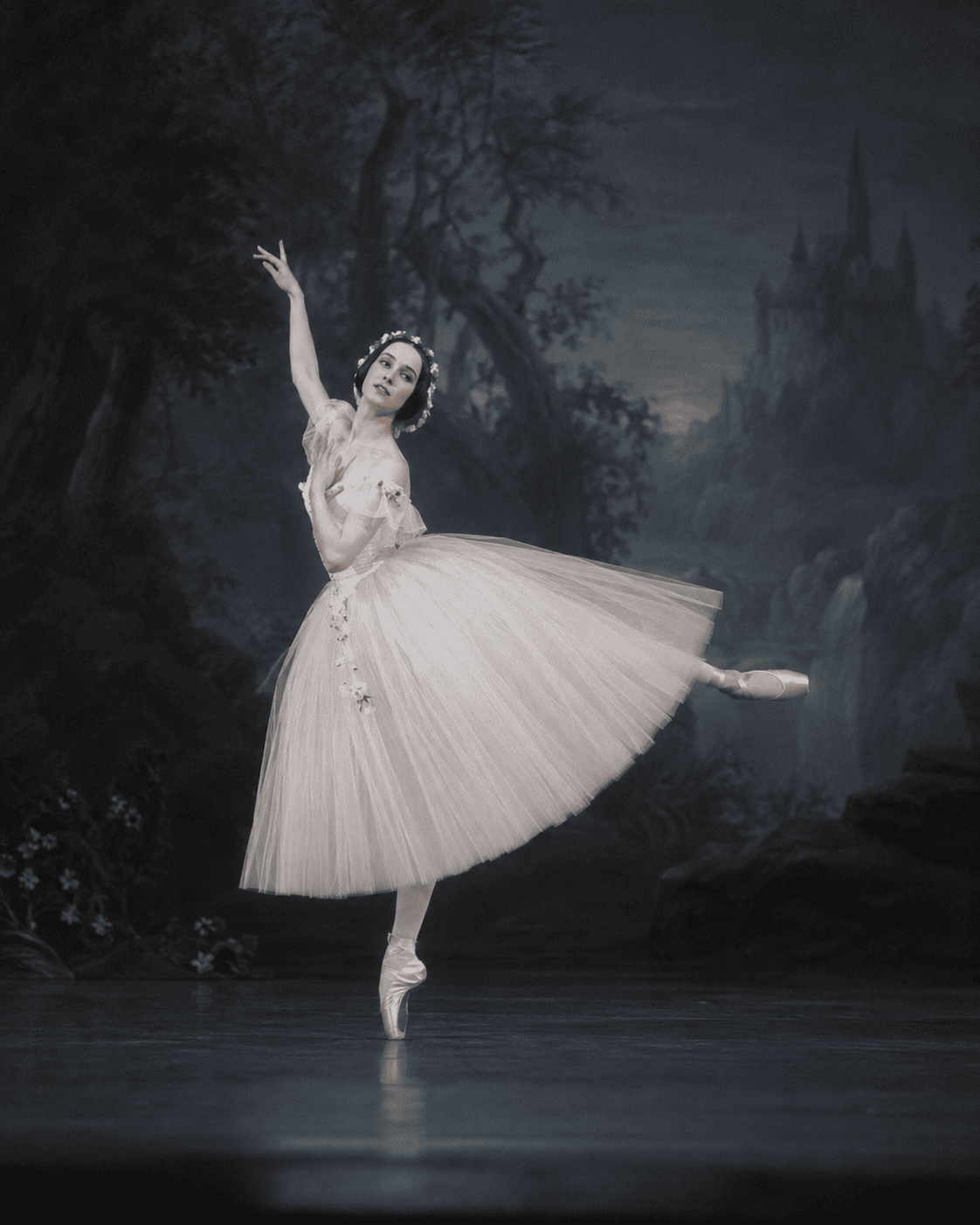
No discussion of the history of pointe shoes is complete without Marie Taglioni. Her performance in La Sylphide in 1832 is one of the landmark moments in ballet pointe shoes history. Dancing the role of a woodland spirit, Taglioni used pointe work to create an ethereal quality that deeply influenced the future of ballet.
Taglioni was not the first dancer ever to rise onto her toes, but she became one of the most iconic figures associated with pointe work. What made her important was the way she used the technique artistically. Pointe was not a trick. It was part of the character, the mood, and the storytelling. Her dancing made audiences believe the ballerina could float between the human and supernatural worlds.
The shoes Taglioni wore were still primitive compared with modern pointe shoes. They did not have today’s highly structured toe box, platform, and shank. Yet they helped establish the visual ideal that shaped pointe shoe history for generations. After Taglioni, pointe work became increasingly central to the identity of the ballerina.
This is why La Sylphide is often remembered as a turning point in the evolution of pointe shoes. It helped transform pointe work from a brief effect into a defining feature of classical ballet.
Evolution of Pointe Shoes: Materials, Toe Boxes, and Shanks
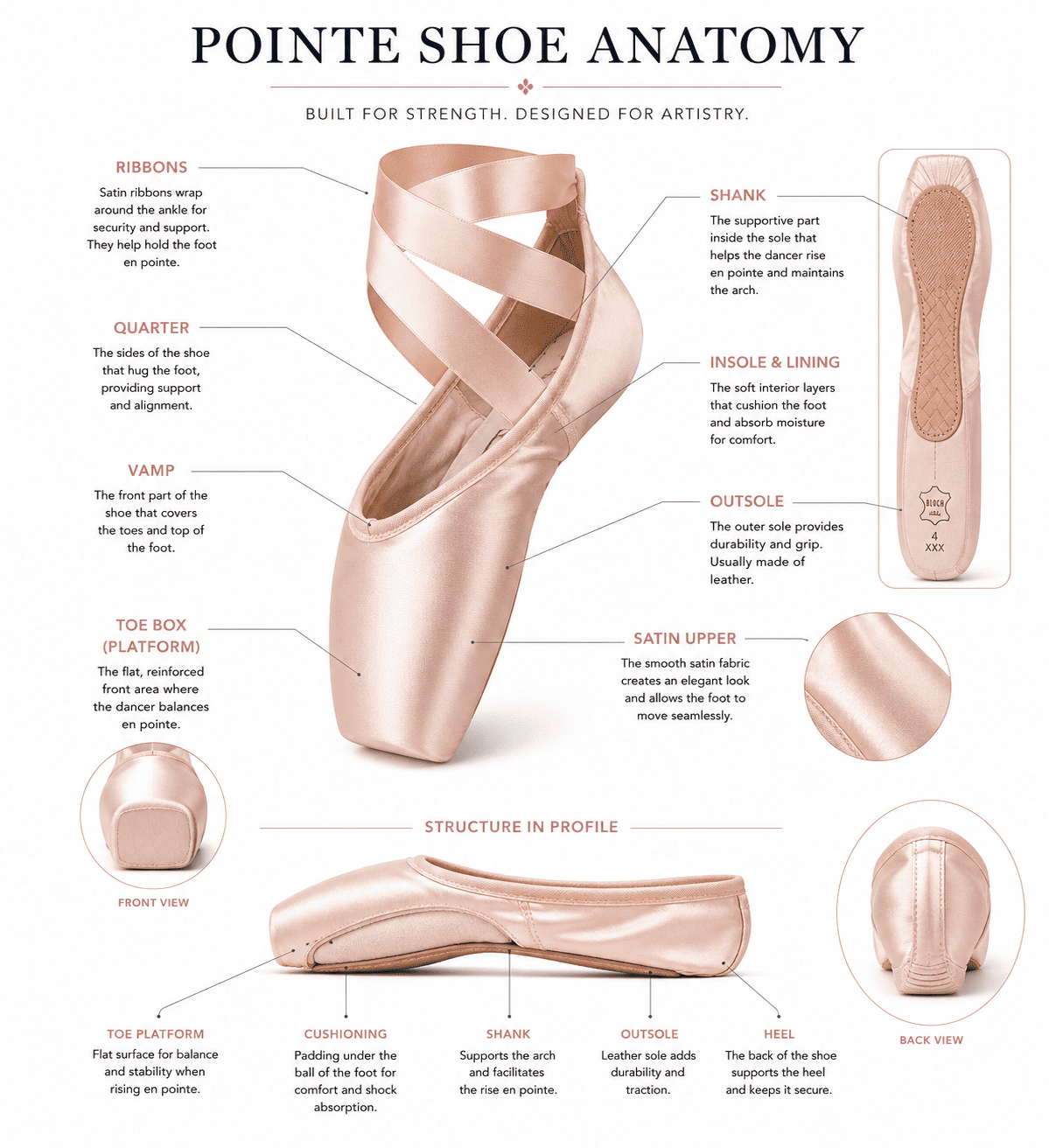
The evolution of pointe shoes is closely connected to changes in materials and construction. As choreography became more difficult, dancers needed shoes that could provide both support and responsiveness. A pointe shoe had to be strong enough to help a dancer balance on the tips of the toes, but flexible enough to allow graceful movement through the foot.
The most important parts of a pointe shoe are the box, the platform, and the shank. The box surrounds and supports the toes. The platform is the flat area at the front of the shoe that allows the dancer to balance en pointe. The shank is the supportive layer inside the sole that helps control the arch of the foot.
Early pointe shoes used layers of fabric, paper, glue, stitching, and satin. Over time, shoemakers developed stronger paste-reinforced boxes and more reliable soles. These improvements allowed dancers to spend longer periods en pointe and perform more advanced steps, including turns, balances, and traveling movements.
By the late 19th and early 20th centuries, pointe shoes had become more structured. Italian and Russian ballet traditions placed high technical demands on dancers, encouraging further development in shoe support and durability. Later, brands such as Capezio, Freed of London, Bloch, Grishko, and Gaynor Minden contributed to the modernization of ballet footwear through craftsmanship, customization, and new materials.
Today, pointe shoes may still be handmade using traditional methods, but modern options can also include synthetic materials, shock-absorbing elements, and longer-lasting construction. This balance between tradition and innovation continues to define pointe shoes history.
Ballet Shoes vs Ballet Slippers vs Pointe Shoes
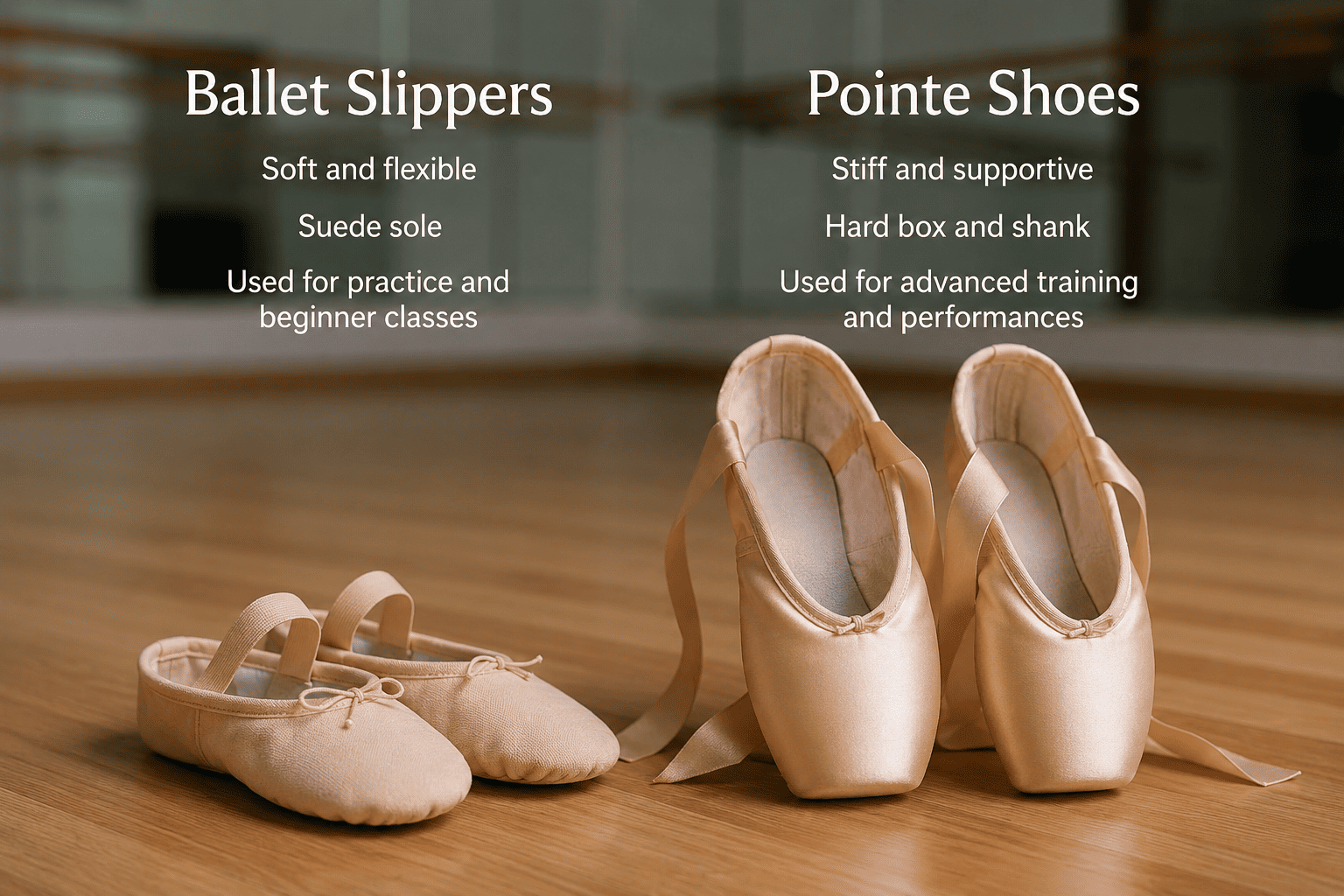
Many people use the terms ballet shoes, ballet slippers, and pointe shoes interchangeably, but they are not exactly the same. Understanding the difference helps clarify the history of ballet shoes and why each type developed for a different purpose.
Ballet shoes is the broadest term. It can refer to the footwear used for ballet in general, including soft practice shoes and, in some contexts, pointe shoes. When people search for ballet shoes history, they are often looking for the full evolution of ballet footwear from court shoes to modern dance shoes.
Ballet slippers are soft, flexible shoes used for technique classes, rehearsals, and some performances. They are usually made from canvas, leather, or satin. Ballet slippers allow dancers to feel the floor and articulate the foot. They are used by beginners and professionals alike.
Pointe shoes are specialized shoes designed for advanced dancers trained to dance on the tips of their toes. They include a reinforced toe box, a platform, and a supportive shank. Pointe shoes are not beginner shoes, and dancers usually begin pointe work only after developing enough strength, alignment, and technical control.
The difference matters because each shoe reflects a different stage in ballet’s development. Ballet slippers represent flexibility and foundational technique. Pointe shoes represent elevation, illusion, and advanced classical training. Together, they show how ballet footwear evolved alongside the art form itself.
History of Ballet Flats: How Stage Footwear Influenced Fashion
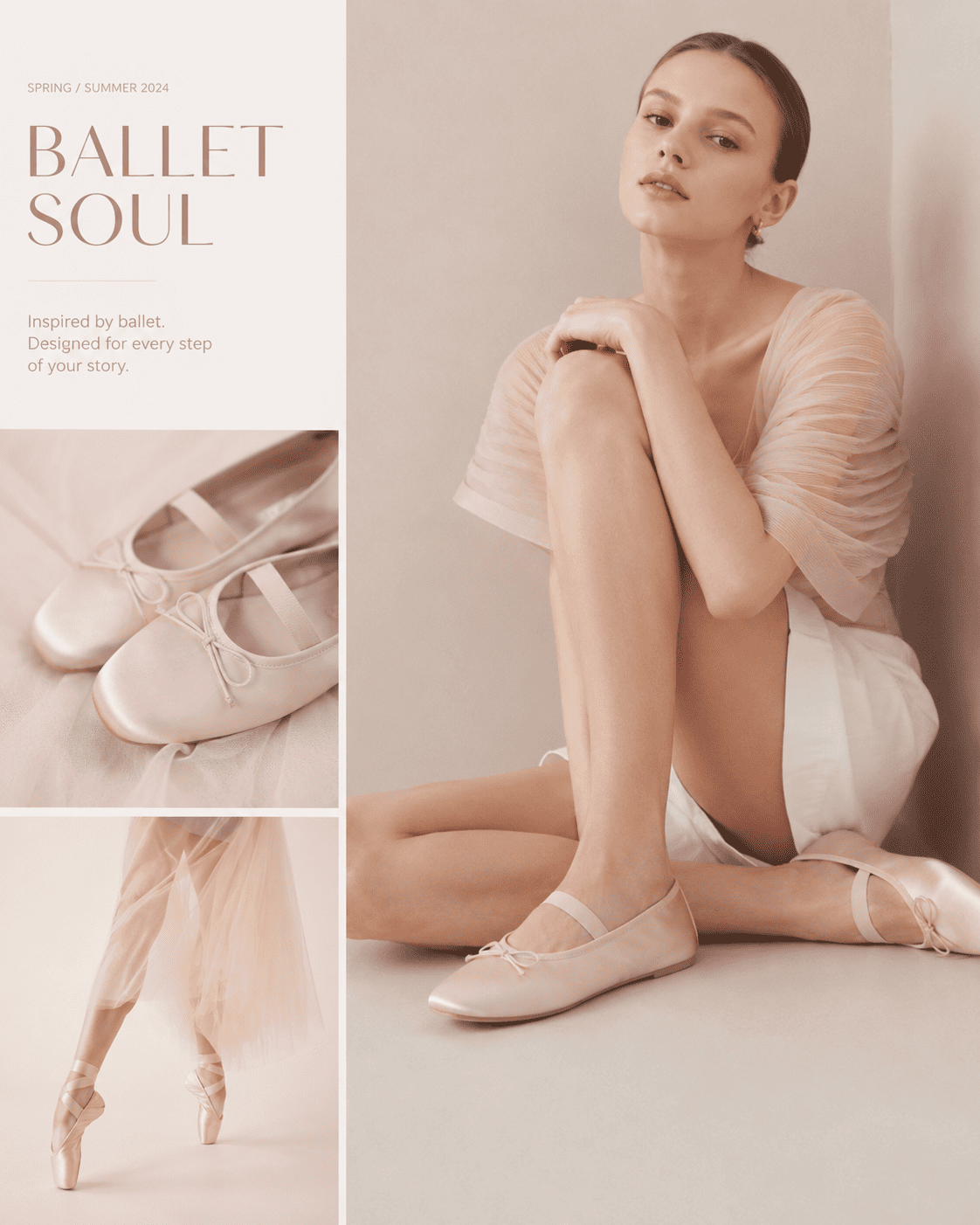
The history of ballet flats is connected to ballet, but ballet flats are not the same as professional ballet shoes. Ballet flats are everyday fashion shoes inspired by the soft, rounded look of ballet slippers. They became popular because they borrowed the elegance and simplicity of dance footwear while adapting it for streetwear.
Ballet flats history became especially visible in the 20th century, when fashion designers and film icons helped turn the ballet-inspired flat shoe into a wardrobe staple. Unlike pointe shoes or true ballet slippers, ballet flats are made for walking, not dancing. They usually have a firmer outdoor sole and do not provide the same floor contact or flexibility needed in a ballet studio.
Still, the connection between ballet flats and ballet shoes is important. Both share a visual language of simplicity, delicacy, and elegance. The rounded toe, low profile, and slipper-like silhouette all reflect the influence of dance. This is why people searching for “history of ballet flats” often arrive at the broader story of ballet footwear.
In recent years, ballet flats have returned to fashion through trends such as balletcore, which draws inspiration from ballet slippers, wrap sweaters, ribbons, soft colors, and studio clothing. This shows how ballet shoes continue to influence culture beyond the stage.
Modern Ballet Shoes: Technology, Inclusivity, and New Materials
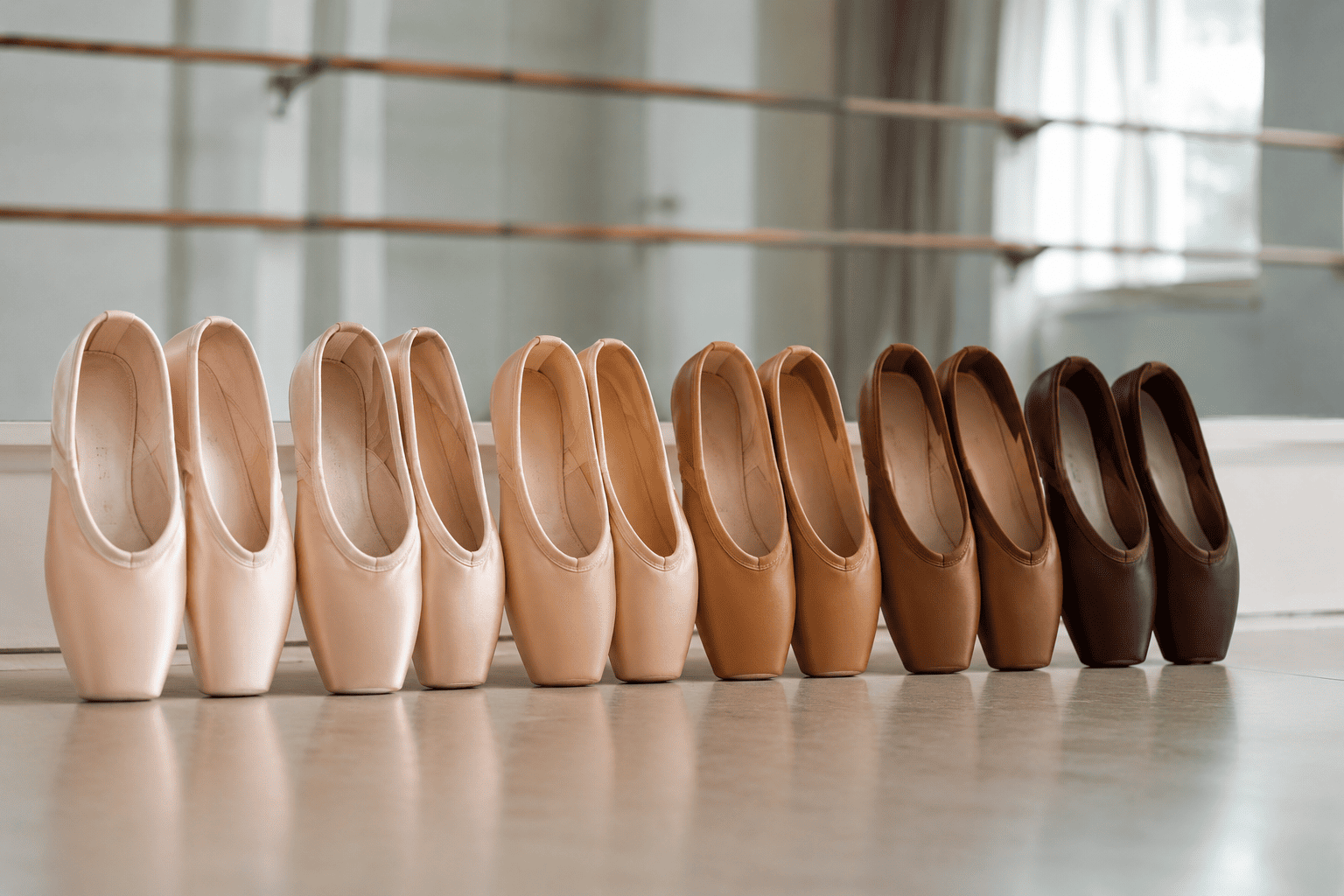
Modern ballet shoes combine centuries of tradition with new expectations around comfort, durability, performance, and representation. While many pointe shoes are still made using traditional craftsmanship, today’s dancers have more options than ever before.
One major change is the use of advanced materials. Some modern pointe shoes incorporate synthetic components designed to last longer than traditional paste-based shoes. Others focus on shock absorption, consistency, or reduced break-in time. These developments respond to the physical demands placed on dancers, especially professionals who rehearse and perform for many hours each day.
Another important change is inclusivity. For many years, ballet shoes and pointe shoes were commonly produced in shades associated with pale pink or “European pink.” This created problems for dancers with darker skin tones, who often had to pancake or dye their shoes to match their legs. Today, more brands offer ballet shoes and pointe shoes in a wider range of skin-tone shades, helping dancers create cleaner lines on stage without treating one skin color as the default.
Technology has also influenced fitting. Dancers now have access to more detailed fitting systems, custom options, and specialized models for different foot shapes. The goal is not simply to make the shoe beautiful, but to help the dancer perform safely and confidently.
The modern evolution of pointe shoes shows that ballet is not frozen in the past. Even an art form known for tradition continues to adapt to the needs of contemporary dancers.
Ballet Shoes as Historical Objects and Cultural Symbols
Ballet shoes are more than performance tools. They are also historical objects that preserve stories about dancers, theaters, training methods, fashion, and cultural ideals. A worn slipper or an old pointe shoe can reveal how a dancer moved, where pressure was placed, and what materials were available at a specific time.
In museum collections or object-history studies, a ballet shoe cover, damaged slipper, or preserved pointe shoe may seem like a strange object at first. Yet these items can tell a rich history. They show the physical labor behind ballet’s graceful image and remind us that every elegant performance depends on discipline, technique, and carefully designed footwear.
Ballet shoes also carry strong symbolic meaning in film, photography, literature, and fashion. They often represent beauty, sacrifice, perfection, ambition, and transformation. Movies such as The Red Shoes and Black Swan use ballet footwear as a visual symbol of obsession, artistry, and the cost of performance.
This symbolic power helps explain why the history of ballet shoes continues to interest not only dancers, but also fashion lovers, historians, collectors, and general readers.
Timeline of Ballet Shoes History
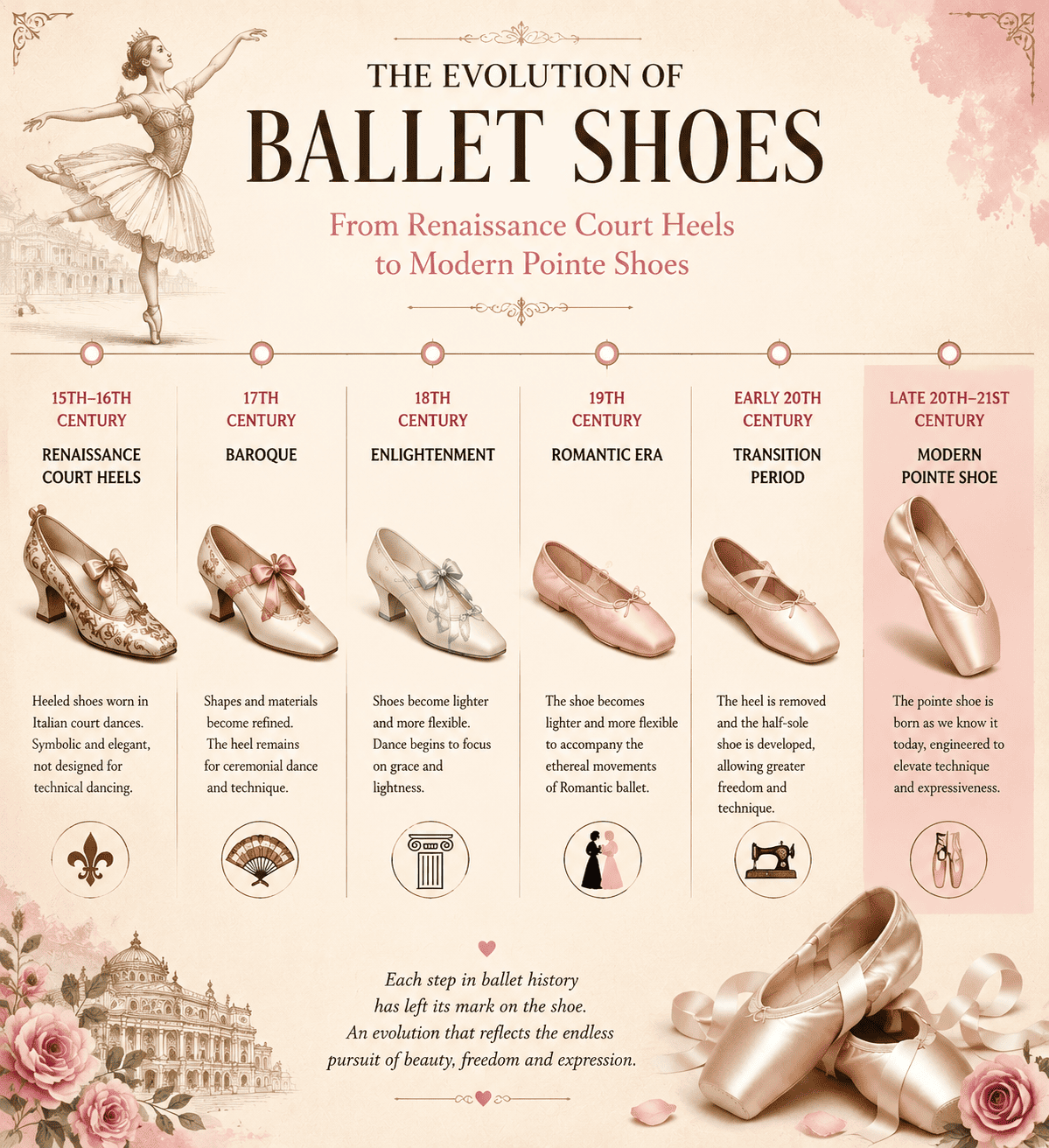
The history of ballet shoes can be understood more clearly through a simple timeline:
- 15th–16th centuries: Ballet begins in Renaissance court culture, where dancers wear formal heeled shoes as part of aristocratic performance.
- 17th century: King Louis XIV helps formalize ballet in France, and court-style footwear remains part of the ballet image.
- 18th century: Dancers begin moving away from heels toward lighter, flatter shoes that allow better footwork.
- 1730s: Marie Camargo becomes associated with shorter skirts and more flexible slippers that reveal and support faster footwork.
- Late 18th century: Ballet technique becomes more expressive and theatrical, increasing the need for flexible dance footwear.
- Early 1800s: Dancers experiment with rising onto the toes for brief effects, laying the foundation for pointe work.
- 1832: Marie Taglioni’s performance in La Sylphide helps define the Romantic image of the ballerina en pointe.
- Late 1800s: Pointe shoes become stronger, with more reinforced toes and improved support.
- Early 1900s: Shoemakers and brands such as Capezio contribute to the development of more specialized dance footwear.
- 20th century: Ballet slippers and pointe shoes become more standardized for training and professional performance.
- Late 20th–21st century: New materials, custom fitting, synthetic components, and inclusive skin-tone shades reshape modern ballet footwear.
More articles about Dance Facts
Explore more guides and related content about Dance Facts.
See more about Dance FactsFAQs About the History of Ballet Shoes
Who invented ballet shoes?
No single person invented ballet shoes. They evolved gradually from European court footwear. Marie Camargo helped popularize flatter ballet slippers in the 18th century, while Marie Taglioni became closely associated with the rise of pointe work in the 19th century.
What were the first ballet shoes?
The first ballet shoes were formal court shoes, often with heels. They were decorative and elegant, but they were not designed for the technical movement associated with modern ballet.
When were pointe shoes invented?
Pointe shoes were not invented in a single year. Early pointe work developed in the early 19th century, and Marie Taglioni’s 1832 performance in La Sylphide became a defining moment in the history of pointe shoes.
What is the difference between ballet slippers and pointe shoes?
Ballet slippers are soft, flexible shoes used for technique classes and general ballet training. Pointe shoes are reinforced shoes used by advanced dancers to dance on the tips of their toes.
What is the history of ballet flats?
The history of ballet flats comes from fashion’s adaptation of ballet slippers. Ballet flats are everyday shoes inspired by dance footwear, but they are not designed for professional ballet technique.
Were pointe shoes used in the 1800s?
Yes. Pointe shoes in the 1800s existed, but they were much softer and less supportive than modern pointe shoes. Dancers relied more on their own strength because the shoes had limited reinforcement.
Why do old ballet shoes matter as historical objects?
Old ballet shoes, slippers, covers, and pointe shoes can reveal how dancers trained, performed, and adapted to the footwear of their time. Even a worn or unusual ballet shoe can help tell the broader history of ballet as both an art form and a physical discipline.
Conclusion: Why the History of Ballet Shoes Still Matters
The history of ballet shoes is not just about footwear. It is about the evolution of ballet itself. From heeled court shoes to flexible ballet slippers, from early 19th century pointe shoes to modern inclusive designs, every stage of ballet shoe history reflects a change in how dancers moved, performed, and expressed ideas on stage.
Ballet shoes helped transform dance from a courtly display into a highly technical and expressive art form. They allowed dancers to move with greater freedom, create the illusion of weightlessness, and push the limits of what the human body can communicate through movement.
Today, ballet shoes continue to evolve while preserving their connection to centuries of tradition. Whether seen in a studio, on a stage, in a museum, or in fashion, they remain one of ballet’s most enduring symbols of grace, discipline, and transformation.
Discover more about the world of dance: