Elizabethan Era Dance
Elizabethan era dance was an important part of social life, court culture, music, theatre, festivals, and recreation in England between 1558 and 1603. Dancing in the Elizabethan era was not only entertainment. It also showed education, social class, manners, courtly skill, and cultural identity.
During the reign of Queen Elizabeth I, dance became closely connected with music, fashion, theatre, and public celebration. Upper class Elizabethan dances were often graceful, formal, and taught by dancing masters, while lower class dances were livelier, more communal, and commonly performed at fairs, festivals, weddings, and village gatherings.
This guide explains what Elizabethan era dance was, how Elizabethan dancing worked, which Elizabethan dances were popular, how music shaped the dances, what role Queen Elizabeth I played, and why dance was such an important part of Elizabethan England.
Table of Contents:
- What Was Elizabethan Era Dance?
- Dancing in the Elizabethan Era: Social Role and Meaning
- Elizabethan Dance and the Influence of Queen Elizabeth I
- Upper Class Elizabethan Dances
- Lower Class Elizabethan Dances
- Elizabethan Country Dances and Festivals
- Elizabethan Era Music and Dance
- Instruments Used for Elizabethan Dancing
- Dance in Elizabethan Theatre and Shakespeare’s Plays
- Dancing Masters and Dance Education
- List of Popular Elizabethan Dances
- Interesting Facts About Elizabethan Dance
- The Legacy of Elizabethan Dance
- FAQs About Elizabethan Era Dance
- Conclusion: Why Elizabethan Era Dance Still Matters
What Was Elizabethan Era Dance?
Elizabethan era dance refers to the dances performed in England during the reign of Queen Elizabeth I, from 1558 to 1603. These dances were part of a wider cultural movement in which music, theatre, poetry, court entertainment, and public festivals flourished. Elizabethan dance included both refined court dances and energetic popular dances enjoyed by ordinary people.
For the upper classes, dancing was a sign of good breeding. Noblemen and noblewomen were expected to know how to move gracefully, follow musical rhythm, and perform formal dances at court. A person’s ability to dance could reflect their education, manners, confidence, and social status.
For the lower classes, dancing was more closely connected with recreation, seasonal celebrations, fairs, weddings, and community gatherings. These dances were usually less formal than court dances, but they were just as important in daily life. They allowed people to celebrate, socialize, and participate in shared traditions.
In simple terms, Elizabethan era dance was both an art form and a social activity. It connected music, movement, class, entertainment, and public life in Elizabethan England.
Dancing in the Elizabethan era had a strong social meaning. It was not just a pastime. It helped people express status, celebrate important events, practice courtly behavior, and participate in community life. Whether performed in a royal hall or a village fair, dance reflected the values and customs of the time.
Among the nobility, Elizabethan dancing was part of social education. Young people from wealthy families learned dance along with music, languages, manners, and conversation. Knowing how to dance well helped them participate in court life, where elegance and self-control were highly valued.
Dance was also connected to courtship. Many formal dances allowed men and women to interact in public under accepted social rules. The movements could be graceful, playful, or flirtatious, but they still followed patterns that reflected order and etiquette.
For common people, dance served a different but equally important purpose. It brought communities together during holidays, festivals, and local celebrations. Lower class dances were often more energetic and informal, giving people a chance to relax from work, enjoy music, and strengthen social bonds.
Elizabethan Dance and the Influence of Queen Elizabeth I
Queen Elizabeth I had a major influence on Elizabethan dance because court culture often followed the queen’s tastes and preferences. Elizabeth was known for enjoying music, pageantry, and refined entertainment. Her court became a center of artistic display, where dancing was part of royal celebrations, diplomatic events, masques, and formal gatherings.
Because the queen valued elegance and courtly skill, dancing became an important accomplishment for the elite. Courtiers were expected to present themselves with grace, and dance was one of the clearest ways to display discipline, rhythm, and refinement. A person who danced well could make a strong impression at court.
Elizabethan dance also reflected the political culture of the period. Court entertainments were often carefully staged to honor the queen, celebrate alliances, or display loyalty. Music, costume, movement, and ceremony worked together to create a powerful image of order and magnificence.
The influence of Queen Elizabeth I helped make dance more than simple amusement. At court, it became a visible expression of power, taste, education, and social identity.
Upper Class Elizabethan Dances
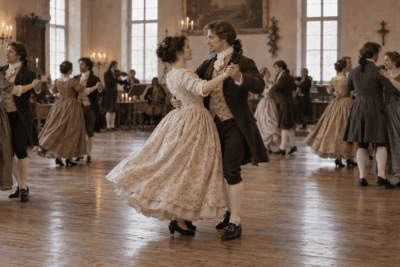
Upper class Elizabethan dances were formal, elegant, and often influenced by European court traditions. These dances were usually performed at royal events, noble households, banquets, masques, and court celebrations. They required practice, musical awareness, posture, and knowledge of social etiquette.
The upper classes preferred dances that showed grace and control. Many of these dances involved measured steps, careful turns, bows, and partner interaction. Some were slow and stately, while others were lively and athletic.
Pavane
The pavane was a slow and dignified dance often associated with courtly elegance. It was usually performed in a processional style, allowing dancers to display fine clothing, posture, and controlled movement. Because of its stately character, the pavane was suitable for formal occasions.
Galliard
The galliard was one of the most energetic upper class Elizabethan dances. It involved lively steps, leaps, and athletic movement. The galliard was often paired with the pavane, creating a contrast between slow elegance and spirited display. It was especially popular among skilled dancers who wanted to show strength, rhythm, and agility.
Almain
The almain, also spelled allemande, was a dance with Germanic influence. It was generally moderate in tempo and included orderly partner movement. In Elizabethan court settings, it offered a balance between formality and accessibility.
Volta
The volta was a more dramatic and physically expressive dance. It involved turning movements and close partner interaction, making it both exciting and controversial for some observers. Its energetic style made it memorable among court dances of the period.
Courante
The courante was a graceful dance with flowing movement. It became popular in European court culture and reflected the refined taste of the upper classes. Like other formal dances, it required control, timing, and awareness of musical structure.
Lower Class Elizabethan Dances
Lower class Elizabethan dances were usually more energetic, communal, and informal than upper class court dances. They were performed at fairs, festivals, village gatherings, weddings, seasonal celebrations, and public events. These dances were part of everyday recreation and helped create a strong sense of community.
Unlike formal court dances, lower class dances did not always require professional instruction. People often learned them by watching others, joining in, and repeating familiar patterns. The emphasis was on enjoyment, rhythm, participation, and celebration.
Jig
The jig was a lively dance associated with quick music and energetic movement. It was popular in festive settings and often linked with humor, entertainment, and public performance. Jigs were accessible and could be enjoyed by many people, making them an important part of Elizabethan recreation.
Morris Dance
Morris dance was a traditional folk dance performed by groups, often with bells, sticks, handkerchiefs, or symbolic costumes. It was commonly connected with seasonal festivals and village celebrations. Morris dancing reflected the folk customs and communal spirit of Elizabethan England.
Country Dances
Elizabethan country dances were social dances performed by groups of people in lines, circles, or other formations. They were less formal than court dances and often encouraged participation from the wider community. Country dances helped connect music, movement, and local tradition.
Round Dances
Round dances involved dancers moving in circular formations. These dances were simple, communal, and well suited to festivals or outdoor gatherings. Their structure made them easy for groups to join, even when not everyone had formal dance training.
Elizabethan Country Dances and Festivals
Elizabethan country dances were closely connected with festivals, holidays, fairs, weddings, harvest celebrations, and other public gatherings. In this sense, dancing was part of Elizabethan era recreation and sports, because it gave people a physical, social, and entertaining activity outside of work.
Festivals were especially important occasions for dance. Music, food, games, theatre, and dancing often appeared together in public celebrations. These events allowed people from different social groups to participate in shared entertainment, although class differences still shaped which dances were considered refined or rustic.
Country dances often used repeated patterns, group formations, and lively music. They were practical for community settings because many people could participate at once. The dances also helped preserve local customs, since steps and tunes were passed from one generation to another.
For modern readers, Elizabethan country dances are important because they show that dance was not limited to royal courts. Dancing in the Elizabethan era was a widespread cultural activity that belonged to both elite and popular life.
Elizabethan Era Music and Dance
Elizabethan era music and dance were deeply connected. Dance depended on music for rhythm, mood, structure, and energy. Musicians provided the tempo that guided dancers, while dancers brought the music to life through movement.
Music in Elizabethan England included courtly instrumental pieces, folk tunes, songs, madrigals, ballads, and theatrical music. Some music was written for refined indoor performance, while other tunes were played at public celebrations and outdoor gatherings.
Different types of dances required different musical styles. A pavane needed slow, stately music that matched its dignified steps. A galliard required a livelier rhythm for leaps and energetic movement. A jig needed quick, bright music that encouraged festive dancing.
This connection between Elizabethan era music and dance is one reason the period is remembered as a rich artistic age. Elizabethan England is most famous for theatre and literature, especially Shakespeare, but music and dance were also essential parts of its cultural life.
Instruments Used for Elizabethan Dancing
Elizabethan dancing was accompanied by a variety of instruments. The choice of instrument depended on the setting. Court dances often used refined instruments suitable for indoor performance, while village dances and festivals used louder or more portable instruments that could support outdoor gatherings.
- Lute: A popular string instrument used in courtly and domestic music. Its delicate sound suited refined performances.
- Viol: A bowed string instrument often used in consort music. It provided a smooth and elegant tone.
- Recorder: A wind instrument used in both formal and informal music. It was common in ensemble performance.
- Crumhorn: A reed instrument with a distinctive sound, often associated with Renaissance music.
- Pipe and tabor: A combination commonly used for lively dance music, especially in outdoor or folk settings.
- Fiddle: A practical instrument for popular dance music, especially in community celebrations.
These instruments helped shape the character of Elizabethan dancing. Formal dances required controlled rhythm and elegance, while popular dances needed strong, lively music that encouraged group participation.
Dance in Elizabethan Theatre and Shakespeare’s Plays
Dance also appeared in Elizabethan theatre. Plays of the period often included music, songs, masques, jigs, or dance-like movement. Theatre was one of the most important art forms of Elizabethan England, and dance helped create atmosphere, celebration, comedy, romance, or spectacle on stage.
In Shakespeare’s plays, dance is often connected with festivity, courtship, disguise, or magical scenes. A dance could mark a wedding celebration, reveal social harmony, or create a playful contrast between characters. Even when dance was not the main focus, music and movement helped shape the theatrical experience.
Dance in plays also reflected real Elizabethan society. Audiences understood the social meanings of formal dances, rustic dances, and festive movement. A courtly dance could suggest refinement, while a lively jig or popular dance could suggest humor, celebration, or common life.
This connection between dance and theatre makes Elizabethan dance especially important. It was not only something people did at court or festivals; it was also part of the dramatic language of the age.
Dancing Masters and Dance Education
Dancing masters played an important role in Elizabethan dancing, especially for the upper classes. These teachers trained noble students in posture, rhythm, steps, etiquette, and courtly behavior. Learning to dance was part of becoming socially polished.
For young men and women of high status, dance education was not optional entertainment. It was part of preparation for public life. At court, a person might be judged by how well they moved, bowed, followed music, and interacted with a partner.
Dancing masters also helped preserve and transmit formal dances. They taught steps, corrected posture, and introduced new styles from Europe. Because Elizabethan court culture was influenced by international trends, dancing masters helped connect English dancers with broader Renaissance dance traditions.
This formal training separated upper class Elizabethan dances from many popular dances. While common people often learned by participation, the elite learned through instruction, repetition, and careful attention to manners.
List of Popular Elizabethan Dances
Many Elizabethan dances reflected the social class, setting, and musical style of the occasion. Some were formal and courtly, while others were lively and popular. The following list summarizes some of the most important dances associated with the Elizabethan era.
- Pavane: A slow, graceful court dance used for formal occasions and elegant display.
- Galliard: A lively and athletic dance known for leaps, quick steps, and energetic movement.
- Almain: A moderate partner dance influenced by European court traditions.
- Volta: A turning dance known for its dramatic partner movement and physical energy.
- Courante: A flowing court dance associated with grace and refinement.
- Jig: A fast and cheerful dance often connected with popular entertainment and festive gatherings.
- Morris dance: A traditional folk dance involving group movement, bells, sticks, handkerchiefs, or symbolic costume elements.
- Country dance: A social group dance performed in communal settings, often using repeated patterns and lively music.
- Round dance: A simple group dance performed in a circle, suitable for community celebrations.
This variety shows why the phrase Elizabethan dances can refer to many different forms. Some belonged mainly to the court, while others belonged to fairs, villages, festivals, and public recreation.
Interesting Facts About Elizabethan Dance
Elizabethan era dancing reveals many interesting facts about life, culture, and social expectations in Renaissance England.
- Dance showed social status: At court, dancing well could signal education, elegance, and noble manners.
- Queen Elizabeth I influenced court entertainment: Her love of music, ceremony, and performance helped make dance important in elite culture.
- Upper and lower classes danced differently: Court dances were usually more formal, while popular dances were often livelier and more communal.
- Music and dance were inseparable: Elizabethan dances depended on rhythm, melody, instruments, and musical structure.
- Dance appeared in theatre: Elizabethan plays often used music and movement to support comedy, romance, ceremony, or celebration.
- Festivals encouraged public dancing: Fairs, holidays, weddings, and seasonal events gave ordinary people many chances to dance.
- Dancing masters taught etiquette: For the elite, dance training was connected to manners, posture, confidence, and social success.
These facts show that Elizabethan dance was not a minor detail of the period. It was part of how people celebrated, performed identity, learned manners, and experienced music.
The Legacy of Elizabethan Dance
The legacy of Elizabethan dance continues through historical performance, Renaissance fairs, theatre productions, early music groups, and dance history studies. Many modern performers recreate Elizabethan dances to help audiences understand how people moved, celebrated, and expressed social identity during the Renaissance.
Elizabethan dance also helps us understand the broader culture of the period. The dances reveal how strongly music, class, gender roles, courtship, public entertainment, and royal ceremony were connected. A single dance could communicate elegance, joy, flirtation, discipline, or social belonging.
Today, interest in Elizabethan era music and dance allows people to experience history through movement rather than only through books. Recreated dances give modern audiences a physical connection to the past and help preserve the artistic traditions of Elizabethan England.
More articles about Dance History
Explore more guides and related content about Dance History.
See more about Dance HistoryFAQs About Elizabethan Era Dance
What was Elizabethan era dance?
Elizabethan era dance was the dance culture of England during the reign of Queen Elizabeth I, from 1558 to 1603. It included formal court dances, popular folk dances, country dances, festival dances, and theatrical movement.
What dances were popular in the Elizabethan era?
Popular Elizabethan dances included the pavane, galliard, almain, volta, courante, jig, morris dance, country dance, and round dance. Some were associated with the upper classes, while others were common in public celebrations and village life.
What was the role of dance in Elizabethan society?
Dance had several roles in Elizabethan society. It was used for entertainment, courtship, social education, court ceremony, festivals, recreation, and community celebration. It also helped show class, manners, and cultural identity.
Did Queen Elizabeth I dance?
Queen Elizabeth I enjoyed music, court entertainment, and dancing. Her court helped make dance an important part of elite culture, ceremony, and social display during the Elizabethan era.
What is the difference between upper class and lower class Elizabethan dances?
Upper class Elizabethan dances were usually formal, graceful, and taught by dancing masters. Lower class dances were often livelier, more communal, and performed at fairs, festivals, weddings, and village gatherings.
What music was used for Elizabethan dancing?
Elizabethan dancing used court music, folk tunes, ballads, instrumental pieces, and theatrical music. Common instruments included the lute, viol, recorder, crumhorn, pipe and tabor, and fiddle.
How was dance connected to Elizabethan theatre?
Dance was connected to Elizabethan theatre through songs, jigs, masques, festive scenes, courtship scenes, and dramatic celebrations. Shakespeare’s plays and other theatrical works often used music and movement to enrich performance.
What art form is Elizabethan England most famous for?
Elizabethan England is most famous for theatre and literature, especially the works of William Shakespeare. However, music and dance were also central to Elizabethan culture and played an important role in court life, festivals, and performance.
Conclusion: Why Elizabethan Era Dance Still Matters
Elizabethan era dance matters because it reveals how people in Renaissance England celebrated, communicated, learned manners, and expressed social identity. Dancing in the Elizabethan era connected music, theatre, court culture, festivals, recreation, and daily life.
Upper class dances such as the pavane, galliard, almain, volta, and courante showed refinement and courtly skill. Lower class dances such as the jig, morris dance, country dance, and round dance reflected community, energy, and popular celebration.
By studying Elizabethan dance, we gain a clearer picture of Elizabethan England as a vibrant cultural world where music and movement were essential to both public entertainment and private social life.

Discover more about the world of dance: