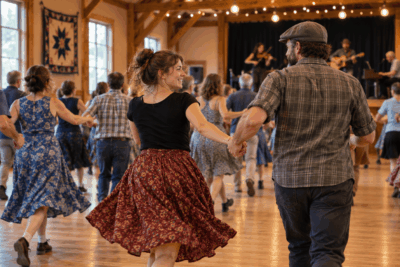
Square Dance: Meaning & History
Square dance is a social folk dance in which four couples form a square and move through patterns guided by a caller. Known for its lively music, partner changes, group formations, and community spirit, square dance has become one of the most recognizable forms of traditional American dancing.
Although square dance is strongly associated with the United States, its roots reach back to European folk and court dances that were adapted by communities in North America. Over time, square dancing developed into several styles, including traditional square dance, modern western square dance, Appalachian variations, and international forms.
This guide explains what square dance is, the meaning of square dancing, where square dancing came from, the history and origins of square dance, the main types of square dancing, how callers and calls work, what music and clothing are used, and why square dancing remains a fun and meaningful activity today.
Table of Contents:
- What Is Square Dance?
- Square Dancing Meaning Explained
- Where Did Square Dancing Come From?
- Square Dance History: From European Folk Roots to American Tradition
- Origins of Square Dancing in the United States
- Traditional Square Dance
- Modern Western Square Dance
- Main Types of Square Dancing
- How Square Dance Works: Formation, Couples, and Calls
- The Role of the Caller in Square Dance
- Square Dance Music
- Square Dance Attire and Clothing
- Basic Square Dance Moves and Calls
- Benefits of Square Dancing
- How to Learn Square Dance as a Beginner
- Fun Facts About Square Dancing
- FAQs About Square Dance
- Conclusion: Why Square Dance Still Matters
What Is Square Dance?
Square dance is a group dance traditionally performed by four couples arranged in the shape of a square. Each couple stands on one side of the square, facing the center. As the dance begins, a caller gives spoken or sung instructions called “calls,” and the dancers follow those calls by moving through patterns, changing places, turning, circling, and interacting with other couples.
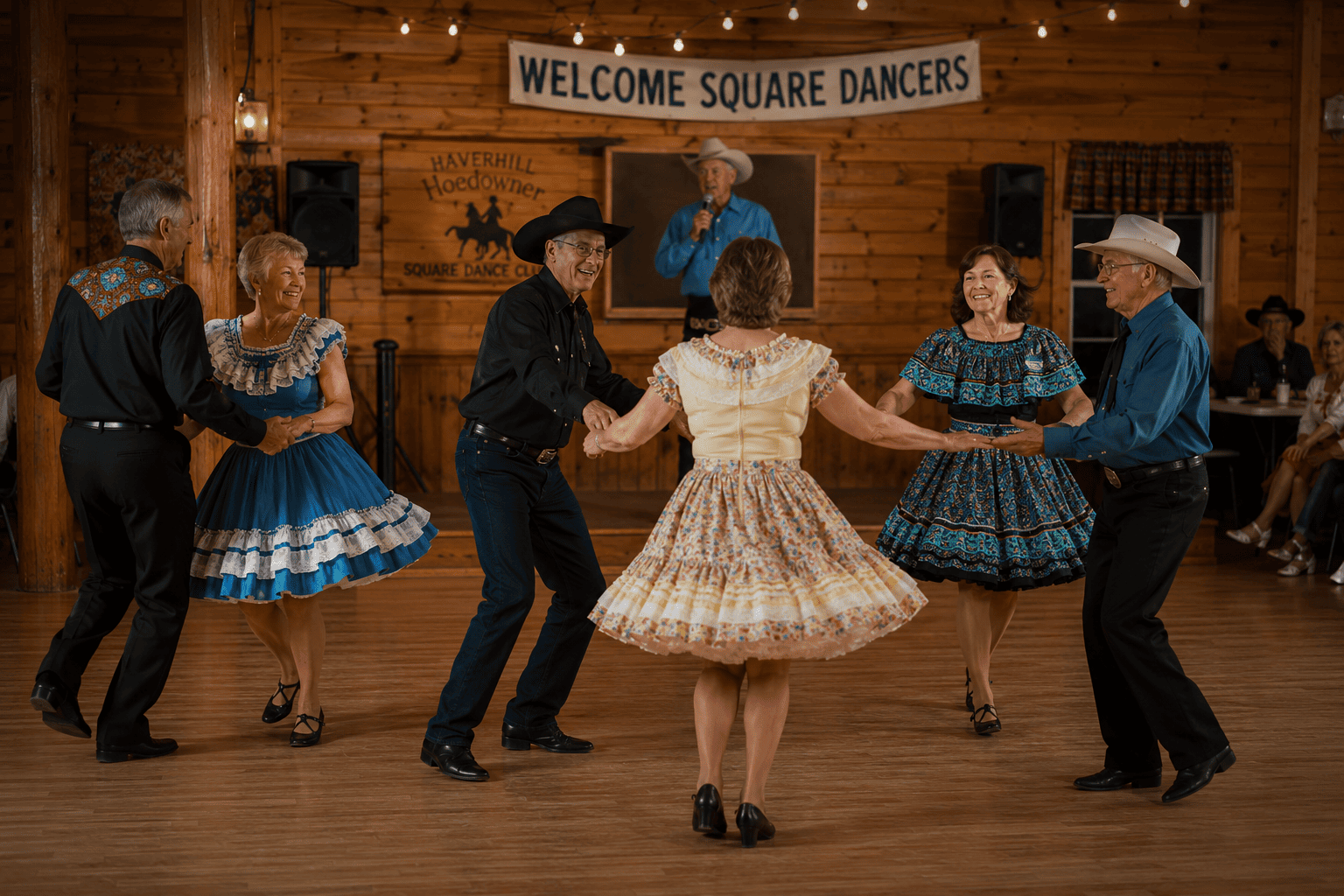
The basic idea of square dance is simple: dancers move together as a coordinated group. However, the dance can become more complex as the caller combines different calls in changing sequences. This makes square dancing both beginner-friendly and mentally engaging. New dancers can start with basic moves, while experienced dancers enjoy the challenge of faster calls and more advanced formations.
Square dance is also a highly social dance. Unlike solo dance styles, square dancing depends on cooperation. Each person must listen to the caller, stay aware of their partner, and move in harmony with the rest of the square. That is why square dance is often connected with community events, clubs, festivals, schools, and local gatherings.
In short, square dance is a traditional group dance built around four couples, a caller, music, movement patterns, and social interaction.
Square Dancing Meaning Explained
The meaning of square dancing goes beyond the physical steps. At its core, square dancing is about cooperation, rhythm, communication, and shared enjoyment. The name comes from the square formation created by four couples, but the cultural meaning of the dance is much broader.
Square dancing meaning can be understood in three ways. First, it is a dance form with a specific structure: four couples, a caller, and a sequence of calls. Second, it is a social activity that brings people together. Third, it is a folk tradition that reflects the blending of different cultural influences over time.
Unlike dances where partners stay mostly with each other, square dancing often requires dancers to interact with everyone in the square. A dancer may start with one partner, move toward another couple, circle with the group, return home, and then repeat the pattern in a new way. This constant movement creates a sense of connection and teamwork.
For many people, square dancing represents friendliness, participation, and community. It is less about performing for an audience and more about joining in. That is one reason square dance has remained popular in clubs, social halls, community centers, schools, and folk dance events.
Where Did Square Dancing Come From?
Square dancing came from a mixture of European dance traditions that were brought to North America and adapted over time. Its origins are often linked to English country dances, French quadrilles, cotillions, reels, and other social dances that used group formations, partner changes, and repeated patterns.
When settlers from Europe arrived in North America, they brought their music, dance customs, and social traditions with them. These dances did not remain exactly the same. In rural towns, frontier communities, and local gatherings, people adapted them to fit available music, space, and community life. Over generations, these influences blended into what became square dancing.
The square dance origin is therefore not tied to one single country, person, or moment. Instead, square dance developed through cultural exchange. European forms provided much of the structure, while American communities reshaped the dance into a more informal, social, and caller-led tradition.
So, where did square dancing come from? The clearest answer is that it grew from European folk and social dances, then evolved in North America into a distinct dance tradition strongly associated with American folk culture.
Square Dance History: From European Folk Roots to American Tradition
Square dance history begins with older group dances in Europe. Many of these dances involved sets of couples moving through patterns in lines, circles, or square-like formations. English country dance, French quadrille, and cotillion traditions all helped shape the movement vocabulary and social structure that later influenced square dancing.
As these dances spread through North America, they changed. In small communities, dances were often held in barns, homes, town halls, and outdoor gatherings. Music was played by local musicians using instruments such as fiddles, banjos, guitars, and later other folk or country instruments. Because many dancers did not memorize long choreographies, the caller became increasingly important.
The caller helped organize the dance by announcing the next movement. This made square dancing more accessible because participants could follow instructions in real time. Over time, calling became one of the defining features of square dance. A good caller could guide beginners, challenge experienced dancers, and create energy in the room.
In the 19th and early 20th centuries, square dancing remained connected to rural entertainment, folk music, and community celebration. Later, in the mid-20th century, square dance clubs, associations, recordings, and organized events helped standardize many calls and spread modern western square dance across the United States and beyond.
The history of square dancing shows how a folk tradition can evolve while still preserving its social purpose. Even as styles changed, square dance remained a way for people to gather, move, listen, laugh, and participate together.
Origins of Square Dancing in the United States
The origins of square dancing in the United States are closely connected to community life. In early American settlements, dances were often one of the main forms of entertainment. People gathered for weddings, harvest celebrations, holidays, church socials, and local events, and group dancing helped create a sense of belonging.
Square dancing origins in America were shaped by practical needs. Communities often included people from different backgrounds, and not everyone knew the same dance steps. The caller solved this problem by giving instructions during the dance. Instead of requiring every dancer to memorize a full routine, the caller could guide the group through each figure.
As square dancing spread, regional styles developed. In some areas, the dance was closely tied to old-time fiddle music. In others, it absorbed influences from country, western, Appalachian, New England, and Southern traditions. This regional diversity is one reason there are many types of square dancing today.
In the United States, square dance became more than a dance style. It became a symbol of social participation. The dance was accessible, energetic, and adaptable, making it suitable for both casual community gatherings and organized dance clubs.
Traditional Square Dance
Traditional square dance refers to older, community-based forms of square dancing that developed before the more standardized modern western style. It is often associated with local customs, live music, regional calls, and a relaxed social atmosphere.
In traditional square dance, the caller usually guides dancers through familiar figures using a style that may vary from region to region. The dance can feel informal, spontaneous, and closely tied to the music. Many traditional dances are performed to old-time fiddle tunes, folk songs, or regional dance music.
Traditional square dance often places more emphasis on community participation than technical perfection. The goal is not to perform a flawless routine for an audience, but to keep the dance moving and enjoyable for everyone involved. Beginners can often participate because the caller provides guidance and the group helps maintain the flow.
This style is important because it preserves the older social roots of square dancing. While modern western square dance is more standardized, traditional square dance reflects local history, regional music, and the communal spirit that helped make square dancing popular in the first place.
Modern Western Square Dance
Modern western square dance is a more standardized and organized form of square dance. It became especially popular in the 20th century, when clubs, callers, recordings, and associations helped create shared call lists and teaching systems. This made it easier for dancers in different places to learn the same movements and dance together.
In modern western square dance, the caller plays a highly active role. Calls may come quickly, and dancers are expected to know the meaning of each movement. Instead of memorizing a single routine, dancers learn a vocabulary of calls. The caller then combines those calls in different ways, creating variety and challenge.
Modern western square dance may use country music, but it can also be danced to pop, rock, jazz, or other styles arranged for square dance calling. This flexibility helps keep the dance fresh and appealing to different generations.
The main difference between traditional square dance and modern western square dance is structure. Traditional square dance is often more regional and informal, while modern western square dance is more standardized, club-based, and call-driven. Both styles belong to the broader square dance tradition, but they offer different experiences.
Main Types of Square Dancing
There are several types of square dancing, and each one reflects a different historical, regional, or musical influence. Understanding the main types of square dance helps explain why the term “square dance” can refer to more than one style.
Traditional Square Dance
Traditional square dance is rooted in older community dance customs. It often uses live music, familiar calls, and regional variations. The focus is usually on social enjoyment, participation, and local tradition.
Modern Western Square Dance
Modern western square dance is more standardized. Dancers learn an organized set of calls, and the caller combines them into changing sequences. This style is common in clubs, lessons, conventions, and organized square dance events.
Appalachian Square Dance
Appalachian square dance is connected to the music and culture of the Appalachian region. It often features energetic old-time music, informal calling, and lively community participation. The style may feel more relaxed and regional than modern western square dance.
New England Square Dance
New England square dance is influenced by the region’s folk and contra dance traditions. It may include clear figures, live music, and a strong connection to local dance communities. The style can overlap with contra dance events, depending on the setting.
Singing Square Dance
Singing square dance happens when the caller sings the calls to the melody of the music. This creates a strong connection between the song and the movement. Singing calls are especially common in modern western square dance programs.
International Square Dance Variations
Square dancing is not limited to the United States. Clubs and dance groups exist in Canada, Europe, Japan, Australia, and other parts of the world. In some places, square dance is practiced in English because the calls are standardized, while local communities add their own musical and social flavor.
These types of square dances show how adaptable square dancing can be. The basic square formation remains important, but the music, calls, clothing, and atmosphere may change depending on the tradition.
How Square Dance Works: Formation, Couples, and Calls
A standard square dance begins with four couples arranged in a square. Each couple stands on one side of the square, facing inward toward the center. The couple closest to the caller is often considered the first couple, and the numbering continues around the square. This numbering helps identify positions and organize movement.
The dancers begin in their “home” positions, but they do not stay there for the entire dance. As the caller gives instructions, dancers may circle, turn, pass through, promenade, swing, or exchange places with other dancers. The challenge is to follow the calls and return to the proper position at the right time.
Square dance works because each call has a shared meaning. When the caller says “do-si-do,” dancers know the expected movement. When the caller says “promenade,” couples know how to move around the square. This shared vocabulary allows the group to perform coordinated patterns without memorizing a full choreography in advance.
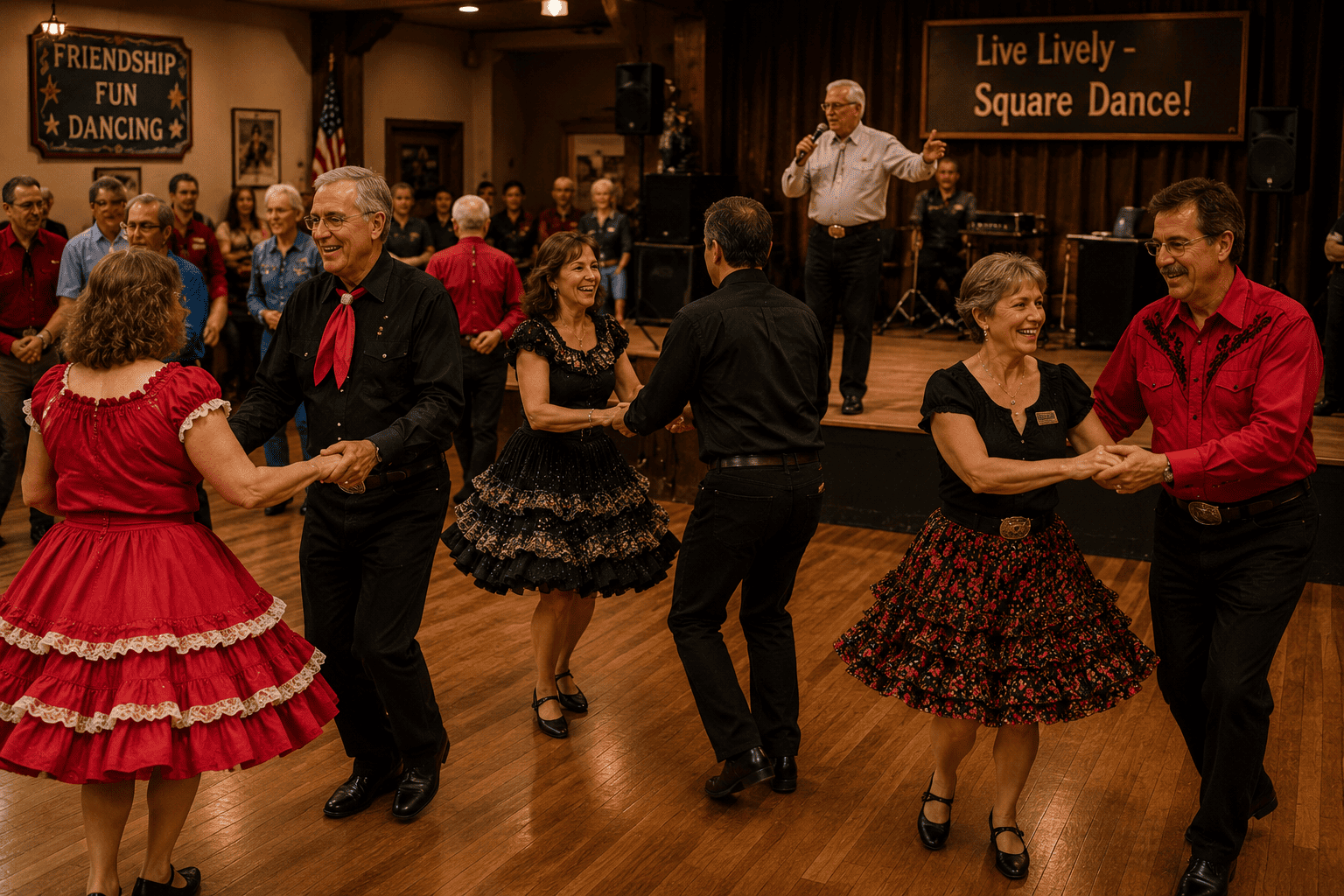
The square formation also makes the dance interactive. Dancers work with their partners, their corners, the opposite couple, and the entire group. This constant exchange is what gives square dancing its lively, social character.
The Role of the Caller in Square Dance
The caller is one of the most important parts of square dance. A caller gives the instructions that guide dancers through the sequence of movements. Without the caller, many square dances would be difficult to organize because dancers would need to remember every pattern on their own.
Square dance calls are short instructions that tell dancers what to do next. Common calls include movements such as “circle left,” “do-si-do,” “swing your partner,” “allemande left,” and “promenade.” In beginner settings, the caller may explain each call slowly. In advanced dances, calls may come faster and in more complex combinations.
A good caller does more than announce movements. The caller watches the dancers, controls the energy of the room, matches the calls to the music, and adjusts the difficulty to the group’s skill level. In singing square dance, the caller may sing the instructions in rhythm with the song, making the call part of the music itself.
The caller is also a teacher and host. For beginners, the caller helps make square dance feel welcoming. For experienced dancers, the caller creates variety, surprise, and challenge. This is why callers and calls are central to both traditional square dance and modern western square dance.
Square Dance Music
Square dance music provides the rhythm, energy, and atmosphere of the dance. Traditional square dance music is often connected to folk, old-time, country, bluegrass, and fiddle traditions. The music needs a clear beat so dancers can move in time and follow the caller easily.
Common instruments include fiddle, banjo, guitar, mandolin, bass, and sometimes accordion or other regional instruments. In older community dances, live musicians were central to the event. The sound of the fiddle, in particular, became closely associated with square dancing in many American traditions.
Modern western square dance may use a wider range of music. While country and western sounds remain common, callers may also use pop songs, classic rock, holiday music, or other familiar tunes adapted for square dance timing. This variety helps keep square dancing accessible and entertaining for different audiences.
The relationship between music and calls is essential. The caller must fit the instructions into the rhythm so dancers can respond smoothly. When the music, caller, and dancers work together, square dance becomes both structured and exciting.
Square Dance Attire and Clothing
Square dance attire can vary depending on the style, event, and region. Traditional images of square dancing often include full skirts, petticoats, western shirts, bolo ties, boots, and bright colors. These outfits help create a festive look and emphasize the spinning, turning, and movement of the dance.
For women, classic square dance clothing may include a wide skirt or dress that moves easily during turns. Petticoats are sometimes worn to add volume and visual effect. For men, traditional attire may include a long-sleeved western shirt, dress pants or jeans, a belt, boots, and sometimes a neckerchief or bolo tie.
However, not every square dance requires traditional clothing. Many beginner classes and casual dances allow comfortable everyday clothes. The most important requirement is practical footwear. Shoes should be comfortable, secure, and easy to move in. Dancers need to walk, turn, and pivot without slipping or sticking too much to the floor.
Square dance clothing serves both a cultural and practical purpose. It reflects the history and festive spirit of the dance, while also supporting the movement needed for a lively social event.
Basic Square Dance Moves and Calls
Square dance is built from named movements called calls. Beginners do not need to learn every call at once. Most people start with a few common moves and gradually build confidence as they attend classes or dances.
- Circle left or circle right: dancers join hands and move in a circle in the direction called.
- Do-si-do: two dancers move around each other, usually passing right shoulders and returning to place.
- Promenade: partners walk together around the square, usually in a circular direction.
- Allemande left: dancers turn by the left hand, often with their corner.
- Swing your partner: partners turn together in a rotating movement.
- Star: dancers place hands together in the center and move as a rotating group.
These calls are simple on their own, but callers can combine them in many ways. That is what gives square dance its variety. A beginner may start by learning basic calls slowly, while an experienced dancer can respond quickly to longer call sequences.
The best way to learn square dance calls is through practice with a group. Square dancing is easier when dancers can hear the caller, watch others, and feel the rhythm of the music. Mistakes are normal, especially at the beginning, and most square dance communities are welcoming to new learners.
Benefits of Square Dancing
The benefits of square dancing include physical activity, mental stimulation, and social connection. Because square dance combines movement, music, memory, and teamwork, it can be enjoyable for people of many ages and experience levels.
Physically, square dancing keeps the body moving. Dancers walk, turn, circle, balance, and change direction throughout the dance. This can support coordination, stamina, posture, and general fitness without feeling like a traditional workout.
Mentally, square dancing requires attention and memory. Dancers must listen to the caller, recognize each call, respond quickly, and stay aware of the group. This makes square dance mentally engaging as well as physically active.
Socially, square dancing encourages interaction. Participants dance with partners, corners, and other couples in the square. This creates a friendly environment where people can meet others, practice cooperation, and feel part of a group. For many dancers, the social benefits are just as important as the physical ones.
Square dancing is also accessible because beginners can start with simple calls and learn gradually. The combination of movement, music, and community is one reason square dance has lasted for generations.
How to Learn Square Dance as a Beginner
Learning square dance as a beginner is easier when you start in a supportive setting. Many square dance clubs, community centers, dance halls, and local organizations offer beginner nights or introductory lessons. These classes usually begin with basic calls and give new dancers time to practice.
A beginner square dance class often starts with the formation of the square, partner positions, and simple calls such as circle left, do-si-do, promenade, and allemande left. The caller or instructor explains each movement before adding music or combining calls into longer patterns.
New dancers should wear comfortable clothing and shoes that allow easy movement. It is also important to listen carefully to the caller rather than trying to memorize everything at once. Square dance is learned through repetition, and each dance helps build confidence.
One of the best beginner tips is to relax and keep moving. Mistakes happen in square dancing, even among experienced dancers. The goal is not perfection on the first try. The goal is to learn the calls, enjoy the music, and participate with the group.
Fun Facts About Square Dancing
Square dancing has a long and colorful history, and many fun facts show how widely it has influenced American social life and folk culture.
- Square dance is based on teamwork: one dancer moving incorrectly can affect the whole square, so cooperation is part of the fun.
- The caller is like a live director: callers guide the dance in real time and can change the sequence of calls.
- Square dance is international: although strongly associated with the United States, square dance clubs exist in many countries.
- Music can vary: square dancing can use traditional fiddle tunes, country music, pop songs, or singing calls.
- Traditional square dance is not the same everywhere: local communities often preserve their own calls, music, and customs.
- Square dancing can be beginner-friendly: many events are designed so new dancers can learn by listening and participating.
These fun facts about square dancing show why the dance has remained popular: it is structured but flexible, traditional but adaptable, and social above all.
FAQs About Square Dance
What is square dance?
Square dance is a social folk dance in which four couples form a square and follow movement instructions given by a caller. The dancers move through patterns, change positions, and interact with partners and other couples.
What is square dancing?
Square dancing is the act of performing square dance. It usually involves a group of eight dancers, a caller, music, and a sequence of calls that guide the dancers through the square formation.
What is the meaning of square dancing?
The meaning of square dancing is both practical and cultural. Practically, it is a group dance based on calls and formations. Culturally, it represents community, cooperation, folk tradition, and social participation.
Where did square dancing come from?
Square dancing came from a blend of European folk and social dances, including English country dance and French quadrille traditions. These dances were adapted in North America and developed into the square dance styles known today.
What is the origin of square dancing?
The origin of square dancing is not connected to one single inventor or country. It developed from older European group dances and evolved in American communities through local music, callers, and social gatherings.
What are the main types of square dancing?
The main types of square dancing include traditional square dance, modern western square dance, Appalachian square dance, New England square dance, singing square dance, and international square dance variations.
What is traditional square dance?
Traditional square dance is an older, community-based form of square dancing. It often uses live music, regional calls, and a relaxed social style focused on participation rather than strict standardization.
How many couples are in a square dance?
A standard square dance has four couples, or eight dancers total. Each couple stands on one side of the square, facing the center.
What does a square dance caller do?
A square dance caller gives the instructions, or calls, that tell dancers what movement to perform next. The caller helps guide the group, maintain rhythm, and create variety in the dance.
What are the benefits of square dancing?
The benefits of square dancing include physical movement, better coordination, mental focus, memory practice, social connection, and community engagement. It is both a recreational activity and a form of group exercise.
Conclusion: Why Square Dance Still Matters
Square dance remains important because it combines music, movement, history, and community in one accessible activity. Its roots come from European folk and social dance traditions, but its development in North America gave it a distinct identity connected to American folk culture.
From traditional square dance to modern western square dance, the form continues to evolve while preserving its basic structure: four couples, a square formation, a caller, and a shared rhythm. Whether someone is interested in square dance history, square dancing origins, types of square dancing, or simply learning a fun social activity, square dance offers a rich and welcoming tradition.
At its heart, square dance is about participation. It invites people to listen, move, cooperate, and enjoy being part of a group. That social spirit is the reason square dancing has lasted for generations and continues to attract new dancers today.
Contra Dance: Definition, History & How It Works
Ice Dance: Meaning, History, Rules, Moves and Olympic Facts
Salsa Music: Origins, Rhythm, Instruments & History

Ghost Dance: Meaning, History, and Native Legacy
Argentine Tango: Meaning, History, Music, Milonga and Dance Style

Bandoneon: Meaning, History, Tango Instrument, Range and Players
Discover more about the world of dance: