Salsa Music: Origins, Rhythm, Instruments & History
Salsa music is an Afro-Caribbean and Latin music tradition built around layered percussion, syncopated rhythms, call-and-response vocals, piano patterns, bass lines, and energetic ensemble arrangements. Its deepest musical roots are associated with Cuba, especially son cubano and related Afro-Cuban forms, but the modern salsa sound developed through a much broader cultural exchange involving Puerto Rican musicians, other Caribbean communities, jazz, and the Latin music scene of New York City.
Salsa is therefore difficult to reduce to a single birthplace, rhythm, or historical moment. It is both a continuation of older Caribbean musical traditions and a modern urban genre that acquired a distinct identity during the twentieth century. Understanding salsa means looking not only at where it came from, but also at how its rhythm works, which instruments create its sound, how a typical song develops, and how musicians across different countries reshaped the genre over time.
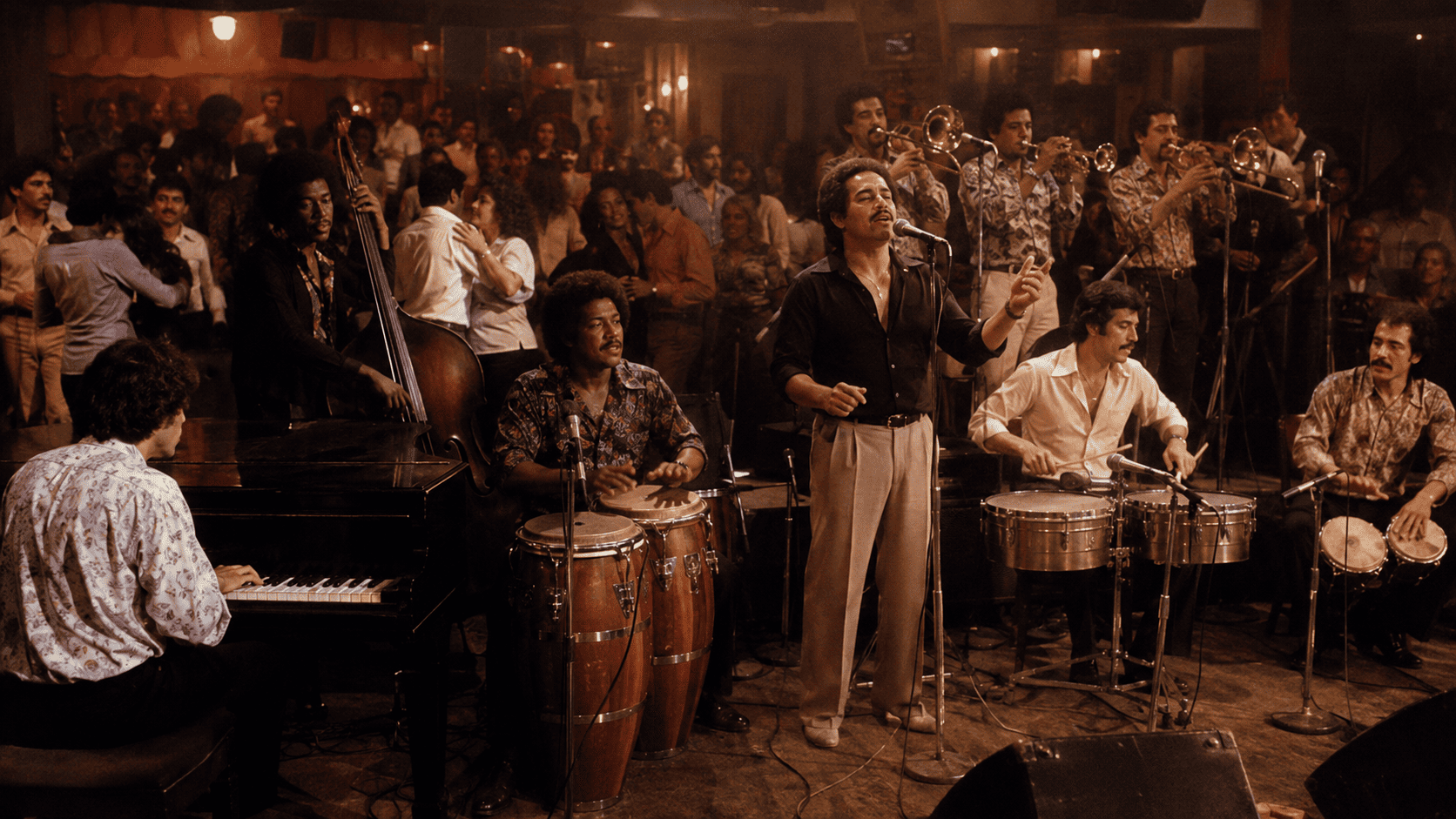
Table of Contents:
- What Is Salsa Music?
- Where Did Salsa Music Originate?
- Why Is It Called Salsa Music?
- What Does Salsa Music Sound Like?
- Instruments Used in Salsa Music
- How Is a Salsa Song Structured?
- The History and Evolution of Salsa Music
- Main Types and Styles of Salsa Music
- Famous Salsa Musicians Who Shaped the Genre
- Lyrics and Cultural Meaning in Salsa Music
- Salsa Music Around the World
- Salsa Music and Salsa Dance
- Frequently Asked Questions About Salsa Music
What Is Salsa Music?
Salsa music is a style of Latin dance music that grew from a network of Afro-Caribbean traditions rather than from one isolated genre. Cuban son is one of its most important foundations, but salsa also absorbed elements associated with mambo, guaracha, rumba, Latin jazz, and other musical forms that circulated between the Caribbean and the United States.
Musically, salsa is recognizable for the interaction between rhythm rather than for one melody or instrument alone. Congas, bongos, timbales, bells, piano, bass, brass, and vocals often play independent but interlocking patterns. Together they create the forward motion that makes salsa feel rhythmically dense while still giving dancers a clear sense of pulse and phrasing.
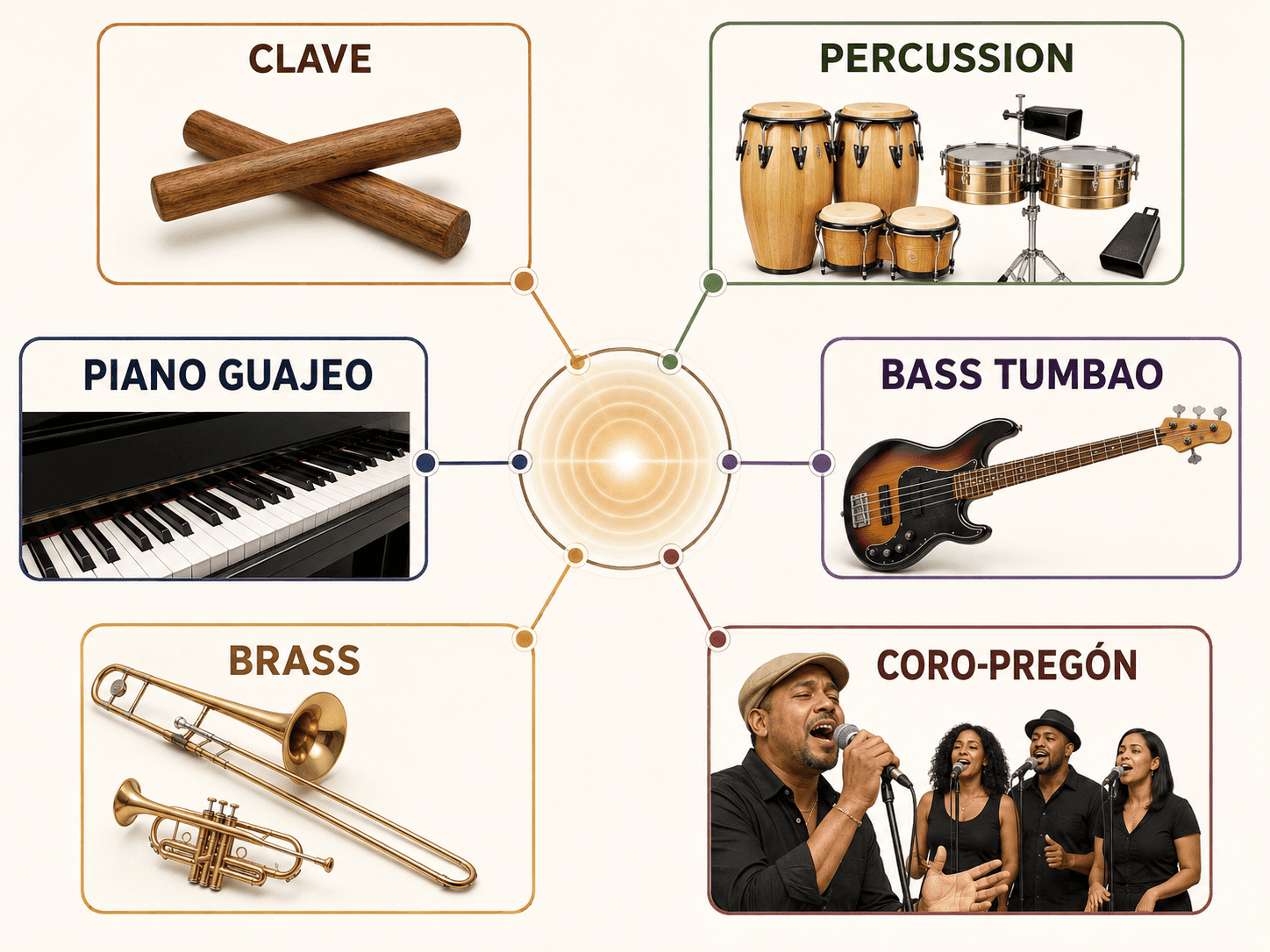
Salsa also relies heavily on repetition and variation. A piano may repeat a syncopated guajeo while the bass maintains a tumbao, percussion instruments divide different parts of the rhythmic cycle, and a lead singer alternates improvised lines with a repeating chorus. Rather than every instrument emphasizing the same beats, the characteristic sound emerges from the way these patterns fit together.
The word salsa is also broader than a rigid technical category. Musicians and historians have long debated exactly which recordings should be classified as salsa because the genre inherited so much from earlier Cuban and Caribbean music. In practical terms, salsa became a useful name for a modern Latin musical movement whose sound was rooted in those traditions but transformed by migration, urban life, recording, performance, and new generations of musicians.
Where Did Salsa Music Originate?
The origin of salsa music cannot be explained accurately by naming a single country. Its musical foundations developed primarily in Cuba, while Puerto Rican musicians and communities became essential to the genre's growth, particularly in New York. Modern salsa emerged from interaction among these traditions rather than from a sudden invention.
Afro-Cuban Roots and Son Cubano
One of salsa's strongest foundations is son cubano, a Cuban genre that developed through the interaction of African-derived rhythm and percussion with Spanish-derived melody, harmony, and song traditions. Son became increasingly prominent in Cuba during the early twentieth century and provided musical features that remain central to salsa, including syncopated bass patterns, repeated instrumental figures, call-and-response singing, and clave-based organization.
African-derived musical traditions were fundamental to this process. Rhythmic layering, percussion, improvisation, call-and-response, and the interaction between repeated rhythmic cycles helped create the musical vocabulary from which son and later salsa developed. Afro-Cuban rumba traditions also contributed rhythmic language and an expressive approach to percussion and vocal exchange.
Other Cuban forms contributed as well. Guaracha brought fast tempos and lively lyrical delivery. Mambo introduced increasingly elaborate arrangements and became an important bridge between Cuban music and the New York ballroom scene. Son montuno further developed the use of repeated piano figures, coro-pregón exchanges, and instrumental intensity that would become familiar features of salsa performance.
Puerto Rican Influence on Salsa
Puerto Rico was not simply a secondary participant in a Cuban musical story. Puerto Rican musicians, singers, composers, arrangers, and audiences became fundamental to the formation of modern salsa, particularly through migration to New York City.
Puerto Rico had its own rich musical traditions, including bomba and plena, while Puerto Rican performers were also deeply involved with son, mambo, bolero, guaracha, and other Caribbean styles. As large Puerto Rican communities developed in New York, musicians moved within a shared Latin music scene where national traditions constantly interacted.
This explains why salsa is often strongly identified with Puerto Rican culture even though many of its structural foundations are Cuban. Puerto Rican artists became some of salsa's most influential performers and helped turn the genre into a musical expression of Latino urban identity in the United States and throughout Latin America.
New York City and the Birth of Modern Salsa
New York City became the decisive meeting place where older Caribbean traditions developed into the modern musical movement widely recognized as salsa. Cuban, Puerto Rican, and other Latin musicians worked alongside African American jazz musicians in a city with an active club, ballroom, recording, and radio culture.
By the 1940s and 1950s, New York had already become a major center for mambo and Afro-Cuban jazz. Musicians experimented with larger horn sections, jazz harmony, percussion-heavy arrangements, and sophisticated ensemble writing. During the following decades, younger musicians inherited that musical environment while developing a harder urban sound associated with the emerging salsa movement.
For this reason, it is more accurate to say that salsa has Caribbean roots and a major modern development in New York than to assign the genre exclusively to either Cuba, Puerto Rico, or the United States.
Why Is It Called Salsa Music?
In Spanish, salsa literally means “sauce.” Long before it became the standard name for a musical genre, the word could suggest flavor, energy, or something that made an experience more exciting. That metaphor suited music created from multiple rhythmic and cultural ingredients.
The word appeared in Latin musical contexts well before the salsa boom of the 1970s. One famous early example is Cuban composer Ignacio Piñeiro's Échale salsita, recorded decades before salsa became a widely used genre label. Musicians and performers also used expressions involving salsa to suggest excitement or musical intensity.
What changed during the 1960s and 1970s was the scale and meaning of the term. Promoters, journalists, radio personalities, record companies, and performers increasingly used salsa as an umbrella term for the energetic Latin music emerging from the New York scene. It became particularly useful for marketing music that drew heavily from Cuban traditions but was being created by musicians from several backgrounds.
There is therefore no single convincing story in which one person simply invented the word salsa for the genre. The modern label developed gradually and became widely accepted because it described a musical movement that listeners already recognized as culturally connected but difficult to define through one older genre name.
What Does Salsa Music Sound Like?
Salsa often sounds energetic, percussion-driven, and rhythmically complex, but speed alone does not define the genre. What makes the music distinctive is the coordination of several repeating rhythmic patterns. Each instrument contributes a different part of the groove, creating tension and momentum without requiring every player to strike the same beats.
A listener may hear a steady cowbell, syncopated conga patterns, a repeating piano figure, a bass line that anticipates beats, a horn section answering the vocals, and a chorus repeating a short phrase while the lead singer improvises. Learning to recognize these layers makes salsa much easier to understand.
The Clave Rhythm: 2-3 and 3-2
The clave is one of the most important organizing concepts in Afro-Cuban music and salsa. It is based on a repeating two-measure rhythmic cycle containing five principal strokes. Depending on which half of the pattern comes first, musicians commonly describe it as 3-2 or 2-3 clave.
The clave should not be understood simply as another percussion beat playing underneath the song. It acts as a structural reference that influences how melodies, bass lines, piano patterns, horn arrangements, and percussion phrases are organized. The physical claves may not always be audible in a recording, but the musical relationships associated with clave can still shape the arrangement.
This is one reason salsa can sound rhythmically complex to new listeners. Some accents appear before or after the strongest beats of the measure, but those syncopations are not random. They interact with a larger rhythmic cycle.
Tumbao and Percussion Patterns
Tumbao refers to repeating rhythmic patterns that create much of salsa's forward movement. The term is commonly associated with both conga and bass patterns, although each instrument performs a different musical function.
The conga player may combine open tones, muted strokes, slaps, and other articulations into a repeating pattern that interlocks with bongos, timbales, and bells. Rather than duplicating one rhythm, salsa percussionists divide the groove among several instruments.
The bass tumbao is equally important. Instead of constantly emphasizing the first beat of each measure, the bassist frequently uses syncopation and anticipations. This creates a sensation of movement into the next beat and contributes to the distinctive elasticity of salsa rhythm.
Piano Montuno and Guajeo
The salsa piano frequently plays a repeating syncopated figure known as a guajeo, often referred to in everyday salsa terminology as a montuno. These patterns outline chords while functioning rhythmically, filling spaces between percussion and vocals rather than simply accompanying the melody with sustained harmony.
The repeated pattern may change as the arrangement develops. Pianists can vary voicings, register, accents, or rhythmic details while preserving the underlying cycle. This combination of repetition and subtle variation helps intensify a salsa performance without sacrificing rhythmic stability.
The term montuno can also refer more broadly to a section of a song, so piano montuno and the montuno section should not always be treated as exactly the same concept.
Coro-Pregón and Vocal Improvisation
One of salsa's most recognizable vocal techniques is coro-pregón. A chorus repeats a short phrase, while the lead singer—often called the sonero in this context—responds with improvised or semi-improvised lines.
This call-and-response structure has deep African and Afro-Caribbean roots. In salsa it creates an interactive feeling: the chorus provides stability while the lead singer can comment on the story, address dancers, introduce humor, show verbal skill, or respond to the energy of a live performance.
Because the pregones may change from performance to performance, two live versions of the same salsa song can feel noticeably different even when their basic arrangement remains recognizable.
Instruments Used in Salsa Music
Salsa does not require one fixed instrumentation. Ensembles can range from compact groups to large orchestras, and regional traditions favor different combinations. Nevertheless, percussion, piano, bass, vocals, and some form of melodic or brass instrumentation form the core of many classic salsa arrangements.
Percussion Instruments
Percussion gives salsa much of its rhythmic identity, but the instruments perform complementary roles rather than simply making the rhythm louder.
- Congas: Tall hand drums that commonly provide the conga tumbao and a wide range of open, muted, and accented tones.
- Bongos: A pair of smaller hand drums used for rapid rhythmic variation. In many traditional arrangements the bongó player switches to a cowbell during more intense sections.
- Timbales: Shallow metal drums played with sticks and often combined with bells and shell patterns. They are important for fills, transitions, accents, and driving sections of the arrangement.
- Cowbell: Different bells can mark contrasting rhythmic patterns and help increase the intensity of the montuno section.
- Claves: Wooden sticks used to articulate the clave pattern when the arrangement calls for it.
- Güiro and maracas: Provide continuous rhythmic texture and help connect the spaces between stronger percussion accents.
The richness of salsa percussion comes from interlocking patterns. Each player must understand not only an individual part but also how that part relates to the clave, bass, piano, vocals, and other percussion instruments.
Piano and Bass
The piano serves both harmonic and rhythmic functions. Rather than behaving only as background accompaniment, it often plays a syncopated guajeo that becomes one of the most recognizable patterns in the entire arrangement.
The bass provides weight while working closely with percussion. Salsa bass lines frequently use anticipations and repeated tumbao patterns instead of simply placing a note on every beat. When piano and bass interlock effectively, they create a harmonic framework that feels rhythmically active even before the percussion is considered.
Brass, Strings and Other Instruments
Brass instruments give many salsa recordings their powerful ensemble sound. Trumpets and trombones can play short rhythmic punches, melodic passages, harmonized lines, and repeating figures known as moñas. Some orchestras also use saxophones.
Trombones became especially associated with the aggressive sound of some New York salsa arrangements, while other groups favored trumpet-heavy instrumentation. There is no single required brass configuration.
Salsa can also draw from the Cuban charanga tradition, where flute and violins replace or complement heavy brass. The Cuban tres, a small guitar-family instrument associated with son, may also appear in traditional or roots-oriented arrangements.
Vocals and the Role of the Sonero
The human voice functions as another rhythmic instrument in salsa. Lead vocals usually carry the song's narrative during the opening sections, but their role changes once the music enters coro-pregón.
A skilled sonero does more than sing a written melody. The singer can improvise new phrases over the repeating chorus, play with rhyme and rhythm, react to the orchestra, and address the audience directly. This makes vocal improvisation one of salsa's most important links to older son and Afro-Caribbean performance practices.
How Is a Salsa Song Structured?
There is no universal template for every salsa song, but many classic arrangements follow a dramatic progression inherited largely from son montuno. A piece often begins with a relatively controlled song section and gradually moves toward more repetitive, improvisational, and rhythmically intense passages.
Verse Section
The opening section often introduces the main melody and lyrical subject. The lead singer follows a more fixed text while the ensemble supports the song with comparatively restrained accompaniment.
This part is sometimes described as the cuerpo, or body of the song. It establishes the narrative and harmonic material before the arrangement begins increasing its rhythmic intensity.
Montuno and Coro-Pregón
The transition into the montuno section often changes the character of the entire performance. A short chorus begins repeating, the lead singer answers with pregones, the percussion becomes more active, and piano and bass settle into strongly repeated rhythmic patterns.
Repetition here does not make the music static. Instead, it creates a stable framework for variation. The singer improvises, percussionists add fills, horns introduce new figures, and the arrangement can build in intensity while remaining anchored to the same basic cycle.
Mambo, Moña and Instrumental Breaks
Salsa arrangements may include instrumental passages commonly described as mambos, where the horn section plays arranged melodic and rhythmic lines. Repeated horn phrases or layered figures may also be called moñas.
These sections create contrast with the vocals and can become some of the most powerful moments in a recording. Solos for piano, percussion, brass, flute, or other instruments may also appear, particularly in longer arrangements and live performances.
The exact order varies considerably. A salsa song can move between coro, pregones, instrumental mambos, solos, and breaks before reaching its final coda. Understanding this flexible architecture is more useful than assuming that every recording follows an identical formula.
The History and Evolution of Salsa Music
The history of salsa music is best understood as a continuum. Musicians did not suddenly replace one genre with another called salsa. Instead, older Afro-Caribbean traditions evolved through migration, recording technology, nightlife, jazz interaction, commercial promotion, and changing audiences.
Cuban Foundations Before Salsa
Long before salsa became a widely used label, Cuban music had already developed many of the genre's essential ingredients. Son cubano emerged as an influential synthesis of African-derived rhythm and Spanish-derived melodic and harmonic traditions. By the early twentieth century it had spread beyond eastern Cuba and become central to Cuban popular music.
Musicians such as Arsenio Rodríguez helped expand the son conjunto sound through stronger percussion, trumpet arrangements, piano, and an increasingly sophisticated approach to son montuno. These developments would later influence musicians who became identified with salsa.
Rumba, guaracha, danzón, charanga traditions, and other Cuban genres also contributed rhythmic, melodic, or instrumental ideas. Salsa inherited this musical vocabulary rather than replacing it.
1940s–1960s: Mambo, Jazz and New York
During the 1940s and 1950s, New York became one of the most important centers for Latin music outside the Caribbean. The popularity of mambo brought large orchestras and Afro-Cuban rhythms into ballrooms and clubs, while interactions with jazz musicians encouraged more complex arrangements and instrumental improvisation.
Figures such as Machito, Mario Bauzá, Tito Puente, and Tito Rodríguez helped establish a powerful New York Latin orchestra tradition. The Palladium Ballroom became strongly associated with the mambo era and with the multicultural audience that surrounded Latin dance music.
By the 1960s, musical tastes were changing. Smaller ensembles, new urban audiences, boogaloo, Latin soul, and younger Puerto Rican and Latino musicians contributed to a scene that no longer sounded identical to the big-band mambo era. Salsa would emerge from this environment rather than from a complete break with it.
1960s–1970s: Fania Records and the Salsa Boom
The late 1960s and 1970s became the defining period for salsa's modern identity. Fania Records, founded in New York in the 1960s, brought together artists whose recordings helped make salsa recognizable as an international Latin music movement.
The Fania sound was not one uniform musical formula. Its roster included singers, bandleaders, composers, arrangers, and instrumentalists with different backgrounds. What connected much of the music was a strong relationship with Afro-Cuban forms combined with the energy, social environment, and cultural identity of New York's Latino communities.
Artists associated with this period—including Willie Colón, Héctor Lavoe, Johnny Pacheco, Celia Cruz, Ray Barretto, and the Fania All-Stars—helped take salsa from neighborhood clubs and Latin audiences to concert halls and international markets.
The 1970s also demonstrated that salsa was more than a commercial label. For many listeners it became an expression of Latino identity, migration, working-class urban life, Caribbean heritage, and cultural pride.
1980s: Salsa Romántica and New Audiences
During the 1980s, salsa romántica became increasingly prominent. Its arrangements often emphasized smoother production, romantic subject matter, and a softer vocal approach than the harder-edged salsa associated with many 1970s recordings.
The style attracted new listeners and became commercially successful, particularly in Puerto Rico and other Latin American markets. Critics sometimes contrasted it with salsa dura, arguing that romantic salsa reduced the aggressive instrumental character or social commentary associated with earlier recordings.
That contrast should not be exaggerated. Salsa romántica retained fundamental salsa rhythms and instrumentation while changing emphasis, production style, and lyrical themes. It represents an evolution within the genre rather than a rejection of salsa's earlier musical language.
1990s to Today: Global Salsa
From the 1990s onward, salsa became increasingly international. Artists and orchestras throughout Latin America, the United States, Europe, and other regions developed local scenes while recordings and touring made different approaches more accessible.
At the same time, salsa continued interacting with contemporary genres and recording technologies. Some artists preserved a deliberately traditional or hard salsa sound, while others incorporated pop production, urban music, jazz, or regional influences.
Digital streaming and social media later changed how listeners discover salsa. Historic recordings that once circulated mainly through collectors, radio stations, and physical albums now exist alongside contemporary releases, allowing younger audiences to hear different eras of the genre within the same musical ecosystem.
Main Types and Styles of Salsa Music
Salsa contains recognizable styles, but these categories often overlap. They may describe an era, production approach, regional scene, lyrical emphasis, or aesthetic preference rather than completely separate musical systems.
Salsa Dura
Salsa dura, or “hard salsa,” generally refers to an aggressive, rhythm-centered approach strongly associated with the classic New York sound of the 1960s and 1970s and with later musicians who deliberately preserved that aesthetic.
It often features prominent percussion, energetic brass, extended montuno sections, improvisation, and arrangements designed around rhythmic intensity. The term is also commonly used in contrast with the smoother sound of salsa romántica.
Salsa Romántica
Salsa romántica emphasizes love, relationships, and emotionally direct lyrics. The style became especially successful during the 1980s and 1990s and often uses polished arrangements that give the singer greater prominence.
Although the lyrical mood may be softer, the genre still relies on essential salsa elements such as clave-related phrasing, percussion, piano patterns, bass tumbao, and coro-pregón sections.
Regional Salsa Traditions
As salsa expanded, different cities and countries developed distinctive scenes rather than simply copying New York recordings.
Puerto Rico became one of salsa's most important centers for singers, orchestras, composers, and arrangers. Colombia developed an especially strong salsa culture in cities such as Cali, while Colombian musicians created their own approaches to arrangement and performance. Venezuela, Panama, Peru, and other Latin American countries also built important salsa audiences and local musical traditions.
These regional scenes share a common musical vocabulary but may differ in orchestration, tempo, repertoire, production, and interaction with local genres.
Songo and Timba: Related but Distinct Traditions
Songo and timba developed in Cuba and are closely related to the same Afro-Cuban musical traditions that influenced salsa, but they should not simply be treated as interchangeable names for salsa.
Songo emerged in post-revolutionary Cuba through musicians who expanded traditional dance music with new rhythmic concepts and influences from jazz, funk, and other modern styles. Timba later developed an even denser and more rhythmically experimental Cuban dance-music language, with complex arrangements, abrupt changes, powerful bass lines, and highly interactive percussion.
Salsa musicians and timba musicians can influence one another, and listeners may place both within a broad Latin dance-music world. Historically and musically, however, they developed through different scenes and should retain their own identities.
Famous Salsa Musicians Who Shaped the Genre
No single musician created salsa. The genre emerged through generations of performers, composers, arrangers, and bandleaders. Several figures are especially useful for understanding how its musical language developed.
- Arsenio Rodríguez: A major innovator of Cuban son whose expanded conjunto arrangements, rhythmic approach, and use of piano and trumpets influenced later salsa musicians.
- Tito Puente: Percussionist, composer, and bandleader whose work connected mambo, Afro-Cuban music, and Latin jazz with generations of salsa listeners and dancers.
- Johnny Pacheco: Dominican-born flutist, bandleader, producer, and co-founder of Fania Records who played a central role in organizing and promoting the New York salsa movement.
- Celia Cruz: Cuban singer whose powerful voice, improvisational ability, and international career made her one of the most recognizable figures in salsa history.
- Willie Colón: Trombonist, composer, arranger, and producer whose early recordings helped define the hard-edged urban sound associated with New York salsa.
- Héctor Lavoe: Puerto Rican singer celebrated for his phrasing, vocal personality, improvisation, and ability to combine humor, vulnerability, and street-level storytelling.
- Eddie Palmieri: Pianist and bandleader known for adventurous harmony, rhythmic experimentation, jazz influence, and powerful Afro-Caribbean arrangements.
- Ray Barretto: Conga player and bandleader whose work connected Afro-Cuban percussion, jazz, and New York salsa.
- Rubén Blades: Panamanian singer-songwriter who expanded the possibilities of salsa lyrics through sophisticated narratives and social and political themes.
- Fania All-Stars: A rotating supergroup that brought together many leading salsa musicians and helped introduce the New York salsa movement to international audiences.
These musicians represent different stages and dimensions of salsa. Their importance lies not merely in popularity but in how they changed arrangement, singing, percussion, songwriting, improvisation, or the international reach of the genre.
Lyrics and Cultural Meaning in Salsa Music
Salsa lyrics cover far more than romance and dancing. Because the genre developed within migrant and urban communities, its songs have often addressed everyday life, cultural identity, neighborhood experience, discrimination, poverty, humor, politics, religion, longing, and the relationship between Caribbean homelands and life abroad.
Some songs celebrate parties and social dancing, while others tell detailed stories about recognizable characters or difficult situations. The singer can function almost like a storyteller, describing city streets, relationships, family tensions, social inequality, or the experience of migration.
Artists such as Rubén Blades demonstrated how salsa could support extended narratives and political commentary without sacrificing its danceable character. Other performers used humor, double meanings, street language, or improvised pregones to create a strong connection with audiences.
Salsa also became an important expression of Latin and Afro-Caribbean identity, particularly in New York. The genre allowed musicians from different national backgrounds to participate in a shared cultural language while still preserving references to Cuba, Puerto Rico, Panama, Colombia, and other parts of Latin America and the Caribbean.
Salsa Music Around the World
Salsa moved rapidly beyond New York and the Caribbean because it circulated through recordings, radio, touring orchestras, migration, nightclubs, and later television and digital media. By the late twentieth century it had become an international musical language.
Latin American countries developed some of the genre's strongest audiences. Puerto Rico remained central to salsa production, while Colombia created a particularly influential salsa culture. Venezuela, Panama, Peru, and other countries supported their own performers, collectors, radio programs, orchestras, and dance scenes.
Salsa also found significant audiences outside Latin America. Musicians and dancers established scenes across Europe, North America, parts of Asia, and Africa. In some places salsa remained closely connected to Latin American immigrant communities; in others it became part of an international social-dance culture.
This global expansion did not create one standardized sound. Instead, musicians continued adapting salsa to local audiences and musical environments while preserving enough of its rhythmic vocabulary for the genre to remain recognizable.
Salsa Music and Salsa Dance
Salsa music and salsa dance developed together, but they should not be treated as the same historical subject. The music provides the rhythmic framework that dancers interpret through timing, weight changes, partner movement, turns, footwork, and improvisation.
Different dancers may respond to different musical layers. Some listen closely to conga patterns, others to the bass, cowbell, piano, melody, or phrasing. This is why salsa musicality involves more than simply counting beats: experienced dancers recognize changes between verses, montuno sections, breaks, percussion passages, and instrumental mambos.
The history of how these movement traditions developed is explored separately in our guide to the history of salsa dance. For an explanation of the dance itself, including its characteristics and major regional styles, see our guide to salsa dance.
Frequently Asked Questions About Salsa Music
Where did salsa music originate?
Salsa music has deep Afro-Caribbean roots, particularly in Cuban son and related musical traditions. Puerto Rican musicians and communities played a major role in its development, while New York City became the central urban environment in which modern salsa emerged as a distinct musical movement during the twentieth century.
What rhythm is used in salsa music?
Salsa uses several interlocking rhythmic patterns rather than one rhythm alone. Clave—commonly organized in 2-3 or 3-2 patterns—is a major structural principle, while conga tumbao, bass tumbao, bongos, timbales, bells, piano guajeos, and other rhythmic layers work together around it.
What instruments are used in salsa music?
Common salsa instruments include congas, bongos, timbales, cowbells, claves, güiro, piano, bass, trumpets, trombones, and vocals. Some arrangements also use saxophone, flute, violins, tres, or other instruments depending on the orchestra and musical tradition.
Is salsa music Cuban or Puerto Rican?
Neither description is complete on its own. Many of salsa's strongest musical foundations come from Cuba, especially son cubano and Afro-Cuban rhythmic traditions. Puerto Rican musicians and migrant communities were central to the development of the modern salsa movement, particularly in New York. Salsa is therefore best understood as a transnational Afro-Caribbean and Latin musical tradition shaped by interaction among Cuba, Puerto Rico, New York, and other communities.
Contra Dance: Definition, History & How It Works
Square Dance: Meaning & History
Ice Dance: Meaning, History, Rules, Moves and Olympic Facts

Ghost Dance: Meaning, History, and Native Legacy

Argentine Tango: Meaning, History, Music, Milonga and Dance Style

Bandoneon: Meaning, History, Tango Instrument, Range and Players
Discover more about the world of dance: