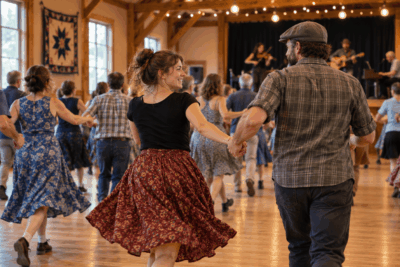
Polka Dance
The polka dance is a lively partner dance known for its fast duple meter, turning movement, and buoyant step patterns. It emerged in Bohemia, in the Czech lands of Central Europe, during the 1830s and became one of the major social-dance crazes of 19th-century Europe before spreading to the United States and other regions.
Traditionally danced to polka music with a strong two-beat pulse, polka developed many regional forms as Czech, Polish, German, Slovenian, Mexican, and other communities adapted the dance and music to local traditions. Today it remains closely associated with festivals, weddings, folk events, and community celebrations.
Table of Contents:
- What Is the Polka Dance?
- Polka Dance Origin
- History of the Polka Dance
- Polka Music: The Sound Behind the Dance
- How to Dance the Polka
- Styles and Variants of Polka
- Polka Dance in the United States
- Cultural Significance of the Polka Dance
- Polka Performers and Musical Legacy
- Frequently Asked Questions About Polka Dance
- Conclusion
What Is the Polka Dance?
The polka dance is a fast social dance for couples, most commonly associated with music in 2/4 meter. Many versions use quick weight changes, traveling turns, and a light hop or lift combined with a step-close-step action, although exact footwork and styling vary among regional and social-dance traditions.
Partners often dance in a closed position while traveling and rotating around the floor. A basic version can be accessible to beginners, while experienced dancers may add faster turns, pivots, directional changes, and styling specific to a local tradition.
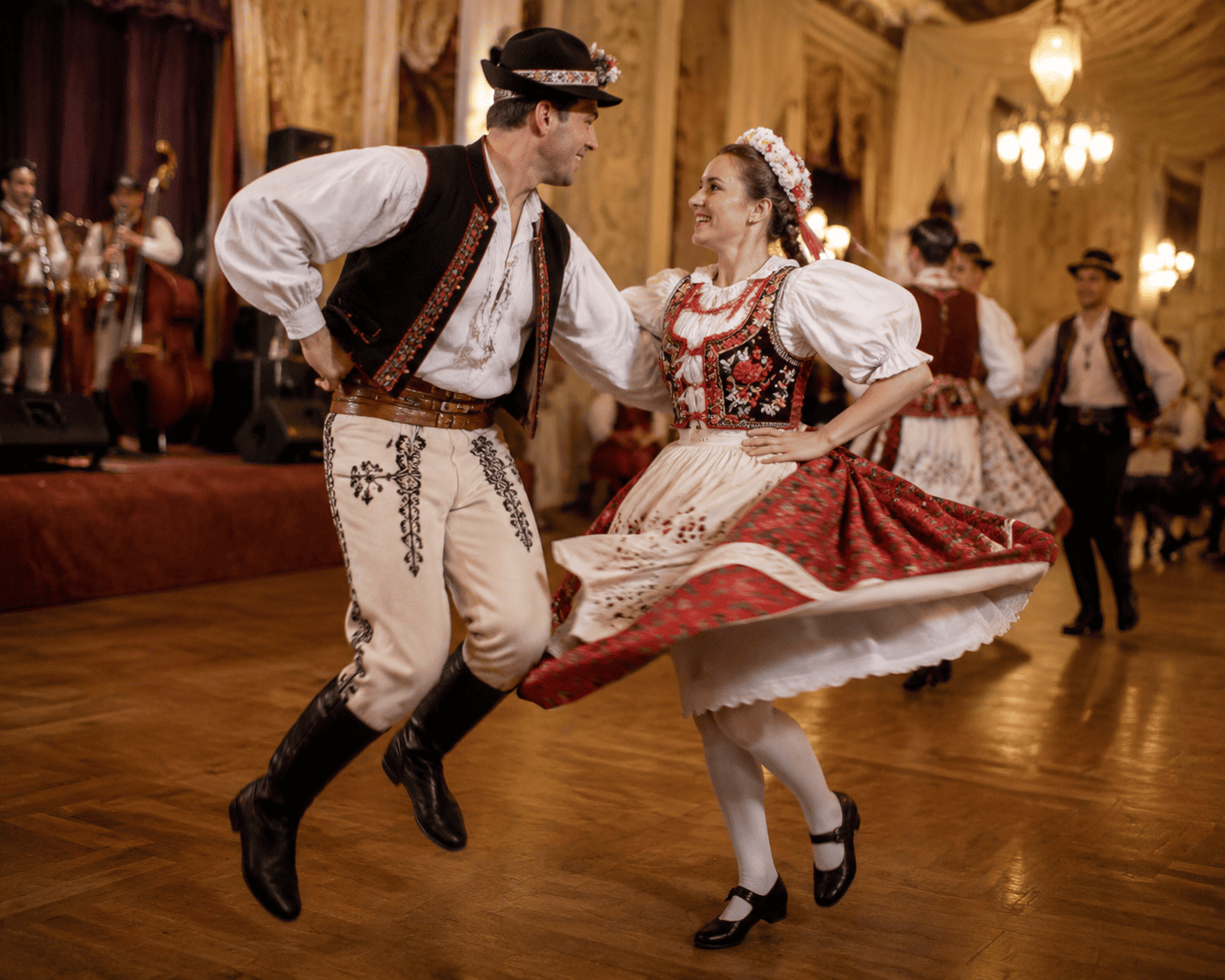
Polka Dance vs. Polka Music
Polka dance and polka music are historically connected but refer to different things. The dance consists of partner movement, footwork, turns, and traveling patterns. In music, the term refers to a lively duple-meter genre historically associated with the dance.
The music provides the meter, phrasing, accents, and tempo that organize the dancers' timing. At the same time, polka repertories also developed beyond the dance floor, including arrangements written for concert and popular performance.
Polka Dance Origin
Polka originated in Bohemia, in the Czech lands of Central Europe, during the 1830s. Historical evidence places its early rise there before it became a major European ballroom craze in the following decade. The Smithsonian Folklife Festival describes the polka as a Bohemian dance that spread rapidly through European social-dance culture.
Where Did Polka Originate?
Polka originated in Bohemia, a historical region that is now largely part of the Czech Republic. It is often associated with Czech folk and social-dance traditions, although historians cannot identify one single earlier peasant dance as the unquestioned source of the polka.
This Bohemian origin is important because the dance later became so strongly associated with Polish, German, Austrian, Slovenian, and other communities that its birthplace is sometimes misunderstood.
Etymology: What Does “Polka” Mean?
The origin of the word polka is debated. One explanation connects it with the Czech word půlka, meaning “half,” possibly reflecting a supposed half-step or half-beat association. Another interpretation links the name with Polka, a term meaning a Polish woman.
Because the etymology is uncertain, neither explanation should be treated as definitive. What is clear is that by the mid-19th century, the name “polka” was widely recognized across Europe as both a dance and a musical form.
Is Polka Czech, Polish, or German?
Polka originated in Bohemia, in the Czech lands, but it became deeply rooted in Polish, German, Austrian, Slovenian, and other Central European traditions. Immigrant communities later strengthened those associations in the United States.
For that reason, describing polka as exclusively Polish or German overlooks both its Bohemian origin and the many communities that later reshaped it.
History of the Polka Dance
The history of the polka dance is notable for the speed of its international expansion. After emerging in the Czech lands, it moved into fashionable ballrooms, public dance venues, printed music, and urban entertainment across Europe.
The Birth and Rise of Polka in Europe
Polka rose to prominence during the 1830s and 1840s. Dance teachers, musicians, published sheet music, public balls, and urban social networks helped carry it through major European cities.
Its fast tempo, close partner position, hopping action, and rapid turning made it especially noticeable in 1840s ballroom culture. By the middle of the century, composers were writing polkas for both social dancing and concert performance, while local dancers and musicians were already adapting the form to regional tastes.
This rapid expansion shaped the dance's later regional identities. The same broad polka tradition could take on different instrumentation, tempos, partner styling, and cultural meanings depending on where it was practiced.
Polka in the 20th Century
During the 20th century, polka remained especially important in immigrant communities, folk-music scenes, and regional dance cultures. In the United States, Polish, Czech, German, Slovenian, and other communities maintained the tradition through community halls, radio, recordings, festivals, weddings, and family celebrations.
Although polka no longer dominated mainstream social dancing as it had during the 19th century, it developed strong regional identities and continued to function as both entertainment and cultural heritage.
Polka Today
Polka is still danced at festivals, weddings, folk events, cultural celebrations, dance classes, and community gatherings. Some groups preserve traditional steps, costumes, and instrumentation, while others use newer arrangements and local musical influences.
Polka Music: The Sound Behind the Dance
Polka music is closely tied to the movement of the dance and is usually built around a clear duple pulse.
What Is Polka Music?
Polka music is a lively dance-music genre most commonly written in 2/4 meter. Its melodies tend to be direct and strongly rhythmic, making the beat easy for dancers to follow. Instrumentation varies widely according to region and musical tradition.
Polka Music Origin
Polka music developed in the same 19th-century Central European setting as the dance. As polka spread, musicians composed and adapted repertories for dancing, public performance, and later immigrant communities.
Polka music and dancing evolved together, but regional traditions developed distinct sounds. Czech, Polish, German, Slovenian, Mexican, and American polka music can differ considerably in instrumentation, phrasing, and tempo while retaining a recognizable duple-meter foundation.
Common Instruments in Polka Music
Accordion and concertina are especially recognizable in many polka traditions, but they are not universal. Depending on the region, ensembles may also include clarinet, trumpet, trombone, tuba, violin, saxophone, drums, bass, and other folk or band instruments.
Tempo, Rhythm, and 2/4 Time
Most polkas use a strong duple meter, commonly written in 2/4, which gives dancers a clear “one-two” pulse. Meter and tempo are different concepts: 2/4 describes how beats are grouped, while the actual speed can vary according to regional tradition, ensemble, and dancing style.
This combination of a clear two-beat structure and lively tempo makes polka music easy to recognize and well suited to traveling and turning partner dances.
How to Dance the Polka
Learning how to dance the polka begins with timing, light weight changes, and a basic traveling pattern. Because different polka traditions use different footwork and styling, any single step description should be treated as a starting point rather than a universal rule.
In many social versions, partners face each other in a closed hold and travel around the floor while rotating. The movement is typically kept light and buoyant, with the feet handling quick weight changes while the partners maintain a stable and comfortable connection.
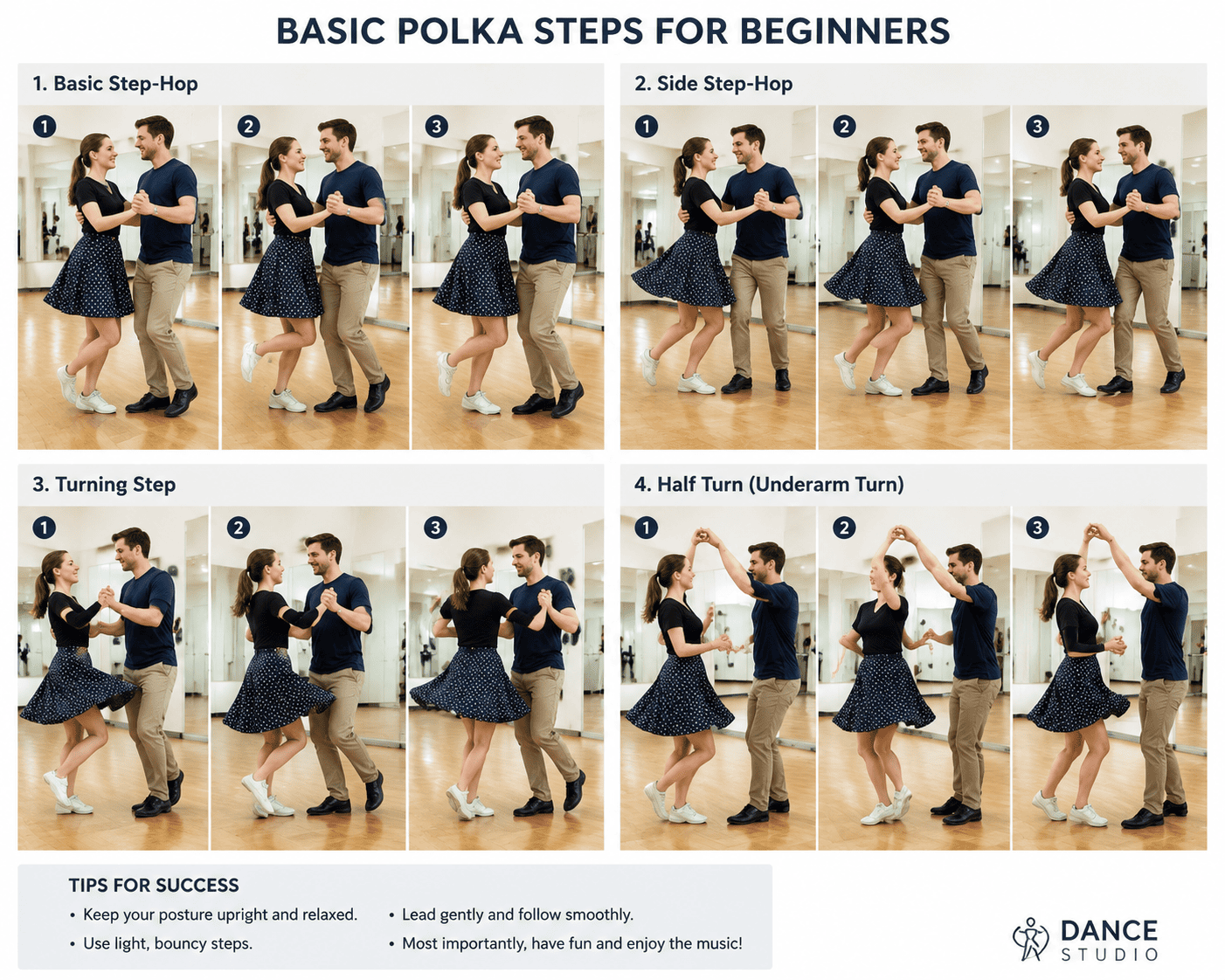
Basic Polka Dance Steps
A common polka pattern combines a small hop or lift with a quick step-close-step action. The exact count and placement of the hop vary among traditions, so dancers may encounter different versions in folk, ballroom, and regional polka classes.
Partners coordinate timing, direction, and weight changes while traveling together. Once the basic pattern feels comfortable, rotation and movement around the floor can be added gradually.
The Step-Hop Pattern
The light hop or lift gives many forms of polka their buoyant character. In many social versions, it remains small and controlled rather than becoming a high jump. Staying relatively close to the floor can help dancers maintain balance, speed, and partner connection.
Turns, Spins, and Partner Movement
Many polka variations rotate as the couple travels around the dance floor. A comfortable frame and consistent timing are more important than forcing fast turns. Partners should avoid pulling against each other and allow rotation to develop from the footwork and direction of travel.
Tips for Beginners
- Practice slowly first. Learn the weight changes before trying to match a fast recording.
- Keep the lift small. Aim for buoyant movement rather than large jumps.
- Listen for the two-beat pulse. The meter helps organize timing even when tempo varies.
- Stay relaxed with your partner. A comfortable frame makes traveling and turning easier.
- Add rotation gradually. Consistent timing matters more than speed or decorative styling.
Styles and Variants of Polka
There is no single worldwide version of a traditional polka dance. Czech, Polish-American, Slovenian-American, German, Mexican, and other traditions share historical connections but may differ in tempo, instrumentation, partner styling, and the way dancers travel or turn. Some remain closely connected to folk dance, while others entered ballroom dancing, festival, and immigrant social-dance traditions.
Czech Polka
Czech polka reflects the dance's Bohemian origin and remains part of Central European folk and social-dance culture. Modern Czech performances may appear in folk ensembles, cultural festivals, and community events alongside other regional dances.
Polish Polka Dance
Polish polka dance traditions became especially prominent in Polish and Polish-American communities. Although polka did not originate in Poland, Polish musicians, dancers, bands, and festivals helped make it an important expression of cultural identity, particularly in the United States.
German and Austrian Polka
German and Austrian musicians incorporated polka into a wider Central European repertory that also included waltzes, marches, and other social dances. Brass and wind ensembles helped spread the style through public performances, festivals, and community celebrations.
Mexican and Latin American Polka
Polka traveled to northern Mexico and South Texas through 19th-century cultural exchange and migration. European dance rhythms and the button accordion became important influences on regional musical traditions that later developed into conjunto and norteño styles. These traditions adapted polka rhythm and instrumentation rather than simply reproducing Central European models.
Elsewhere in Latin America, local forms could diverge even further. Paraguayan polca, for example, took its name from the European polka but developed into a distinct musical tradition with its own rhythmic and melodic character.
Polka Dance in the United States
The polka dance in the United States grew through immigration and community life. Czech, Polish, German, Slovenian, and other Central and Eastern European groups brought music and social-dance traditions with them and adapted those traditions to American venues, audiences, and regional identities.
Immigrant Communities and Polka Traditions
Community halls, churches, ethnic clubs, family events, radio programs, recordings, and local bands helped preserve polka across generations. For many families, the music and dance became ways to maintain a connection with heritage even as language and other customs changed.
American polka was never one uniform style. Different immigrant networks developed distinctive musical sounds and social traditions, so a Polish-American event could sound and look different from a Slovenian-American or Czech-American gathering even when all were described broadly as polka.
Polka in the Midwest
The Midwest became one of the strongest centers of American polka culture. Wisconsin, Minnesota, Ohio, Illinois, and nearby regions developed active scenes connected to Czech, Polish, German, Slovenian, and other communities. The Smithsonian has documented how multiple immigrant traditions shaped polka culture in Wisconsin and the wider region.
Polka Festivals, Weddings, and Community Events
Polka remains common at heritage festivals, weddings, community dances, and cultural celebrations. These settings allow experienced dancers and newcomers to share the floor, helping the tradition continue through participation as well as formal instruction.
Cultural Significance of the Polka Dance
The cultural significance of polka comes largely from its role in social and community life. In many places, music and dancing connect family gatherings, migration history, regional identity, and shared celebration.
For immigrant and descendant communities in particular, polka can function as living cultural heritage. Music, dance, food, costume, and recurring events help preserve connections to family and ancestry while allowing traditions to change with contemporary life.
This helps explain why polka can remain meaningful even where it is no longer part of mainstream nightlife. Familiar music, shared steps, and annual festivals or family events create continuity across generations.
Polka Performers and Musical Legacy
Polka's musical legacy extends from community dance bands and immigrant recordings to concert repertory and regional popular music. Performers and ensembles have been essential to keeping the dance connected to live social events.
Polka Bands and Famous Musicians
Polka bands played a major role in maintaining the tradition in the United States. Slovenian-American accordionist Frankie Yankovic became one of the country's best-known polka performers and helped bring the music to wider audiences through recordings, radio, and live performance.
Polka in Classical and Folk Repertoire
During the 19th century, composers wrote polkas for both social dancing and concert performance. In folk and community traditions, however, polka has remained practical dance music—repertory performed at festivals, dances, weddings, and other social events.
More articles about Dance List
Explore more guides and related content about Dance List.
See more about Dance ListFrequently Asked Questions About Polka Dance
What is the polka dance?
The polka dance is a lively partner dance that emerged in Bohemia during the 1830s. It is commonly danced to music in 2/4 meter and often includes quick traveling steps, turning, and a light hop or lift.
Where did polka originate?
Polka originated in Bohemia, in the Czech lands of Central Europe. It spread rapidly across Europe during the 19th century and later developed strong regional traditions in the United States and elsewhere.
Is polka Polish, Czech, or German?
Polka originated in Bohemia, but Polish, German, Austrian, Slovenian, and other communities played major roles in its later development and cultural identity.
What is polka music?
Polka music is lively dance music commonly written in duple meter, especially 2/4. Depending on the tradition, ensembles may use accordion, concertina, brass, clarinet, violin, drums, bass, and other instruments.
How do you dance the polka?
A basic polka uses quick weight changes, a light and buoyant step pattern, partner travel, and often rotation. Exact footwork varies among regional, folk, and social-dance traditions.
Conclusion
From its emergence in 1830s Bohemia to its development across Europe, the United States, and Latin America, polka has remained adaptable rather than fixed. Its duple-meter music, energetic partner movement, regional variations, and strong ties to community celebrations have allowed dancers and musicians to preserve the tradition while continuing to reshape it for new generations.
Contra Dance: Definition, History & How It Works
Square Dance: Meaning & History
Ice Dance: Meaning, History, Rules, Moves and Olympic Facts
Salsa Music: Origins, Rhythm, Instruments & History
Ghost Dance: Meaning, History, and Native Legacy
Argentine Tango: Meaning, History, Music, Milonga and Dance Style
Discover more about the world of dance: