The History of Salsa Dance: Origins, Evolution & Cultural Impact
The history of salsa dance is a story of cultural exchange, migration, musical innovation, and social dancing. Salsa was not created by one person or born fully formed in a single place. Its foundations developed through Afro-Caribbean traditions, especially in Cuba and Puerto Rico, while New York City became a crucial center where those influences met, changed, and gained a modern salsa identity.
This salsa dance history guide explains those layered origins, the communities that shaped the dance, the relationship between salsa music and movement, and the way salsa evolved into distinct styles practiced around the world. It also answers common questions about where salsa came from, when modern salsa emerged, and why no single person can accurately be called its inventor.
Table of Contents:
- What Is Salsa Dance?
- Origins of Salsa Dance
- Where Did Salsa Dance Originate?
- Who Invented Salsa Dancing?
- Mixing of Cultures in the Caribbean
- Cuba, Puerto Rico, and New York: The Birth of Salsa
- Mambo: The Precursor to Salsa
- History of Salsa Music and Dance
- Evolution of Salsa Through the Decades
- Key Figures in Salsa Dance History
- The Different Styles of Salsa Dancing
- How Salsa Became a Global Phenomenon
- Timeline of Salsa Dance Milestones
- Sources and Influences Over Time
- Frequently Asked Questions About Salsa Dance History
What Is Salsa Dance?
Salsa dance is a partner dance built around Latin and Afro-Caribbean musical traditions. It is known for rhythmic footwork, turns, partner connection, improvisation, and a strong relationship with percussion and musical phrasing. Although different regional styles use different timing and movement patterns, they share a common historical foundation.
The salsa dance origin story cannot be separated completely from the music. Dancers developed their timing, breaks, turns, and improvisational vocabulary in response to changing forms of Cuban, Puerto Rican, and New York Latin music. At the same time, the dance developed its own social conventions and regional styles rather than simply mirroring the history of the music.
The Origin of the Word “Salsa”
The word salsa means “sauce” in Spanish. It had appeared in Latin musical culture before the salsa boom of the 1970s, but during the 1960s and 1970s it became increasingly useful as an umbrella label for an energetic mix of Afro-Caribbean and Latin sounds circulating in New York. The term eventually became closely associated with both the music and the social dance that developed around it.
Salsa as Music vs. Salsa as Dance
Salsa music and salsa dance are inseparable historically, but they are not the same thing.
- Salsa music grew from son cubano, mambo, guaracha, Latin jazz, and other Afro-Caribbean traditions, combining layered percussion, piano, brass, vocals, and clave-based rhythmic organization.
- Salsa dance developed as a social movement practice around that musical world, with partner work, turns, footwork, timing systems, body movement, and improvisation that varied by place and generation.
This distinction matters because the musical ingredients of salsa are older than the modern dance identity that became widely recognized under the name salsa.
Origins of Salsa Dance
The origins of salsa dancing stretch across the Caribbean and the United States. Salsa did not emerge from one national tradition alone. Its deeper foundations are strongly connected to Cuban and Afro-Cuban music and dance, while Puerto Rican traditions and migration played an important role in the communities that carried, performed, and transformed this culture.
New York became the major urban meeting point where Caribbean musicians, dancers, promoters, clubs, and record companies interacted. Older forms such as son, rumba, mambo, and other Latin dance traditions did not disappear; instead, they contributed musical and movement ideas that dancers adapted to a changing social environment. Modern salsa grew through this long process rather than through a single moment of invention.
Where Did Salsa Dance Originate?
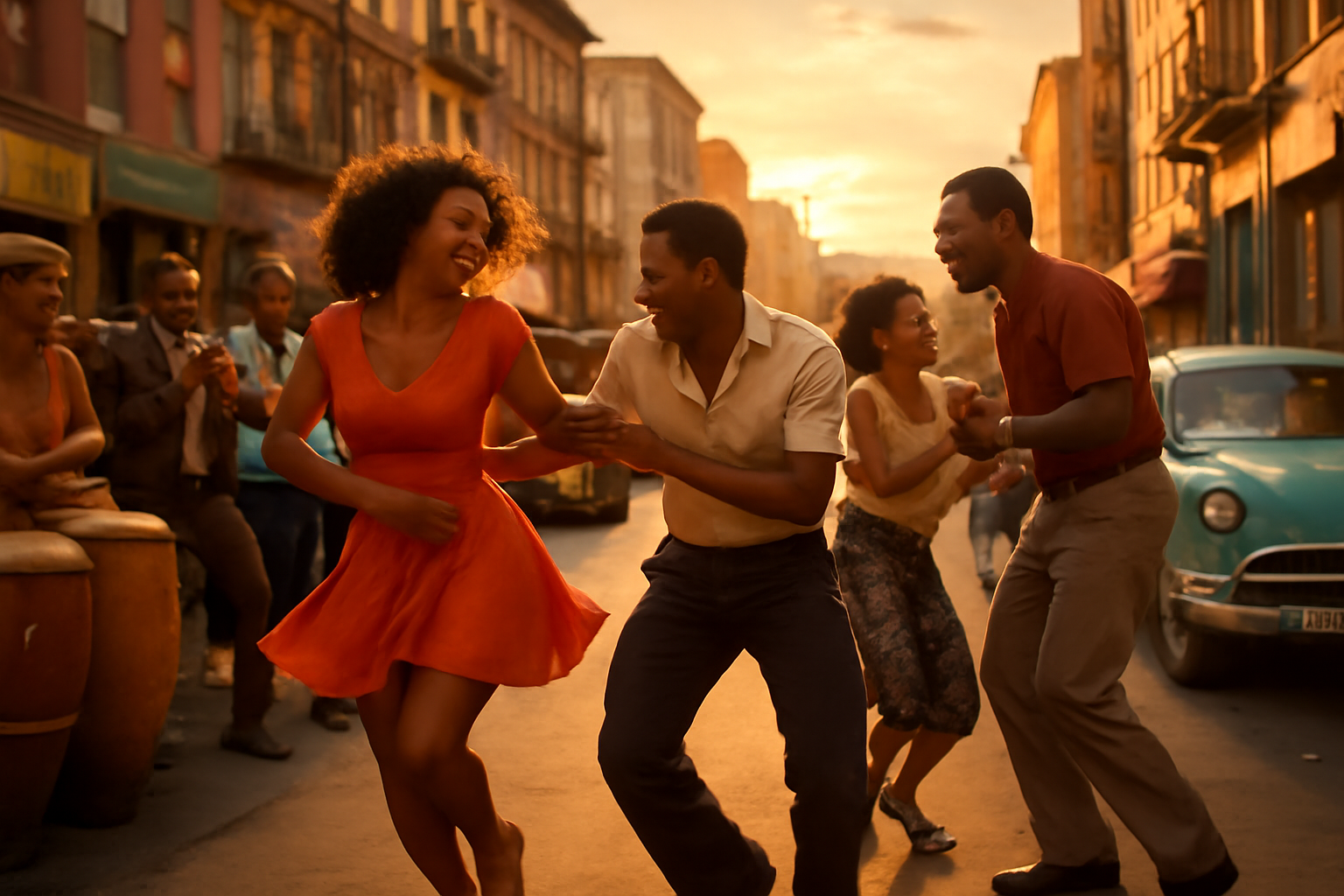
Where did salsa dance originate? The most accurate answer is layered. Salsa has deep Caribbean roots, particularly in Cuban musical and dance traditions, while Puerto Rican communities also played a major role in its development and transmission. New York City became the place where these traditions interacted most visibly and where modern salsa gained a distinct urban identity.
For that reason, describing salsa as simply “Cuban,” “Puerto Rican,” or “New York” leaves out part of the story. Cuba supplied many of the foundational genres and rhythmic structures; Puerto Rican musicians, dancers, and migrant communities were central to the New York scene; and New York provided the social and cultural environment in which the modern salsa movement became internationally recognizable.
Who Invented Salsa Dancing?
Who invented salsa dancing? No single person did. Salsa developed collectively through musicians, dancers, teachers, clubs, immigrant communities, and generations of social dancers. Its movement vocabulary evolved from earlier Caribbean and Latin dance traditions and continued changing as dancers responded to new music and local social scenes.
Some individuals later became influential in particular styles. Eddie Torres, for example, played an important role in systematizing and teaching New York-style On2 salsa to international audiences. His influence helped make a specific timing approach easier to teach and transmit, but that is very different from saying that he invented salsa itself.
Mixing of Cultures in the Caribbean
The history of salsa dancing reflects centuries of cultural interaction in the Caribbean. African-derived rhythmic and movement traditions and Spanish musical forms became especially important to the genres that later fed into salsa. Indigenous Caribbean cultures also form part of the region’s broader historical context, although their direct contribution to salsa is less clearly documented than the African and European influences found in its musical predecessors.
1) Indigenous Caribbean Context
Before European colonization, the Caribbean was home to Indigenous peoples including the Taíno. Their cultures shaped the region long before salsa existed. However, it is more accurate to treat this as part of the Caribbean cultural background rather than to present Taíno dance as a direct, primary source of modern salsa.
2) Spanish Influence
Spanish colonization introduced European instruments, melodic and harmonic practices, song forms, and partner-dance conventions. In Cuba and Puerto Rico, these elements interacted with African-derived traditions and helped shape musical forms that would later influence salsa.
3) African Rhythmic Foundations
African-derived traditions preserved and transformed throughout the Caribbean contributed essential rhythmic and movement foundations. Polyrhythmic percussion, call-and-response, improvisation, complex body movement, and communal dance practices became central features of Afro-Caribbean culture. These influences are fundamental to understanding the rhythmic character from which salsa eventually developed.
Cuba, Puerto Rico, and New York: The Birth of Salsa
Cuba provided many of the strongest musical and movement foundations through son cubano, rumba, mambo, and related Afro-Cuban traditions. These forms combined African-derived rhythm and movement with Spanish melodic and song traditions, creating patterns that later became central to the salsa environment.
Puerto Rico contributed its own dance and musical traditions, including bomba and plena, but its role was also crucial through migration. Puerto Rican musicians, dancers, and audiences became a major part of New York’s Latin cultural scene, helping transform older Caribbean forms into a shared urban culture.
New York City brought these communities into sustained contact in clubs, ballrooms, neighborhoods, recording studios, and live performance spaces. Cuban, Puerto Rican, other Caribbean, and African American influences interacted with jazz and the city’s commercial music industry. By the 1960s and 1970s, this environment had become central to the identity and international spread of modern salsa.
Mambo: The Precursor to Salsa
One of the most important chapters in the history of salsa is mambo. Before salsa became widely recognized under its modern name, mambo was a major force in New York Latin dance culture during the 1940s and 1950s. The ballroom and club scene surrounding mambo helped establish patterns of partner dancing, musical interpretation, breaks, turns, and improvisation that later salsa dancers inherited and adapted.
Salsa therefore did not replace mambo with an entirely unrelated dance. It grew from a broader continuum that included mambo, son cubano, rumba, and other Afro-Caribbean forms. This historical continuity explains why the boundaries between mambo and salsa can still look different depending on whether a dancer, musician, or historian is describing them.
History of Salsa Music and Dance
The history of salsa dance developed alongside changes in Latin music, especially in New York. During the 1960s and 1970s, musicians drew on Cuban son, mambo, guaracha, Latin jazz, and other Caribbean traditions while record labels and live venues helped bring the emerging salsa identity to a much larger audience.
For dancers, those musical changes mattered because they shaped tempo, phrasing, percussion, breaks, and the social settings in which people danced. As salsa music reached broader audiences, dancers developed increasingly recognizable local approaches to timing and partner work. The dance remained improvisational and social, even as teachers and studios later began to organize those approaches into named styles.
Evolution of Salsa Through the Decades
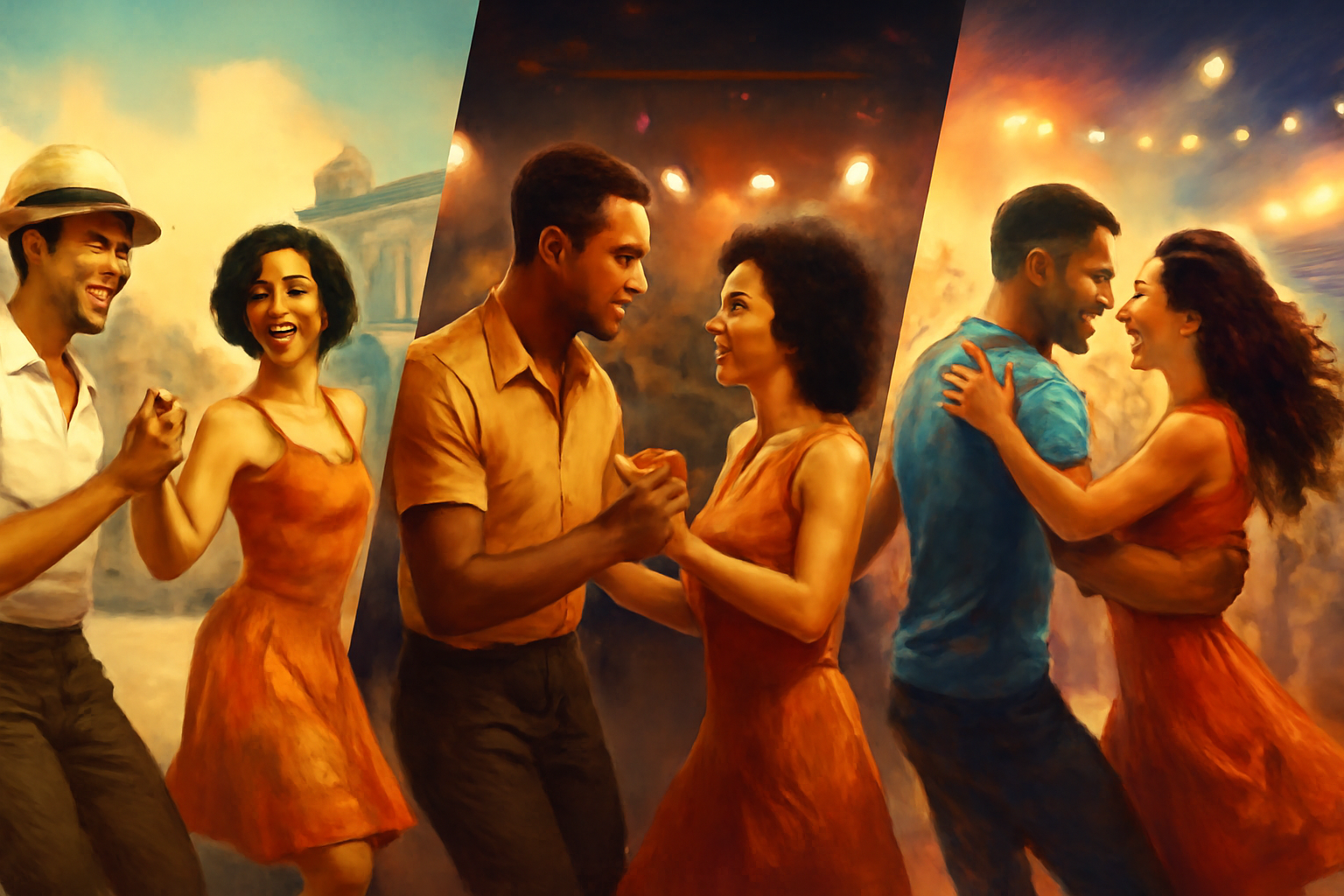
The evolution of salsa reflects changes in music, migration, nightlife, teaching, and the way dancers formed communities.
In the 1960s, the cultural and musical environment that would be widely identified as salsa became more clearly defined in New York. Social dancers were already drawing from mambo and other Caribbean traditions while the city's Latin music scene was developing a new identity.
In the 1970s, salsa entered a period of major visibility. Clubs, concerts, recordings, and touring artists carried the music to new audiences, while social dancing became more widespread and local styles grew more recognizable.
In the 1980s, salsa continued to diversify. Salsa romántica changed the musical landscape, while dance schools and instructors increasingly organized movement into teachable patterns and timing systems.
From the 1990s to the present, international festivals, salsa congresses, competitions, dance schools, video instruction, and social media accelerated the exchange of styles. Dancers could now learn approaches developed in New York, Los Angeles, Cuba, Colombia, and elsewhere without living in those places, helping salsa become both global and highly regional at the same time.
Key Figures in Salsa Dance History
Salsa developed collectively, so its history should not be reduced to a short list of “inventors.” Still, certain dancers, teachers, musicians, and performers helped shape how salsa was taught, heard, and understood by international audiences.
Eddie Torres, often associated with New York-style salsa On2, became especially influential as a teacher and performer. His systematic approach to timing helped transmit New York mambo and salsa traditions to generations of dancers around the world.
Celia Cruz was not a dance-system creator, but her international success as a salsa singer helped bring the music—and therefore the social dance surrounding it—to audiences far beyond its original communities.
Tito Puente was likewise primarily a musician and bandleader rather than a salsa dance teacher. His work in mambo, Latin jazz, and Afro-Cuban music formed part of the musical environment that shaped generations of social dancers.
The Different Styles of Salsa Dancing
As salsa spread across cities and countries, distinct styles developed. They share overlapping historical roots but differ in timing, spatial organization, body movement, footwork, and the way partners interact.
Salsa On1 – LA Style Salsa
LA-style salsa is commonly danced with the break step beginning on beat one. It is usually linear or “slot-based” and is known for fast turns, clear lines, dips, tricks, and a performance-oriented vocabulary, although it is also widely danced socially.
New York Style Salsa – On2
New York style is commonly associated with breaking on beat two and with the teaching legacy of Eddie Torres. It often emphasizes smooth partner movement, rhythmic interpretation, percussion, and musical phrasing. Although clave is an important part of salsa music, On2 should not be reduced to a single fixed “clave alignment”; dancers may listen to several rhythmic layers when interpreting the music.
Cuban Salsa – Casino and Rueda de Casino
Cuban salsa, commonly called Casino, developed from Cuban social dance traditions and typically uses more circular partner movement than the slot-based approaches common in LA and New York styles. Rueda de Casino expands this social vocabulary into a group format in which couples dance in a circle and change partners or patterns in response to calls.
Colombian / Cali Style
Colombian salsa, particularly the style associated with Cali, is known for rapid footwork, rhythmic precision, athletic energy, and a strong local performance culture. Its development shows how salsa was not simply exported unchanged from New York but was reinterpreted by dancers in different regions.
How Salsa Became a Global Phenomenon
Salsa became a global dance through migration, touring musicians, recordings, films, television, dance academies, festivals, and later the international congress circuit. These channels allowed dancers from different countries to encounter styles that had previously been strongly associated with particular cities or communities.
Dance schools across Europe, Asia, Africa, and Latin America incorporated salsa into their programs, while social events created local communities around the dance. International exchange did not erase regional differences; instead, it helped styles such as New York On2, LA On1, Cuban Casino, and Cali salsa become recognizable beyond their places of origin.
Timeline of Salsa Dance Milestones
- Late 19th century–1920s: Son cubano emerges in eastern Cuba and spreads more widely, becoming one of the key musical foundations later associated with salsa.
- 1940s–1950s: Mambo becomes a major force in New York Latin dance culture, establishing an important social and movement foundation for later salsa.
- 1960s: Caribbean musical traditions and New York Latin culture converge more visibly, while the term salsa gains wider use as a label for the emerging urban sound.
- 1970s: Salsa reaches a major period of visibility through clubs, recordings, concerts, and the international influence of New York's Latin music scene.
- 1980s: Salsa diversifies musically and geographically, while dance instruction becomes more organized and regional styles become easier to identify.
- 1990s–Present: Congresses, festivals, schools, competitions, video, and social media accelerate the worldwide exchange of salsa styles.
Sources and Influences Over Time
Rather than treating salsa as the product of one predecessor, it is more useful to see how several traditions contributed different elements to the dance environment that eventually became salsa:
- Son Cubano: supplied an important rhythmic and structural foundation through the long interaction of African-derived rhythm and Spanish song traditions in Cuba.
- Mambo: contributed strongly to New York partner-dance culture, timing, breaks, turns, and the social ballroom environment from which later salsa developed.
- Rumba and Guaguancó: contributed Afro-Cuban rhythmic awareness, body movement, improvisational qualities, and expressive styling that remain visible in many salsa contexts.
- Jazz: influenced arrangements, improvisation, instrumentation, and the broader New York musical environment in which modern salsa took shape.
These influences did not enter salsa at a single date or in equal proportions. They overlapped across generations, which is one reason the salsa dance origin is better understood as a historical process than as a single birthplace or invention.
Frequently Asked Questions About Salsa Dance History
Where did salsa dance originate?
Modern salsa developed through Caribbean traditions and New York social dance culture. Cuba provided many foundational musical and movement forms, Puerto Rican communities played a major role in the New York scene, and New York became the central urban environment in which modern salsa identity took shape.
Who invented salsa dance?
No single person invented salsa dance. It evolved collectively through musicians, dancers, teachers, social clubs, and Caribbean communities over many decades. Later figures such as Eddie Torres helped systematize and spread particular styles, but they did not create salsa from scratch.
What is the salsa dance origin story?
The story begins with African-derived and Spanish traditions interacting in the Caribbean, especially in Cuba, and continues through forms such as son, rumba, and mambo. Migration and cultural exchange carried these traditions into New York, where Caribbean communities and the city's music and dance scene helped shape modern salsa.
When did salsa dancing start?
The roots of salsa are much older, but salsa as a modern named music-and-dance movement became clearly recognizable during the 1960s and 1970s. Its development depended on earlier traditions that had already evolved for decades in the Caribbean and New York.
Where did salsa dancing come from?
Salsa dancing came from a transnational exchange rather than a single country. Its strongest historical foundations connect Cuba, Puerto Rico, and New York, with African-derived Caribbean traditions at the core of its rhythm and movement.
The history of salsa dance shows how a social dance can grow through migration, musical change, and repeated cultural exchange. From Caribbean foundations and the New York mambo scene to regional styles and international congresses, salsa has continued to change without losing its connection to the communities and rhythms that shaped it. Across its history, that continuity is more important than any attempt to assign the dance to one inventor, one year, or one country.
Contra Dance: Definition, History & How It Works
Square Dance: Meaning & History
Ice Dance: Meaning, History, Rules, Moves and Olympic Facts
Salsa Music: Origins, Rhythm, Instruments & History

Ghost Dance: Meaning, History, and Native Legacy

Argentine Tango: Meaning, History, Music, Milonga and Dance Style
Discover more about the world of dance: