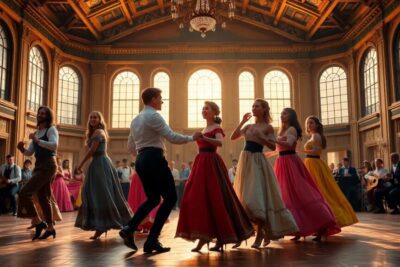
History of Dance: Origins, Timeline, Cultural Traditions, and Modern Evolution
Dance is one of the oldest forms of human expression. Long before written records, people used movement, rhythm, gesture, and body language to communicate, participate in ceremonies, mark important events, tell stories, and strengthen community bonds. The history of dance is therefore not the story of one inventor, one country, or one style. It is the story of how human societies around the world developed meaningful ways of moving.
Questions such as when dance began, where it originated, and who invented it do not have a single answer. Dance predates written history and probably developed independently in many early communities. Evidence from art, archaeology, written records from later civilizations, and documented cultural traditions shows that movement has long been connected to ritual, social life, storytelling, celebration, spirituality, and performance.
This guide follows the history of dance from prehistoric societies and ancient civilizations through traditional dance, European court culture, ballet, ballroom, modern dance, jazz, street dance, hip-hop, contemporary forms, and today's global dance culture.
Table of Contents:
- What Is Dance?
- The Origin of Dance: When and Where Did Dancing Begin?
- How Was Dance Used in Prehistoric and Early Societies?
- History of Dance Timeline
- Ancient Dance Forms
- Cultural Traditions in the History of Dance
- The Evolution of Dance Through the Ages
- The History of Dance in the United States
- Dance and Music Through History
- Types of Dance That Shaped History
- Dance Culture and Social Identity
- The Globalization of Dance
- Dance Facts About the History of Dance
- FAQ About the History of Dance
- Conclusion: Why the History of Dance Still Matters
What Is Dance?
Dance is organized or intentional body movement used to express emotion, communicate ideas, tell stories, respond to music, participate in cultural practices, or interact socially. It may be performed alone, with a partner, in groups, on a stage, in a sacred space, at a celebration, in the street, or as part of everyday community life.
At its broadest, dance is movement given meaning through rhythm, intention, context, or shared convention. A person may dance to celebrate, mourn, worship, entertain, compete, preserve tradition, express identity, or simply enjoy moving with others. This is why the history of dancing is closely connected to music, religion, theater, politics, migration, social life, and cultural identity.
Unlike art forms that depend on a separate physical object, dance uses the human body as its primary medium. This helped movement traditions develop in communities long before formal schools, written notation, or professional theaters existed.
The Origin of Dance: When and Where Did Dancing Begin?
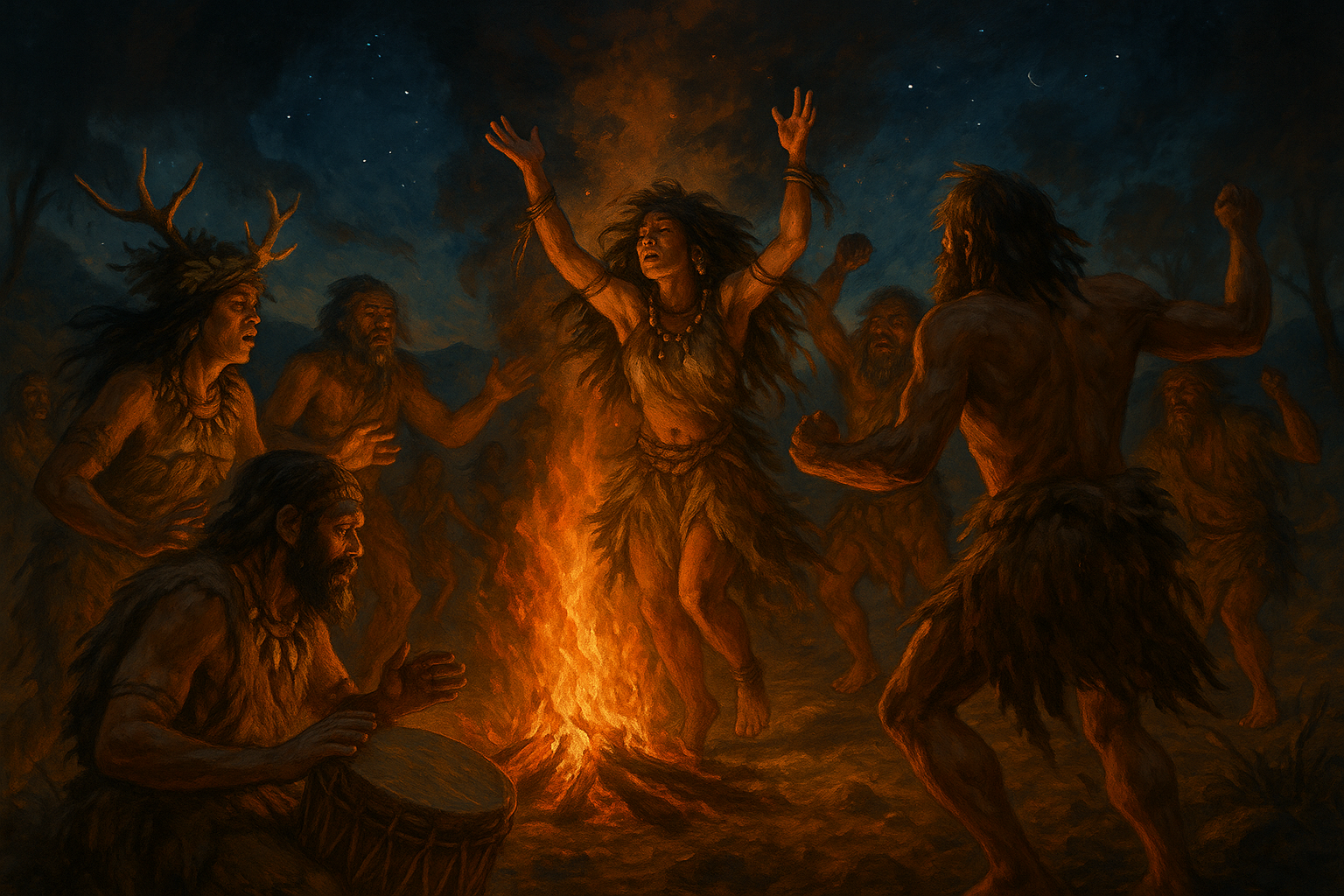
The origin of dance reaches back into prehistory. Because people danced before written records existed, historians cannot identify an exact first date, location, or inventor. Visual evidence from ancient art and the widespread presence of dance in later documented cultures strongly suggest that organized movement has been part of human social life for thousands of years.
Early dances may have served many purposes. In different societies, movement became associated with ceremony, hunting, healing, mourning, celebration, fertility, storytelling, social bonding, spiritual practice, and transitions between stages of life. These functions should not be treated as universal to every early culture, but they demonstrate the wide range of purposes dance could serve.
The history of dance therefore did not begin with dance as entertainment alone. Movement could be social, practical, symbolic, spiritual, and artistic long before professional performance became a distinct activity.
When Did Dance Begin?
There is no known date for when dance began. The question often phrased as “when was dance invented?” assumes a single moment of creation, but dance almost certainly developed gradually. Humans discovered that repeated movement, gesture, rhythm, imitation, and group coordination could communicate ideas and create shared experiences.
For that reason, dance may be nearly as old as organized human culture itself. Formal traditions such as ballet, ballroom, or jazz appeared much later, but meaningful rhythmic movement existed long before those named styles.
Where Did Dance Originate?
Dance has no single known geographic birthplace. Communities in Africa, Asia, Europe, the Americas, and Oceania developed their own movement traditions according to local beliefs, environments, social structures, and musical practices.
Some documented traditions use dance to represent animals or hunting, while others connect movement to ancestors, deities, seasonal cycles, agriculture, warfare, healing, court ceremony, or community celebration. The diversity of these traditions supports the idea that dancing arose independently in many human societies.
Who Invented Dance?
No single person is known to have invented dance. It existed before written historical records and developed collectively through human communities rather than through one identifiable creator.
The earliest dancers were likely ordinary members of communities participating in ceremonies, celebrations, storytelling, social interaction, and shared rhythmic activity. Over generations, repeated movements could become traditions and acquire meanings recognized by the group.
How Was Dance Used in Prehistoric and Early Societies?
In prehistoric and early societies, dance could serve functions that later became separated into religion, entertainment, storytelling, healing, education, and social ceremony. Movement helped communities create shared meaning when knowledge was transmitted primarily through participation, observation, memory, and oral tradition.
Because prehistoric societies left limited direct evidence, historians must be cautious about assigning specific meanings to ancient movement. Later documented traditions nevertheless show that dance has repeatedly served as communication, ceremony, social bonding, healing practice, and storytelling across many cultures.
Dance as Communication
Movement can communicate without spoken language. Gesture, posture, rhythm, facial expression, direction, and group formations can convey emotion, social roles, or symbolic meaning. In some traditions, dancers imitate animals, dramatize important events, or represent relationships between people and their environment.
This communicative quality remains one of dance's most enduring features. Even when audiences do not share the same language, they can often recognize qualities such as celebration, grief, tension, power, playfulness, or unity through movement.
Dance in Ceremonies and Rituals
Many documented societies have used dance in ceremonies connected with birth, initiation, marriage, death, harvest, seasonal change, spiritual devotion, and relationships with ancestors or supernatural forces. Repeated movements, music, costumes, objects, and group participation can give these ceremonies shared structure and meaning.
In these contexts, dancing is not simply a performance observed from a distance. It may be part of the ritual itself. To explore this relationship more deeply, read about dance in religion and mythology.
Dance as Social Bonding
Dancing together can reinforce a sense of belonging. Coordinated movement creates a shared physical experience in which participants follow common rhythms, patterns, or social conventions.
Community dances have often accompanied weddings, initiations, funerals, victories, seasonal celebrations, and other important events. Their significance lies not only in what the movement looks like but also in who participates, when it occurs, and what the event means to the community.
Dance as Healing and Spiritual Practice
In some traditional societies, movement, music, chanting, repetition, and altered states of consciousness form part of healing or spiritual practices. Religious specialists, healers, or community members may use dance within ceremonies intended to restore balance, seek guidance, communicate with spiritual forces, or support collective emotional experience.
These practices should be understood within their own cultural and religious contexts rather than interpreted as early versions of modern medicine or therapy.
Dance as Storytelling and Expression
Dance can preserve stories without relying exclusively on written text. Movement may represent historical events, mythological narratives, ancestors, relationships with nature, or community values. Gesture, costume, rhythm, spatial patterns, and music can all contribute to the meaning of a performance.
This storytelling function continued into many later traditions, including classical Indian dance, ceremonial dances, ballet, theater dance, and contemporary choreography.
History of Dance Timeline
A history of dance timeline cannot include every movement tradition in the world, but it can show major shifts in how dance developed as ritual, social practice, theatrical art, professional discipline, and global popular culture.
| Period | Main Developments in Dance History |
|---|---|
| Prehistoric Era | Communal movement likely accompanied ritual, social interaction, storytelling, celebration, and other forms of collective life, although specific practices are difficult to reconstruct. |
| Ancient Egypt | Visual and written evidence shows dance in religious ceremonies, funerals, festivals, court settings, and entertainment. |
| Ancient Greece | Dance formed part of religious festivals, education, civic life, theater, music, and ceremonial activity. |
| Ancient India | Dance, drama, music, gesture, and religious storytelling developed within diverse traditions that later influenced major classical forms. |
| Ancient China | Court, ritual, military, and ceremonial dances formed part of political, religious, and social life. |
| Middle Ages | Religious practices, courtly entertainment, folk traditions, and communal social dances coexisted across Europe and other regions. |
| Renaissance | European court dance became increasingly codified, while dance masters, manuals, court spectacles, and theatrical entertainment helped prepare the way for ballet. |
| 17th–19th Centuries | Ballet developed as a professional theatrical form, while ballroom and social dances expanded alongside changing court and urban cultures. |
| Early 20th Century | Modern dance challenged ballet conventions, while African American social dance, jazz, tap, swing, and popular entertainment transformed dance culture. |
| Late 20th Century | Breaking, hip-hop dance, funk styles, postmodern dance, contemporary practices, club cultures, and new global exchanges expanded dance vocabulary. |
| 21st Century | Digital video, social media, online instruction, global pop industries, competitions, and international collaboration accelerate the circulation of dance. |
The timeline shows that dance history is not a straight progression from “simple” to “advanced” movement. Older traditions continue alongside newer ones, and innovation frequently develops through contact between communities, migration, social change, and the reinterpretation of existing forms.
Ancient Dance Forms
Ancient civilizations left paintings, sculpture, written descriptions, religious texts, and performance traditions that provide stronger evidence for dance than we have for prehistoric communities. These sources reveal that dancing could be religious, social, theatrical, educational, ceremonial, or entertaining.
Dance in Ancient Egypt
Ancient Egyptian art depicts dancers in funerary, religious, courtly, and entertainment settings, often accompanied by musicians playing instruments such as harps, flutes, drums, clappers, and sistrums.
Dance could be associated with celebration, mourning, worship, processions, and royal or elite entertainment. Rather than representing one standardized Egyptian dance style, the surviving images point to several forms of movement used for different social and ceremonial purposes.
Dance in Ancient Greece
In ancient Greece, dance was closely connected to music, poetry, religion, education, theater, and civic festivals. Greek drama combined spoken text with musical and choreographed elements, and the chorus could use coordinated movement to participate in storytelling and collective commentary.
Dancing also appeared in weddings, religious observances, military training, celebrations, and social life. Greek ideas about rhythm, physical education, theater, and performance became part of the broader cultural inheritance that later European societies interpreted in different ways.
Dance in Ancient India
India developed sophisticated traditions connecting dance with music, drama, storytelling, gesture, religion, and aesthetics. Sanskrit writings such as the Natya Shastra demonstrate an early systematic understanding of performance that included movement, dramatic expression, music, gesture, and emotion.
Modern classical Indian forms have distinct histories rather than one common origin. Bharatanatyam is strongly connected to South Indian devotional, temple, court, and performance traditions, while Kathak developed through North Indian storytelling traditions and later evolved under both devotional and courtly patronage. Treating all Indian classical dances as the product of the same historical pathway would obscure their differences.
Dance in Ancient China
Dance in ancient China appeared in court ceremonies, ritual practice, festivals, military contexts, and political displays. Movement could symbolize social order, cosmological ideas, authority, celebration, or communal identity.
Chinese dance changed considerably across dynasties, so it is more accurate to speak of multiple historical traditions than of one continuous ancient style. Later Chinese folk, theatrical, and court practices developed in different historical contexts and continued to transform over time.
Cultural Traditions in the History of Dance
The history of traditional dance cannot be separated from the cultures that created particular movement practices. Geography, religion, language, music, social organization, migration, colonization, and historical change all influence how communities dance and what those dances mean.
The following regional overview cannot represent every tradition, but it illustrates why world dance history is better understood as many interconnected histories rather than one universal sequence.
African Dance Traditions
Africa contains thousands of communities with distinct movement traditions, so there is no single “African dance.” Across different regions and periods, dance has been connected to ceremonies, storytelling, social identity, initiation, healing, funerals, festivals, political authority, and community celebration.
Many African traditions place strong emphasis on relationships among movement, rhythm, musicians, and participants. Polyrhythm, grounded movement, call-and-response, improvisation, and community participation are important in numerous traditions, although they should not be treated as universal features of every African dance.
The African diaspora profoundly reshaped dance in the Americas. Enslaved Africans preserved and transformed rhythmic principles, movement practices, and cultural memory under conditions of forced displacement and oppression. These histories later contributed to African American social dances, jazz and tap traditions, Caribbean and Latin American dances, and many forms of twentieth-century popular movement.
Asian Dance Traditions
Asian dance traditions encompass very different historical systems. Indian classical dances combine movement with music, storytelling, gesture, and aesthetic theory. Chinese traditions include court, folk, ritual, theatrical, and festival dances. Japanese performance traditions include forms such as Noh and, from the early seventeenth century onward, Kabuki, which combines acting, music, stylized movement, costume, and dance.
Korean court and folk traditions, Balinese performance, and the classical and ceremonial dances of Southeast Asia likewise demonstrate different relationships among religion, court culture, theater, community life, and symbolic gesture.
One well-known Chinese tradition is the Lion Dance, performed in different regional styles and commonly associated with festivals and celebrations.
European Dance Traditions
European dance history includes village and regional folk traditions, court dances, theatrical dance, ballet, ballroom, social dance, and later modern concert forms. Community dances accompanied weddings, seasonal festivals, celebrations, and local customs, while elite courts developed increasingly codified systems of movement and etiquette.
For more on community-based traditions, see this guide to folk dance. Court culture later contributed to the development of ballet, explored in the history of ballet, while changing forms of partner dancing contributed to the origins of ballroom dancing.
Native American and Indigenous Dance Traditions
Indigenous peoples of the Americas maintain highly diverse dance traditions connected to specific nations, communities, ceremonies, histories, lands, and spiritual systems. It is therefore inaccurate to describe Native American dance as one unified style.
Depending on the community and context, dance may be associated with ceremony, seasonal events, social gathering, storytelling, healing, remembrance, or relationships with ancestors and the natural world. Some dances are public, while others are restricted or sacred and should not be separated from their cultural protocols.
Latin American and Caribbean Dance Traditions
Latin American and Caribbean dance histories reflect complex interactions among Indigenous peoples, African diasporic traditions, European colonization, migration, local musical cultures, and later urban development. Those interactions produced many distinct forms rather than a single “Latin dance” tradition.
Salsa, Tango, Merengue, Samba, Bachata, Rumba, and other dances developed through different histories. Salsa reflects Afro-Caribbean traditions, migration, and urban cultural exchange; its development is examined in more detail in our Salsa dance history guide.
Tango emerged from the social and musical environments of Argentina and Uruguay and later became an internationally recognized partner dance. See the guides to Tango history and Argentine Tango for a more focused treatment.
The Evolution of Dance Through the Ages

The evolution of dance reflects changes in religion, political power, social class, technology, music, migration, entertainment, and artistic values. Older forms did not simply disappear when new ones developed. Folk, ceremonial, classical, social, theatrical, and street traditions continue to coexist and influence one another.
From Folk Dance to Court Dance
Community-based dances were transmitted through participation and local custom. Weddings, harvests, seasonal festivals, religious celebrations, and other gatherings provided settings in which movement traditions could be repeated and passed between generations.
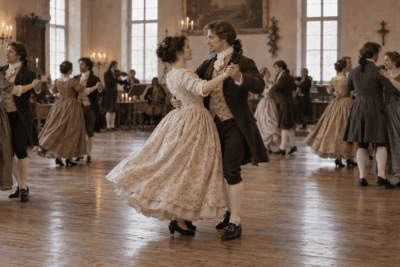
European court dances developed in very different social environments. Nobles learned prescribed steps, formations, etiquette, and ways of carrying the body that communicated rank and refinement. These court traditions later contributed to theatrical dance and formal partner dancing.
The Renaissance and the Birth of Ballet
During the Renaissance, elite European dance became increasingly documented and formalized. Dance masters taught courtly movement, manuals recorded steps and social conventions, and elaborate entertainments combined music, poetry, spectacle, costume, and choreography.
Ballet developed from Italian and French court culture before becoming a professional theatrical art. Over the following centuries it acquired specialized vocabulary, training methods, institutions, and repertory and became highly influential in European and later international concert dance.
18th and 19th Century Dance
During the eighteenth and nineteenth centuries, ballet, theatrical dance, and social partner dancing continued to change. Ballroom traditions expanded as new partner dances moved through courts, salons, public halls, and eventually broader social settings.
The nineteenth-century Romantic ballet emphasized supernatural characters, heightened emotion, theatrical illusion, and an increasingly important use of pointe technique. Learn more about this technical development through the guide to pointe work.
Early 20th Century: Modern Dance, Jazz, and Social Dance
At the beginning of the twentieth century, modern dance pioneers challenged many conventions of academic ballet. Different artists experimented with gravity, breath, natural movement, personal expression, abstraction, theatricality, and new relationships between music and choreography.
At the same time, African American music and social dance traditions transformed popular culture. Ragtime, jazz, blues, swing, tap, the Charleston, Lindy Hop, and theatrical jazz developed through complex exchanges among Black communities, entertainment industries, social venues, and stage performance. Explore this history further in the history of jazz dance.
Film, Broadway, nightclubs, touring shows, recording technology, and mass media gave dance a scale of cultural circulation that had not previously been possible.
Late 20th and 21st Century: Street Dance, Hip-Hop, and Global Fusion
During the late twentieth century, new urban dance cultures reshaped popular movement. Breaking developed within the emerging hip-hop culture of New York, particularly the Bronx. Other influential funk and street-dance traditions followed different histories: Locking and Popping/Boogaloo, for example, developed in California funk scenes rather than simply originating as hip-hop dance techniques.
These traditions later circulated through clubs, television, film, competitions, battles, music videos, and international street-dance communities, where styles continually interacted and influenced one another.
Postmodern and contemporary choreographers were simultaneously challenging assumptions about stage dance through everyday movement, improvisation, alternative performance spaces, multimedia, and new relationships between performer and audience. Today's contemporary dance encompasses many different training backgrounds and creative approaches.
In the twenty-first century, digital media has accelerated exchange even further. A choreography, social dance, or short movement phrase can now travel internationally through video platforms and social media within hours.
The History of Dance in the United States
The history of dance in the United States reflects Indigenous traditions, African diasporic culture, European migration, Latin American and Caribbean influence, theater, popular music, immigration, segregation, social change, and urban life. There is no single American dance tradition.
Indigenous nations maintained distinct dance practices long before European colonization, many of which continue today. These traditions should be understood according to their own cultural contexts rather than treated simply as early stages of American entertainment.
African American communities have been central to the development of American dance. Under slavery and later segregation, Black communities preserved, transformed, and created movement traditions that contributed to ring shout practices, tap, jazz dance, swing, blues dancing, funk styles, breaking, hip-hop dance, and many forms of popular performance.
European immigrant communities brought folk, courtly, ballroom, and theatrical traditions, while later migration from Latin America, the Caribbean, Asia, and other regions continued to transform American social and theatrical dance.
Broadway, Hollywood, television, clubs, dance halls, music videos, competitions, and digital platforms eventually made the United States one of the major centers through which dance styles circulated internationally.
Dance and Music Through History
Dance and music have influenced each other throughout much of recorded history. Rhythm, tempo, melody, phrasing, and instrumentation can shape movement, while the needs of dancers can influence musical form, arrangement, and performance practice.
In ritual and community contexts, drums, clapping, chanting, bells, flutes, strings, and other instruments have accompanied movement in different societies. European court dances developed alongside music designed for specific steps and formations, and ballet later created particularly close collaborations between composers, choreographers, musicians, and dancers.
During the twentieth century, new popular music repeatedly generated new dance environments. Jazz and swing accompanied major African American social-dance innovations; rock and roll transformed youth dancing; funk became central to traditions such as Locking and Popping; hip-hop culture fostered Breaking and later hip-hop dance vocabularies; house music and club culture supported the development of House dance.
Some partner dances are also deeply linked to their musical traditions. Tango, for example, depends on phrasing, rhythm, orchestration, improvisation, and partner interpretation. Explore this relationship further in the guide to Tango music.
Types of Dance That Shaped History
No short list can represent world dance history, but several broad forms illustrate major ways dance has developed: as ritual, community tradition, theatrical art, social practice, and urban cultural expression. The purpose of this section is to summarize their historical contribution rather than repeat their complete histories.
Ritual Dance
Ritual dance demonstrates one of movement's oldest documented social functions: connecting physical action with ceremony, spirituality, healing, seasonal change, or transitions in community life.
Folk Dance
Folk dance preserves community memory through movement transmitted across generations. It shows how dancing can express regional identity without requiring a professional stage or formal institution.
Classical Dance
Classical traditions demonstrate how dance can develop highly codified technique, repertory, pedagogy, aesthetics, and institutions. Ballet and the various classical dances of India are important examples, but they come from very different cultural histories.
Ballet
Ballet helped establish professional dance academies, specialized theatrical technique, choreographic repertory, and influential ideas about stage production. Its vocabulary later affected many forms of modern and contemporary concert dance.
Ballroom Dance
Ballroom traditions show how partner dancing changed alongside social etiquette, public leisure, music, class relations, and eventually competition. Waltz, foxtrot, tango, quickstep, and other forms developed through different historical settings rather than from one unified ballroom origin.
Jazz Dance
Jazz dance demonstrates the central influence of African American movement, rhythm, social dance, popular music, theater, and entertainment on twentieth-century American dance culture.
Modern Dance
Modern dance expanded concert dance by challenging ballet conventions and developing new approaches to gravity, breath, gesture, abstraction, emotion, and choreographic experimentation.
Hip-Hop and Street Dance
Hip-hop and other street-dance traditions demonstrate how movement innovation can emerge from community spaces, clubs, parties, battles, and youth culture rather than formal academies. Their global influence has transformed commercial, social, and competitive dance.
Contemporary Dance
Contemporary dance reflects the increasing interaction among training systems, improvisation, concert dance, global influences, interdisciplinary performance, and individual choreographic approaches.
Dance culture includes the people, values, music, clothing, spaces, traditions, social rules, and histories surrounding a particular form of movement. Understanding a dance therefore requires more than learning its steps.
Dance can communicate belonging, ethnic or regional identity, religious commitment, gender expectations, social status, resistance, generational identity, or membership in a particular scene. Those meanings change over time and may be contested within the communities themselves.
Migration is especially important. When communities move, their dances travel with them, but the forms rarely remain completely unchanged. New music, languages, neighborhoods, political conditions, and encounters with other communities can transform both movement and meaning.
Dance can also challenge established cultural boundaries. African American social dances repeatedly reshaped mainstream American entertainment; street-dance communities created new forms outside traditional institutions; and migrant communities transformed partner dances such as salsa and tango as they moved between countries and cities.
For this reason, the history of dance is also a history of identity, cultural exchange, power, memory, and social change.
The Globalization of Dance
Dance has always traveled through migration, trade, conquest, colonization, touring performers, religious exchange, and contact between communities. Modern transportation, recording, film, television, and digital media greatly accelerated that process.
Today, dancers can study movement from other countries through online classes and videos, follow international competitions, collaborate across continents, and participate in trends that spread globally within days.
K-pop choreography provides one example of contemporary global exchange, drawing on multiple commercial and street-dance vocabularies while being produced within a distinct Korean entertainment system. Viral dance challenges represent another form of circulation in which short choreographies can be repeated and adapted by millions of users.
Global circulation also raises questions about context, credit, ownership, and cultural appropriation. Learning movement from another culture can create productive exchange, but understanding where a dance came from and acknowledging the communities that developed it helps prevent its history from being erased.
Dance Facts About the History of Dance
These dance history facts summarize several of the most important ideas in the development of dance:
- Dance has no known single inventor. Movement traditions developed before written history and emerged in many different societies.
- There is no single birthplace of dance. Communities across several continents developed distinct forms of meaningful movement.
- Dance has served more than entertainment. It has been used in ritual, ceremony, storytelling, social interaction, identity, political display, healing traditions, and artistic performance.
- Ancient civilizations left important evidence of dance. Egyptian art, Greek texts and theater, Indian performance theory, and Chinese historical records all document movement practices.
- Ballet developed from European court culture before becoming a professional theatrical and technical system.
- African diasporic traditions transformed dance in the Americas and contributed fundamentally to many later social, theatrical, and street-dance forms.
- Modern and street-dance traditions challenged older definitions of professional dance by creating new techniques, spaces, communities, and ways of performing.
- Digital media has accelerated the globalization of dance, allowing movements to circulate internationally faster than at any earlier point in history.
More articles about Dance History
Explore more guides and related content about Dance History.
FAQ About the History of Dance
What is the origin of dance?
The origin of dance reaches back into prehistoric human societies. Dance probably developed gradually in many communities as people used movement for communication, ceremony, celebration, storytelling, social bonding, and other forms of collective expression.
When did dance begin?
No exact date is known because dancing existed before written historical records. Meaningful rhythmic movement was almost certainly practiced thousands of years before named theatrical and social dance styles appeared.
Where did dance originate?
Dance has no known single place of origin. Communities in Africa, Asia, Europe, the Americas, and Oceania developed their own movement traditions in response to different cultural, religious, social, and environmental conditions.
Who invented dance?
No individual is known to have invented dance. It developed collectively among human communities before written history, making dance a shared cultural creation rather than the invention of one person.
How was dance used in early societies?
Different societies used dance in different ways, including ceremony, communication, storytelling, social bonding, spiritual practice, celebration, and some healing traditions. No single set of functions should be assumed to apply to every early culture.
What is the history of traditional dance?
Traditional dance develops within communities and can preserve social customs, music, stories, religious practices, regional identity, and shared memory. These traditions continually change as communities respond to migration, political change, and contact with other cultures.
What does a history of dance timeline show?
A history of dance timeline traces major periods from prehistoric communal movement through ancient civilizations, traditional and court dance, ballet and ballroom, modern and jazz dance, street and hip-hop cultures, contemporary dance, and today's digitally connected global scene.
What was the first style of dance?
The first dance style cannot be identified. The earliest movement traditions predate written records and probably varied between communities, so historians cannot name one documented form as humanity's original dance.
Conclusion: Why the History of Dance Still Matters
The history of dance reveals how deeply movement is connected to human culture. From prehistoric communities and ancient ceremonies to village celebrations, royal courts, theaters, jazz clubs, street battles, ballrooms, and digital platforms, people have continually used dance to communicate, participate, remember, and create.
Dance did not evolve along one universal path. Older traditions survived while new forms emerged through migration, cultural exchange, political change, music, professional institutions, popular entertainment, and technological innovation.
Understanding dance history therefore means understanding more than a sequence of styles. It means recognizing how movement carries cultural memory, expresses identity, reflects historical conditions, and changes when people and ideas move between communities.

Discover more about the world of dance: