Folk Dance: Meaning, Characteristics, Types, and Cultural Importance
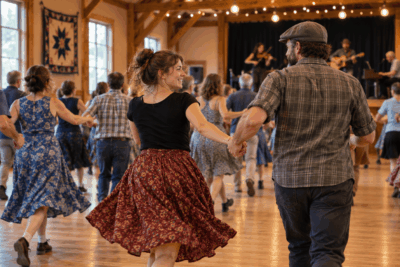
Folk dance is a traditional form of dance that reflects the cultural heritage, customs, and social values of specific communities. Passed down through generations, these dances are performed by ordinary people during celebrations, festivals, weddings, and other significant community events—not by professional dancers on formal stages.
Unlike ballet or contemporary dance, folk dancing emphasizes community participation over technical perfection, making it accessible to people of all ages and skill levels. From the energetic Irish jig to India's vibrant Bhangra, folk dances serve as living expressions of cultural identity, connecting us to our ancestors while continuing to evolve in modern times.
In this comprehensive guide, you'll discover everything about folk dance: its meaning, definition, origins, characteristics, components, diverse styles from around the world, and its crucial role in preserving cultural traditions. Whether you're researching for academic purposes, considering learning folk dance, or simply curious about this ancient art form, you'll gain a deep understanding of why folk dancing remains relevant and beloved across the globe.
Table of Contents:
- What is Folk Dance?
- Defining Folk Dance: What Makes a Dance a Folk Dance?
- Background and History of Folk Dance
- Characteristics of Folk Dance
- Types of Folk Dance from Around the World
- The Role and Importance of Folk Dance in Cultural Identity
- How to Experience and Learn Folk Dance Today
- The Future of Folk Dance
- Frequently Asked Questions About Folk Dance
What is Folk Dance?
What is folk dance? Folk dance refers to traditional dances that originate from the cultural practices of specific ethnic groups, nations, or regions. These dances are usually performed in groups, accompanied by traditional music, and connected to community life. In simple terms, the meaning of folk dance is a dance tradition that belongs to the people, grows within a culture, and is passed down through generations.
The definition of folk dance goes beyond movement alone. It includes customs, music, clothing, rituals, and shared social experiences. Because of this, folk dance is often studied not only as a performing art but also as an important expression of history, identity, and community values.
- Community-based: Performed in groups during social gatherings, not just as solo performances
- Passed down orally: Learned through observation and participation, not only through formal instruction
- Simple, repetitive movements: Easy-to-follow patterns that encourage participation
- Accompanied by traditional music: Uses local rhythms and instruments such as fiddles, drums, flutes, or accordions
- Celebratory or ceremonial purpose: Common at festivals, weddings, harvests, and religious events
- Culturally specific: Reflects the history, values, and lifestyle of the community that created it
Now, let's explore folk dance in greater depth, from what makes a dance a folk dance to its background, characteristics, global types, and cultural importance.
Defining Folk Dance: What Makes a Dance a Folk Dance?
Defining folk dance is important because not every traditional-looking dance automatically fits the category. What makes a dance a folk dance is its connection to a living or historical community tradition. Folk dance usually develops over time among ordinary people, rather than being created by a single choreographer for the stage.
In other words, what is the meaning of folk dance in practice? It is a form of movement shaped by collective memory. Folk dances are tied to local customs, social occasions, and shared values. They may change slowly over generations, but they remain recognizable because their purpose is rooted in culture rather than in pure theatrical innovation.
Operationally, several features help define folk dance: it is community-centered, socially learned, culturally meaningful, and often performed in recurring settings such as seasonal celebrations or communal gatherings. This is why folk dance definition and folk dance meaning are closely linked to tradition, belonging, and continuity.
One of the most beautiful aspects of folk dancing is its inclusivity. People of all ages and backgrounds can participate, regardless of skill level. This accessibility promotes community engagement and allows for the preservation of cultural traditions. In many societies, these dances play a critical role in maintaining social cohesion, offering a space for shared experiences and collective memory.
Background and History of Folk Dance
The history of dance and the evolution of folk dance are rich and varied, reflecting how societies have transformed over time. Originating in ancient rituals, dance was used as a form of communication with the divine—a concept also explored in dance in religion and mythology. In many cultures, it was believed that dance could invoke blessings, celebrate the harvest, or mark important life transitions. These early forms of dance were often intertwined with music, as rhythm and melody enhanced the experience and conveyed emotions.
As societies developed, so did their folk dances. The origin of folk dance can be traced back to rural communities where they were performed as a way to bond, celebrate, and even educate. For example, in Europe, the Renaissance period saw a flourishing of dance forms that were often performed at courtly gatherings. However, the essence of folk dance remained rooted in the common people's experiences, which were often a reflection of their daily lives and struggles.
With the advent of globalization and the spread of technology, the history of folk dancing has also been affected by cultural exchange. Traditional dances have often been adapted or blended with other styles, leading to the emergence of new forms. However, the core characteristics of folk dances—community, tradition, and cultural expression—remain intact, ensuring that these vibrant forms continue to resonate with people today.
Characteristics of Folk Dance
The characteristics of folk dance vary from one culture to another, yet all folk dance types share several common elements that define this traditional art form. One of the most notable traits is the emphasis on community participation. Unlike professional dance forms that focus on individual skill and performance, folk dances are typically performed in groups, allowing everyone to join in. This collective experience fosters a sense of unity and belonging.

Another defining feature is the use of simple, repetitive movements. These movements are often accessible and easy to learn, making it possible for individuals of all ages and abilities to participate. The choreography is usually based on patterns that are easy to remember, allowing dancers to focus more on the communal experience rather than technical precision. This aspect of folk dance encourages improvisation and personal expression within a structured format.
Additionally, many folk dances are accompanied by traditional dance music that reflects the culture’s unique sound and rhythm. Instruments commonly used in folk music include fiddles, accordions, drums, and flutes, creating a lively atmosphere that enhances the dance experience. The music often dictates the tempo and style of the dance, allowing the movements to be closely intertwined with the musical elements, further enriching the participants’ experience.
Components of Folk Dance
The components of folk dance help explain why these traditions remain recognizable across generations. While each culture has its own style, the main components of a folk dance usually include group participation, repeated step patterns, traditional music, culturally meaningful gestures, and a social or ceremonial setting.
- Movement patterns: Repeated steps and formations that are easy to learn and remember
- Music and rhythm: Local instruments and recognizable rhythms that guide the dance
- Group interaction: Lines, circles, pairs, or communal formations that emphasize participation
- Cultural symbolism: Gestures, costumes, and customs that connect the dance to community identity
- Occasion and purpose: Performance during festivals, weddings, harvests, rituals, or social gatherings
These elements also overlap with the main features of folk dance. In many cases, when people ask about the components of a folk dance, they are really asking what characteristics define the form and make it different from theatrical or highly codified dance traditions.
Types of Folk Dance from Around the World
There is a vast array of types of folk dance practiced globally, each with its unique characteristics and cultural significance. The rich diversity of folk dance types around the world demonstrates how different communities have developed unique movement vocabularies to express their cultural values.
Europe
Europe boasts an incredibly diverse folk dance heritage, with each nation developing distinctive styles reflecting its unique history and temperament.
- The Irish Jig stands as one of Europe's most recognizable folk dances, characterized by rapid leg movements and a rigid upper body. Performed to lively traditional music, jigs became symbols of Irish cultural resistance and pride, particularly during periods of English oppression.
- The Polka dance originated in mid-19th century Bohemia (now Czech Republic) and quickly swept across Europe and America. This partnered dance features a distinctive hop-step-close-step pattern performed to 2/4 time music, embodying the joyful spirit of rural celebrations.
- Greek Sirtaki, while popularized in modern times through the film "Zorba the Greek," draws from authentic Greek folk traditions. Dancers form a line or circle with hands on shoulders, performing synchronized steps that gradually increase in tempo—symbolizing unity and collective strength.
- The Tarantella from Southern Italy is a rapid, whirling dance traditionally believed to cure the bite of the tarantula spider. Couples dance in 6/8 time with tambourines, showcasing the Mediterranean passion and dramatic flair characteristic of Italian folk traditions.
- Flamenco’s folk roots in Andalusia, Spain, combine Romani, Moorish, and Spanish influences, much like the stylistic fusion found in salsa dance history. While it has evolved into a sophisticated art form, its origins lie in the communal celebrations of marginalized communities, expressing deep emotion through percussive footwork, hand clapping, and guitar.
East and South Asia
Asia's vast geographical and cultural diversity has produced some of the world's most vibrant and varied folk dance traditions.
- Bhangra from Punjab (India and Pakistan) is an exuberant harvest dance celebrating the spring festival of Vaisakhi. Characterized by energetic kicks, jumps, and shoulder movements performed to dhol drum beats, Bhangra embodies the agricultural community's joy and gratitude. Today, it has gained global popularity, blending traditional and modern elements.
- Bon Odori from Japan is a Buddhist folk dance performed during the Obon festival to welcome ancestral spirits. Dancers move in circles around a raised platform, performing simple, repetitive hand gestures and steps that anyone can join. Different regions have unique variations, each telling local stories through movement.
- The Chinese Lion Dance is performed during Lunar New Year and other celebrations, with two dancers operating an elaborate lion costume. The dance combines martial arts, acrobatics, and drumming to bring good luck and ward off evil spirits—a perfect example of how folk dance serves both entertainment and spiritual purposes.
- Thai Ramwong is Thailand's national folk dance, performed at festivals and social gatherings. Dancers move in concentric circles, men on the outside and women inside, performing graceful hand movements and slow, swaying steps that reflect Thai aesthetics of elegance and restraint.
- Filipino Tinikling mimics the movements of the tikling bird dodging bamboo traps. Dancers step rhythmically over and between bamboo poles clapped together by musicians, requiring precise timing and agility. This playful dance reflects the Philippines' agricultural heritage and communal spirit.
Africa
African folk dances are deeply intertwined with daily life, spirituality, and social structures, serving purposes far beyond entertainment.
- The Adumu (Jumping Dance) of the Maasai people in Kenya and Tanzania is performed by warriors during coming-of-age ceremonies. Young men form a circle and take turns jumping as high as possible while maintaining a rigid posture—a display of strength and endurance that also serves as courtship.
- Gumboot dance originated among South African gold miners who were forbidden to speak underground. They developed a complex communication system using rubber boot slaps, stomps, and body percussion. What began as resistance became a celebrated folk art form symbolizing resilience and creativity under oppression.
- The Kpanlogo from Ghana emerged in the 1960s, blending traditional Ga dance movements with modern influences. Performed to polyrhythmic drumming, dancers execute hip rotations, foot stomps, and fluid arm movements that celebrate Ghanaian urban culture and youth expression.
- Ngoma is not a single dance but a family of ceremonial dances found across East and Central Africa. These dances accompany life's major transitions—births, initiations, weddings, and funerals—with drum-driven rhythms and movements that connect participants to ancestral traditions and community values.
- Indlamu is a Zulu war dance from South Africa featuring high kicks, stomps, and mock combat movements. Traditionally performed by men wearing animal skins and carrying shields, it demonstrates physical prowess and tribal pride while preserving warrior traditions in peaceful contexts.
North America
North America also has important folk dance traditions shaped by Indigenous cultures, immigrant communities, rural life, and social gatherings. These forms show how folk dance evolves while still preserving communal patterns and local identity.
United States
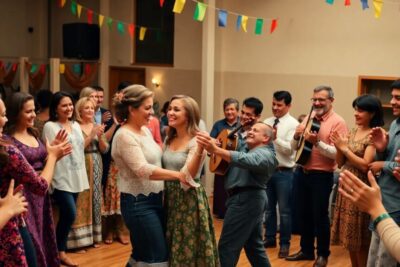
In the United States, folk dance is often associated with community-based traditions such as square dance, contra dance, clogging, and Appalachian social dance. These forms developed through a blending of European, African, and local influences, and they remain closely tied to regional music, festivals, and shared social spaces.
American folk dance traditions are especially relevant if you want to understand how folk dance works in a modern multicultural society. In many parts of the country, these dances are still practiced at schools, local events, heritage festivals, and recreational dance gatherings, which reinforces the importance of folk dance in both culture and education.
South America
South America is home to many folk dances that reflect Indigenous roots, colonial history, and regional celebrations. Across countries such as Argentina, Bolivia, Brazil, Chile, Colombia, Peru, and Venezuela, folk dance often combines music, costume, and storytelling in ways that express both local pride and historical memory.
The Role and Importance of Folk Dance in Cultural Identity
Folk dance is not merely a performance; it serves as a vital aspect of cultural identity. Many communities use dance as a means of preserving their heritage and passing down traditions to future generations. Through these dances, stories are told, values are shared, and a sense of belonging is fostered. This connection to cultural roots is especially important in an increasingly globalized world, where local traditions may be at risk of fading away.
Moreover, traditional folk dancing often plays a crucial role in community gatherings and celebrations. Events such as weddings, harvest festivals, and religious ceremonies frequently feature folk dances as a way to bring people together and reinforce social bonds. The shared experience of dancing helps to strengthen relationships within the community, creating a sense of unity and support among participants.
The importance of folk dance also extends to education and cultural literacy. Folk dances help younger generations understand where they come from, how communities express values, and why traditions remain meaningful. Whether through schools, festivals, or cultural centers, folk dance continues to teach history in a living, embodied form.
In contemporary society, folk dances are often reinterpreted and incorporated into modern performances, allowing for a blend of tradition and innovation. This evolution helps keep the dances relevant and appealing to younger generations, ensuring that the cultural significance of folk dance continues to thrive. Whether through local performances or international festivals, the spirit of folk dance remains alive, connecting people across cultures and generations.
How to Experience and Learn Folk Dance Today
Interested in participating in folk dance? Here are practical ways to engage with this living tradition:
Finding Folk Dance Communities
Local cultural centers and community halls frequently host folk dance groups representing various ethnicities. These welcoming spaces often offer beginner-friendly sessions where newcomers can learn basic steps without prior experience.
University and college groups maintain active folk dance clubs, particularly international student organizations that share their cultural heritage through dance. Many welcome community members, not just students.
Folk festivals and cultural celebrations provide opportunities to observe authentic performances and often include participatory sessions where attendees can join guided dances. Events like Greek festivals, Oktoberfest celebrations, or Lunar New Year festivities regularly feature folk dancing.
Online Learning Resources
The digital age has democratized access to folk dance instruction. YouTube channels dedicated to specific dance traditions offer step-by-step tutorials, while platforms like Zoom have enabled virtual folk dance classes connecting learners worldwide with instructors from source cultures.
Benefits of Learning Folk Dance
Beyond cultural appreciation, folk dancing offers numerous personal benefits:
- Physical fitness: Moderate cardiovascular exercise improving coordination and flexibility
- Social connection: Building friendships through shared communal activity
- Cognitive benefits: Learning patterns and sequences enhances memory and spatial awareness
- Stress relief: Rhythmic movement and music provide natural mood elevation
- Cultural literacy: Deeper understanding and respect for diverse traditions
The beauty of folk dance lies in its accessibility—you don't need special equipment, athletic prowess, or years of training. Just willingness to participate, respect for the culture, and openness to community connection.
The Future of Folk Dance
As we look toward the future, the landscape of folk dancing is likely to continue evolving. With advancements in technology and communication, communities are finding new ways to share their traditional dances with a global audience. Social media platforms, online tutorials, and virtual performances are making it easier for individuals to learn and participate in folk dances from around the world, breaking down geographical barriers.
Additionally, the fusion of traditional and contemporary styles is becoming increasingly popular. Many choreographers are drawing inspiration from folk dance elements, blending them with modern dance techniques to create innovative performances that resonate with today's audiences. This blending not only revitalizes folk dance but also introduces its rich cultural narratives to new generations, fostering appreciation and respect for diverse cultural heritages.
Moreover, many organizations and cultural institutions are dedicated to preserving and promoting folk dance traditions. By hosting workshops, festivals, and competitions, they provide opportunities for communities to engage with their heritage and showcase their unique dances. This commitment to preservation ensures that folk dance remains an essential aspect of cultural identity, allowing it to thrive in an ever-changing world.
In summary, the world of dance is a vibrant tapestry woven from countless cultural threads, with folk dance serving as a vital expression of community, identity, and tradition. From its historical roots to its modern interpretations, folk dance continues to captivate and inspire people around the globe, reminding us of the power of movement and the shared experiences that connect us all.
More articles about Dance List
Explore more guides and related content about Dance List.
See more about Dance ListFrequently Asked Questions About Folk Dance
To help you better understand folk dancing and its role in communities worldwide, we've compiled answers to the most common questions people ask about this traditional art form.
What is the difference between folk dance and other dance forms?
Folk dance is community-based and passed down through generations informally, emphasizing participation over performance perfection. In contrast, classical dance forms (like ballet) have codified techniques taught through formal instruction, while contemporary dance focuses on individual artistic expression. Folk dance serves social and cultural functions within specific communities rather than entertainment for external audiences.
What are the characteristics of folk dance?
The main characteristics of folk dance include community participation, repeated and accessible movement patterns, oral or informal transmission, traditional music, and a strong connection to cultural customs. These characteristics are what distinguish folk dance from more theatrical or highly codified dance forms.
What are the components of a folk dance?
The components of a folk dance usually include simple step patterns, group formations, local musical accompaniment, symbolic gestures, and a clear social or ceremonial context. These elements work together to preserve the dance’s meaning and make it recognizable within a community.
Can anyone learn folk dance regardless of cultural background?
Yes, folk dances can be learned and appreciated by anyone, though it's important to approach them with cultural respect and awareness. Many folk dance communities welcome outsiders who show genuine interest in learning. However, some ceremonial or sacred dances may be restricted to community members, and learners should always be mindful of cultural appropriation versus appreciation.
Do folk dances ever change, or do they stay the same?
Folk dances are living traditions that naturally evolve while maintaining core elements. As communities change, migrate, and interact with other cultures, dances adapt—incorporating new movements, music, or purposes while preserving essential characteristics. This evolution is normal and healthy, reflecting the dynamic nature of culture itself.
What should I wear to participate in folk dancing?
For casual community folk dance sessions, comfortable clothing that allows free movement is sufficient—no special costume required. Traditional costumes are typically reserved for performances and formal cultural celebrations. If attending a specific cultural event, ask organizers about appropriate attire to show respect for the tradition.
Is folk dance still relevant in modern society?
Absolutely. Folk dance continues to serve vital functions: preserving cultural heritage, strengthening community bonds, providing accessible physical activity, and offering cultural education. In our increasingly digital and individualized world, the communal, embodied experience of folk dance provides valuable connection to tradition, community, and shared humanity.
Folk dance represents humanity's enduring need for communal expression, cultural continuity, and joyful movement. From understanding what folk dance is to exploring the characteristics of folk dance, the components of folk dance, and the many types of folk dance practiced worldwide, these traditions remind us that the impulse to dance together transcends all boundaries. Whether you're researching the history of folk dance, the meaning of folk dance, or seeking to join a local folk dancing group, this timeless art form offers something meaningful for everyone.
Contra Dance: Definition, History & How It Works
Square Dance: Meaning & History
Ice Dance: Meaning, History, Rules, Moves and Olympic Facts
Salsa Music: Origins, Rhythm, Instruments & History
Ghost Dance: Meaning, History, and Native Legacy
Argentine Tango: Meaning, History, Music, Milonga and Dance Style
Discover more about the world of dance: